The Georgia Department of Public Health confirmed a rabid cat in Floyd County’s Cherry Street area on November 19, 2026. Local officials urge residents to verify pet vaccinations and avoid stray animals, as the disease is nearly fatal once symptoms appear.
South Carolina health officials confirmed three new rabies cases in November 2026, involving a cat in Spartanburg County, a raccoon in Charleston County, and a skunk in Anderson County. These incidents resulted in one human exposure and three pet exposures, requiring quarantine or medical referral. Statewide, 103 animals have tested positive for rabies this year, below the 136-case average since 2002.
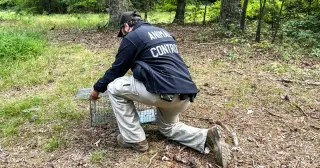
Benton police confirmed a rabies case in a cat tested at K-State Animal Hospital. Authorities are trapping local cats for quarantine and hosting a vaccination clinic next Saturday to protect residents.
A cat found near Delta, Utah, has tested positive for rabies, prompting the Central Utah Health Department to initiate post-exposure treatments for known contacts. Officials suspect the indoor/outdoor pet contracted the virus from a wild animal. While the disease is fatal, it is preventable through vaccination and avoiding stray wildlife.
The Roanoke City and Alleghany Health Districts have confirmed a cat tested positive for rabies. The animal was captured on October 9, 2026, near 11th Street NW and Moorman Avenue NW in Roanoke City. Officials urge residents to avoid unknown animals, report injured wildlife, and ensure pets are vaccinated. Immediate medical attention is required for anyone exposed to the animal.
Marion, Massachusetts, has issued a rabies advisory after a raccoon found acting abnormally near Point Road and the town water tower tested positive for the virus. The Marion Board of Health is urging residents to avoid interacting with wild animals and to contact Animal Control if they encounter suspicious wildlife. While the specific variant is not detailed, officials emphasize that rabies is fatal but nearly 100% preventable with prompt post-exposure treatment.
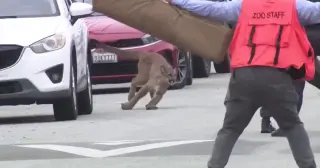
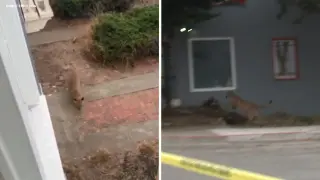
A juvenile male mountain lion was spotted in San Francisco's Outer Sunset neighborhood on Friday morning, leading to a multi-hour standoff involving animal control, police, and wildlife experts. The animal, weighing approximately 78 pounds, was tranquilized after evading capture for several hours. It was fitted with a GPS collar and released back into the wild. This incident marks the second mountain lion sighting in San Francisco within two weeks, though it is unclear if this is the same individual seen earlier in the Golden Gate Park panhandle.
A mountain lion was captured by San Francisco Animal Care and Control on September 18, 2026, after roaming the Outer Sunset neighborhood. The animal was first spotted near Ulloa Street and 44th Avenue around 7:30 a.m. and was tranquilized several hours later after a tense standoff. This is the second confirmed mountain lion sighting in San Francisco within two weeks, following an earlier observation in the Panhandle.
The CDC issued a health advisory on September 10, 2026, warning of a 17% increase in rabies-related inquiries and post-exposure treatment (PEP) errors from July to August. The alert follows high-profile incidents, including a North Carolina petting zoo outbreak that exposed over 260 people and rabid beavers in Maryland. While rabies remains nearly 100% fatal if untreated, the CDC emphasized that proper PEP administration is critical to prevent unnecessary costs and adverse effects.
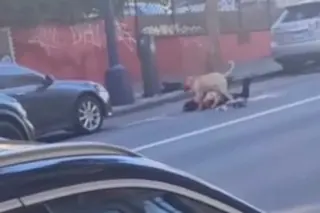
A woman is in life-threatening condition after being mauled by a pit bull in San Francisco’s Tenderloin neighborhood on Tuesday morning. The attack occurred on Larkin Street between Eddy and Turk streets around 9:20 a.m. The dog, described as a light brown pit bull terrier, collapsed and died at the scene shortly after police restrained it. The victim was rushed to a hospital with severe injuries to her hands, fingers, chest, and face. Investigators are seeking the dog’s owner, who fled the scene, to determine if charges will be filed. Authorities are also investigating whether a medical condition or toxin caused the dog’s aggressive behavior and subsequent death.
A rabid raccoon was captured in Raleigh on September 6 after displaying erratic behavior, marking the city’s second rabid raccoon and fourth confirmed rabies case of 2026. The animal contacted a dog, which is now under a 45-day quarantine. Officials urge residents to report unusual animal behavior and ensure pets are vaccinated.
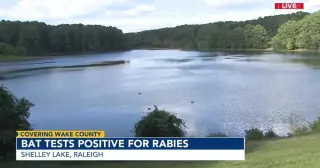
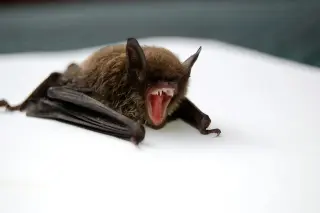
A bat rescued from Shelley Lake in Raleigh tested positive for rabies, marking the city's third confirmed case this year. Two individuals attempted to transport the drowning animal to a wildlife rehabilitator in Charlotte, but it died in transit and was returned to Raleigh for testing. Health officials report minimal to no contact between the bat and the rescuers, though both have been notified. Wake County officials urge residents to avoid unknown animals and ensure pets are vaccinated, following a recent statewide scare involving rabid goats from a mobile petting zoo.
A mountain lion was spotted in a tree near Fell and Baker Streets in San Francisco’s Panhandle on Saturday night, prompting a temporary alert from city and state agencies. By Sunday morning, officials lifted the warning, believing the animal had left the area. However, an unconfirmed sighting was reported later that day near 44th and Fulton Streets. Authorities noted that such sightings are common in the city, as mountain lions often travel from the Peninsula and typically return to natural habitats without requiring relocation.
Humboldt County Public Health officials are urging residents to exercise extreme caution after three children required treatment for rabies exposure following two separate bat encounters in the past two weeks. The incidents occurred in Manila and the Sunset Avenue neighborhood of Arcata, with both bats testing positive for the disease. While rabies is endemic to California, the county has already identified five rabies-positive wild animals this year, including two skunks in Blue Lake. Officials emphasize that bat bites can be too small to notice, making prompt medical attention critical for any physical contact with a bat. The county recommends avoiding wild animals, securing pet food, and 'bat-proofing' homes by sealing gaps as small as three-eighths of an inch. Although rabies is nearly always fatal once symptoms appear, it is preventable with immediate post-exposure treatment. Residents can report exposures or questions to the Department of Health and Human Services.
The Rhode Island Department of Health issued a new alert after two raccoons in Warwick tested positive for rabies, prompting treatment for three adults and three dogs. The state has recorded 34 rabid animals this year, significantly exceeding the five-year average of 24, with raccoons and bats accounting for the majority of cases.