
ADA Journal Editors Halt Manuscript Reviews in Escalating Boycott Over Conference Ejections
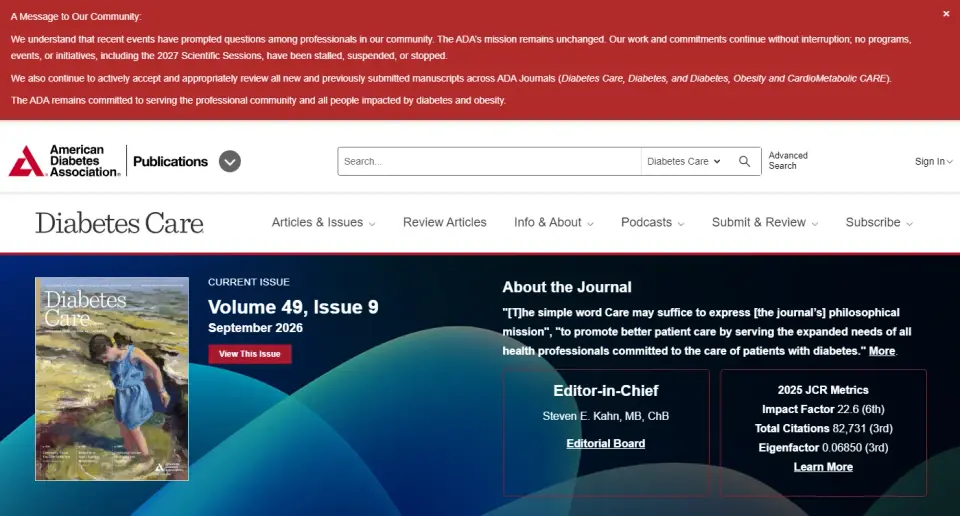
The editorial board of Diabetes Care, the American Diabetes Association's flagship journal, has suspended manuscript reviews in a formal boycott. This action follows the ejection of five researchers from the ADA's June conference for distributing an editorial on federal funding cuts. The boycott demands an independent review of the ADA's leadership and structure, with signatories threatening to join other medical societies if demands are not met.
Key points
- The editorial leadership of Diabetes Care, including editor-in-chief Steven Kahn, suspended manuscript reviews on September 10, 2026, as part of a broader boycott of the American Diabetes Association.
- The boycott was triggered by the ejection of five researchers from the ADA's June conference in New Orleans for distributing an editorial criticizing federal science funding cuts.
- Signatories of the boycott, which includes over 400 members, have pledged to halt all participation in ADA activities, including meetings, grant reviews, and fundraising, until an independent review of the organization's structure is conducted.
- The ADA's internal investigation initially concluded the ejections were due to code-of-conduct violations, but later acknowledged the investigation was ongoing and did not fully account for all facts.
- The ADA removed a notice from its website announcing the suspension of manuscript reviews, but later posted a banner stating it continues to accept and review manuscripts, creating confusion for authors.
Background
The American Diabetes Association has faced significant internal conflict in 2026, following the ejection of five researchers from its June conference. The researchers were removed for distributing an editorial in Diabetes Care that criticized federal cuts to science funding. This incident led to a series of protests, including a Change.org petition with over 8,000 signatures and a letter demanding the resignation of ADA CEO Charles Henderson. The current boycott is the latest escalation in this ongoing dispute, with the editorial board of Diabetes Care joining the boycott and suspending manuscript reviews. The ADA has faced criticism for its handling of the incident and its internal investigation, which has been described as a 'sham' by some members.
How outlets are covering it
The perspectives on the ADA boycott vary significantly among the outlets. Retraction Watch highlights the conflict between the ADA's website banner, which states it continues to accept manuscripts, and the editors' notice suspending reviews. Fierce Biotech emphasizes the scale of the boycott, noting hundreds of signatures from prominent figures, and includes quotes from Steven Kahn comparing the situation to apartheid. MedPage Today focuses on the immediate impact on the journal, noting that the ADA removed the editors' notice, and includes quotes from Kahn describing the boycott as a 'picket line.' STAT provides a broader context, noting the boycott as part of a larger trend of members protesting ADA leadership, and includes quotes from Kahn describing the boycott as a 'strike against a major corporation.' All outlets agree on the core facts of the boycott and the ejection, but differ in their emphasis on the ADA's response and the potential consequences for the organization.
Why it matters
The boycott of the American Diabetes Association and the suspension of manuscript reviews in its flagship journal, Diabetes Care, have significant implications for the diabetes research community. The boycott highlights deep divisions within the ADA and raises questions about the organization's leadership and governance. If the boycott is not resolved, it could lead to a splintering of the ADA, with members joining other medical societies. This could have a major impact on the field of diabetes research, as the ADA is a major funder and promoter of research in the field. The boycott also raises broader questions about the role of professional societies in science and the importance of free speech and academic freedom.
What to watch
The next steps in the ADA boycott are uncertain. The boycott will remain in place until the ADA board of directors allows a formal review of the organization's structure and function. If the ADA does not meet the boycotters' demands, they plan to align with existing or newly formed medical societies. The ADA has not responded to requests for comment, but it has stated that it is aware of the boycott and remains focused on serving its members. The final report of the ADA's internal investigation is expected in the coming weeks, which could provide more clarity on the situation.
- Diabetes association turmoil roils journal as group tries to thwart boycott retractionwatch.com
- Scientists boycott American Diabetes Association as fallout of June conference fracas escalates fiercebiotech.com
- Boycott of the American Diabetes Association Launched MedPage Today
- Boycott launched against American Diabetes Association includes journal STAT
- ADA Says Its Investigation of Meeting Controversy Isn't Done Yet MedPage Today
Want the full story? Read the original reporting
Read on retractionwatch.com