Tag

Research Ethics

All articles tagged with #research ethics

OpenAI’s 719-Manuscript Dump Shatters Math Community as Experts Debate Verification and Human Relevance
science1 day ago

OpenAI’s 719-Manuscript Dump Shatters Math Community as Experts Debate Verification and Human Relevance

OpenAI released over 700 AI-generated mathematical proofs on October 6, 2026, claiming to solve 372 open problems. While Fields Medalist Hugo Duminil-Copin described the move as an 'annihilation' of his field, experts like Hector Pasten noted significant advances in number theory and physics. However, concerns remain regarding verification, as some proofs were retracted for errors, and human researchers rushed to publish their own work to avoid being scooped.


AI Peer Review Faces Scrutiny Over Bias, Cost, and Reliability
science-and-technology1 day ago

AI Peer Review Faces Scrutiny Over Bias, Cost, and Reliability

AI tools are increasingly integrated into academic peer review, but new studies reveal significant flaws. While AI can audit the entire scientific corpus for a fraction of the cost of human review, it suffers from high acceptance rates, inability to judge novelty, and sensitivity to author metadata. Critics warn that current models may reinforce existing biases rather than ensure objective scientific evaluation.

OpenAI’s 700-Manuscript Math Dump Sparks Verification Crisis
technology4 days ago

OpenAI’s 700-Manuscript Math Dump Sparks Verification Crisis

OpenAI released nearly 400 AI-generated mathematical results across 700+ manuscripts, overwhelming the academic community. While some claims address major open problems like the Riemann hypothesis, experts face a 'slopocalypse' of unverified proofs. Only 42% of results are formally verified in Lean, leading to retracted papers and intense debate over the future of human-led mathematical research.

OpenAI's 722-Paper Math Dump Sparks Verification Crisis and Human Race
technology5 days ago

OpenAI's 722-Paper Math Dump Sparks Verification Crisis and Human Race

OpenAI released 722 mathematical proofs on October 7, 2026, including claims on the Riemann hypothesis and unique games conjecture. While some results are potentially groundbreaking, three have already been retracted, and many lack formal verification. The release triggered a race among human researchers to publish competing work before AI scooped them, raising concerns about the future of mathematical research and the reliability of AI-generated proofs.

OpenAI's Mass Release of 700 AI-Generated Math Preprints Sparks Academic Outrage
technology6 days ago

OpenAI's Mass Release of 700 AI-Generated Math Preprints Sparks Academic Outrage

OpenAI posted over 700 AI-generated mathematical preprints on GitHub on October 6, 2026, triggering a crisis in the academic community. While the firm claims the move aims to provide tools for scientists, many mathematicians criticized the lack of collaboration and transparency. The release follows OpenAI's earlier solution of the Navier-Stokes equation and has led to calls for equitable access to AI models to prevent a two-tier research system.

Harvard Anthropologist's Report Accuses Discipline of Abandoning Objectivity for Political Advocacy
academia16 days ago

Harvard Anthropologist's Report Accuses Discipline of Abandoning Objectivity for Political Advocacy

Joseph Henrich, a Harvard biological anthropologist, released a 107-page report asserting that cultural anthropology has suffered a severe decline in scholarly standards due to the prioritization of political advocacy over rigorous, objective research. The report, part of a broader critique of humanities scholarship, claims that the field is in crisis, evidenced by dwindling enrollments, departmental splits, and a suppression of dissenting views. Henrich argues that the American Anthropological Association has driven this shift by embedding moral positions into scholarly discourse, leading to a toxic intellectual climate. While Henrich advocates for a return to replicable methods and open debate, the American Anthropological Association has rejected the findings, labeling the critique a political attack and defending the current state of the discipline.

ADA Journal Editors Halt Manuscript Reviews in Escalating Boycott Over Conference Ejections
science-and-medicine28 days ago

ADA Journal Editors Halt Manuscript Reviews in Escalating Boycott Over Conference Ejections

The editorial board of Diabetes Care, the American Diabetes Association's flagship journal, has suspended manuscript reviews in a formal boycott. This action follows the ejection of five researchers from the ADA's June conference for distributing an editorial on federal funding cuts. The boycott demands an independent review of the ADA's leadership and structure, with signatories threatening to join other medical societies if demands are not met.

OpenAI's Navier-Stokes breakthrough sparks 'childish' rivalry and ethical crisis in mathematics
technology1 month ago

OpenAI's Navier-Stokes breakthrough sparks 'childish' rivalry and ethical crisis in mathematics

OpenAI claims to have solved the Navier-Stokes Millennium Prize problem using 10,000 AI agents in 88 hours, costing an estimated $15 million. This rapid success has triggered a crisis of trust among mathematicians, particularly regarding the company's interactions with NYU professor Tristan Buckmaster and Anthropic researcher Levent Alpöge. While OpenAI denies using their work to train its models, critics argue the company prioritizes competitive dominance over academic norms, leaving the mathematical community 'shell-shocked' and questioning the future of human-led research.

Cephalopods Urged Into Global Reforms for Research Welfare
science5 months ago

Cephalopods Urged Into Global Reforms for Research Welfare

An editorial argues that cephalopods (octopuses, cuttlefish, and squid) deserve stronger welfare protections in research due to their sentience and complex brains; despite decades of safeguards for vertebrates and EU rules extending protections to cephalopods, analgesics for these animals are scarce, hindering humane care. The piece calls for global adoption of higher welfare standards, continued development of pain-relief options, and consideration of a UN convention on animal health and protection to ensure ethical, high-quality science.

AI Adoption in Peer Review: A Growing Trend and Policy Challenge
science-and-technology10 months ago

AI Adoption in Peer Review: A Growing Trend and Policy Challenge

A survey of 1,600 researchers across 111 countries reveals that over half now use AI for peer review, often against guidelines, with many employing it to assist in writing reports, summarizing manuscripts, and detecting misconduct. Despite its growing use, concerns about confidentiality, accuracy, and the need for responsible implementation persist, prompting publishers like Frontiers to develop policies and in-house AI tools. Experiments show AI can mimic review structure but lacks the ability to provide constructive feedback or detailed critique, highlighting both the potential and limitations of AI in peer review.

Debate Over Mirror-Image Biology and Its Potential Risks
science1 year ago

Debate Over Mirror-Image Biology and Its Potential Risks

Experts are debating the risks and benefits of researching mirror-image molecular biology and the potential creation of mirror-image organisms, which could have significant scientific and medical applications but also pose unknown risks. Current scientific challenges make the creation of fully functional mirror-image life forms unlikely in the near future, but ongoing research offers promising benefits in drug development and biotechnology. Caution and responsible regulation are emphasized to balance innovation with safety.

"Ethical Overconfidence: Researchers' Misjudgment of Their Practices"
science2 years ago

"Ethical Overconfidence: Researchers' Misjudgment of Their Practices"

A study of over 11,000 Swedish researchers reveals a widespread belief in one’s own ethical superiority, with over 55% rating themselves as adhering to good research practices as well as or better than their peers, and nearly 63% rating their research field’s ethical standards as high or higher than others. This self-assessment bias, particularly pronounced in medical research, raises concerns about recognizing ethical shortcomings and hindering interdisciplinary collaboration, highlighting the need for heightened self-awareness and ethical vigilance in the scientific community.

"Unveiling Genetic Diversity: Insights from the All of Us Research Program"
genetics-and-research-ethics2 years ago

"Unveiling Genetic Diversity: Insights from the All of Us Research Program"

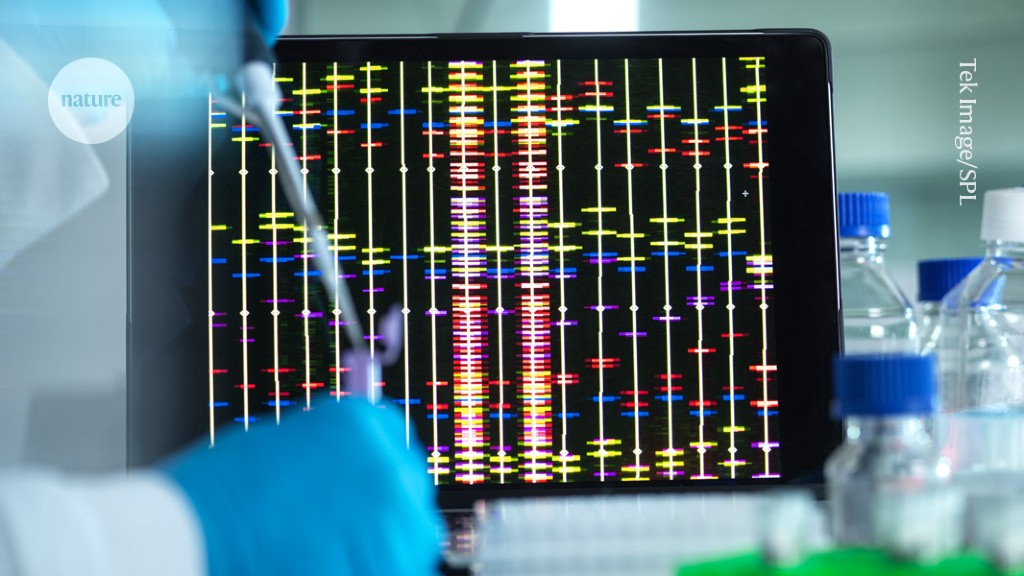
Geneticists express unease over a figure in a high-profile Nature paper from the All of Us program, fearing it could reinforce racist beliefs. The figure, depicting genetic relationships and self-described race and ethnicity, has reignited debate about how to discuss and depict race and ethnicity in genetics research. Concerns have been raised about the potential for misinterpretation and the responsibility of geneticists to ensure their research is not used to justify violence or spread pseudoscientific beliefs. While some call for retraction, others emphasize the need for responsible communication of data and adherence to best practices for using population descriptors in genetics research.

AI Developers Utilize ChatGPT to Assist Scientists in Managing Paper Overload
science-and-technology2 years ago

AI Developers Utilize ChatGPT to Assist Scientists in Managing Paper Overload

Researchers have used the AI model behind ChatGPT to generate a fake clinical-trial data set that supports an unverified scientific claim. The AI-generated data falsely indicated that one surgical procedure was better than another. Concerns are raised about the ability of AI to fabricate convincing data, which adds to existing worries about research integrity. The fake data set was initially deemed authentic but failed authenticity checks upon closer scrutiny. Experts emphasize the need for updated quality checks and AI-based solutions to detect and prevent the use of AI-generated synthetic data in scientific research.