
Multicellularity Expands Microbial Chemical Repertoires
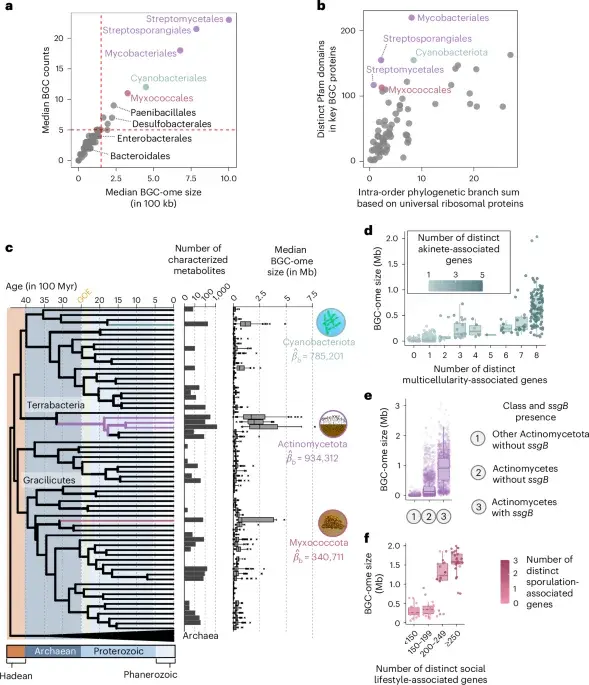
A new study shows that the evolution of multicellularity in microbes is closely linked to large expansions in specialized metabolite production. Unicellular lineages generally harbor few biosynthetic gene clusters, whereas multicellular groups in bacteria (Cyanobacteriota, Myxococcota, Actinomycetota) and fungi (Pezizomycotina, Agaricomycetes) exhibit ancestral increases in BGC content alongside multicellular development and self-recognition traits. These lineages also harbor enriched carbohydrate-active enzymes, suggesting energy from complex catabolic processes fuels metabolite production, aligning with a public-goods framework and offering a path for discovering novel antimicrobial compounds while illuminating major evolutionary transitions.
Want the full story? Read the original reporting
Read on Nature