Tag

Science

All articles tagged with #science

Artemis II Splashdown Becomes PB&J Moment as Smucker's Offers Lifetime Uncrustables
science1 hour ago

Artemis II Splashdown Becomes PB&J Moment as Smucker's Offers Lifetime Uncrustables

NASA’s Artemis II crew—Reid Wiseman, Victor Glover, Christina Koch and Jeremy Hansen—will return to Earth to an “abundant” supply of Uncrustables on the recovery ship after Smucker’s offered a lifetime supply; the crustless PB&J is a standout in a bread-free space menu, a mission that traveled about 252,756 miles and set distance records, with splashdown expected tonight.

Artemis II wraps up historic crewed lunar loop with a safe splashdown
science4 hours ago

Artemis II wraps up historic crewed lunar loop with a safe splashdown

NASA's Artemis II crew—Reid Wiseman, Victor Glover, Christina Koch and Jeremy Hansen—completed a nine‑day mission around the Moon aboard the Orion capsule Integrity, then splashed down safely in the Pacific after a high‑speed re‑entry and a six‑minute comms blackout. The astronauts were taken for medical checks aboard the USS John P. Murtha and will head to Houston; President Donald Trump welcomed them home. NASA says the mission validates its updated heat‑shield re‑entry plan and sets the stage for Artemis III (Earth‑orbital rendezvous tests in mid‑2027) and Artemis IV (Moon landing planned for 2028), though targets may shift and the hardest part lies ahead.

Five psychedelics converge on a common brain pattern, despite different chemistries
science13 hours ago

Five psychedelics converge on a common brain pattern, despite different chemistries

A multi-dataset analysis of over 500 brain scans from 267 participants shows psilocybin, LSD, mescaline, DMT, and ayahuasca produce a shared brain-state: weakened within-network connections and increased cross-network communication. This common neural signature could help standardize psychedelic research and guide future mental-health therapies, though the study used healthy adults and variations across datasets mean more work is needed.

Single-Dose Frog-Derived Bacterium Trims Tumors Completely in Mice
science16 hours ago

Single-Dose Frog-Derived Bacterium Trims Tumors Completely in Mice

A bacterium isolated from frog gut, Ewingella americana, was given intravenously to mice with colorectal cancer and achieved a 100% complete tumor remission by both directly killing cancer cells and activating an anti-tumor immune response, outperforming some conventional therapies in this model; the bacterium selectively accumulates in tumors, clears rapidly from the bloodstream, and shows no lasting toxicity to healthy organs, suggesting a novel biodiversity-derived approach with potential for other cancers.

Artemis II seals a landmark lunar milestone with a Pacific splashdown
science17 hours ago

Artemis II seals a landmark lunar milestone with a Pacific splashdown

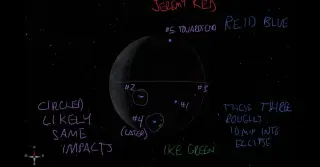
Artemis II’s four-astronaut crew completed humanity’s first crewed lunar flyby in more than 50 years, reaching a record distance of about 252,756 miles and capturing the far side of the Moon plus a total solar eclipse. The Orion capsule, named Integrity, reentered the atmosphere at Mach 33 and made a controlled Pacific splashdown, marking a historic homecoming that sets the stage for future Artemis missions and a sustainable Moon program.

Artemis 2's camera kit: Nikon D5 to Z9, GoPro, and iPhone gear you can buy today
science20 hours ago

Artemis 2's camera kit: Nikon D5 to Z9, GoPro, and iPhone gear you can buy today

NASA’s Artemis 2 mission uses a surprisingly practical mix of cameras—15 mounted on the Orion spacecraft and 17 used by the crew—headlined by Nikon’s D5 DSLR and Z9 mirrorless, plus GoPro action cams and an iPhone 17 Pro Max. The gear list includes the D5 with an 80-400mm lens, a selection of Nikon primes and zooms (35mm f/2D, Z14-24mm f/2.8, 14-24mm f/2.8 ED, 24-70mm f/2.8), the FTZ II adapter, the Z9’s newer optics, along with consumer picks (GoPro Hero 13 and iPhone 17 Pro Max). Space.com notes prices and affiliate links for shoppers to buy similar gear, underscoring NASA’s preference for reliable legacy bodies combined with modern mirrorless tech.

Ancient plate stresses, not a plume, power Yellowstone
science20 hours ago

Ancient plate stresses, not a plume, power Yellowstone

A new Science paper argues Yellowstone’s volcanism isn’t driven by a fixed mantle plume but by stresses from the vanished Farallon plate under North America. The geophysical model describes a translithospheric magma plumbing system with two branches feeding the Yellowstone caldera and the Snake River Plain; the crust’s geometry and mantle flow create conduits for molten material, explaining two different styles of volcanism at a single hotspot. While the approach links Yellowstone to historical plate movements, it remains a present‑day snapshot and leaves questions about history and why Yellowstone is unique still open.

Common neural fingerprint linked to five psychedelics, study suggests
science22 hours ago

Common neural fingerprint linked to five psychedelics, study suggests

A multinational reanalysis of 11 datasets (267 participants, 519 brain scans) across five psychedelics—psilocybin, LSD, mescaline, DMT and ayahuasca—identified a shared neural fingerprint: increased cross-network communication and selective reductions within certain networks across cortical and subcortical regions, suggesting a flattening of the brain's hierarchy. The pattern was most similar for psilocybin and LSD. While promising for understanding psychedelics and potential therapies, the study emphasizes the need for standardized, larger trials and notes that existing datasets used varied methods and doses.

Artemis II Braces for Reentry as Heat Shield Flaws Loom
science22 hours ago

Artemis II Braces for Reentry as Heat Shield Flaws Loom

Ahead of Artemis II’s planned California splashdown, NASA acknowledges known flaws in the capsule’s heat shield—a design linked to Artemis I’s crack, and lacking a backup shield. Officials say a modified reentry path and crew safety measures will mitigate risk during the 5,000-degree-F heat, which makes the final ~13 minutes of flight the mission’s most perilous phase. Experts including Charlie Camarda warn of possible catastrophe, while NASA asserts the shield’s overall thermal performance has met or exceeded expectations; the four astronauts have been sending personal messages home as they approach splashdown.

Artemis II’s Mission Control: A Modern Nerve Center Built on Apollo’s Legacy
science22 hours ago

Artemis II’s Mission Control: A Modern Nerve Center Built on Apollo’s Legacy

An inside look at NASA’s Artemis II Mission Control in Houston shows a modern nerve center where flight directors guide the mission, a capsule communicator talks directly with the crew, and a new Science desk joins the room’s familiar subsystems and screens. The setup tracks milestones with a countdown, preserves decades of mission-history posters and rituals, and, while the room has evolved from Apollo-era green mainframes to wood desks and digital workflows, the core systems and spirit of exploration remain the same—as Judd Frieling notes, NASA is building on the giants of Apollo, Shuttle, and ISS as Artemis moves forward.

Mexico's Vampire Bats May Drive Cross-Species CWD Spread, Study Finds
science23 hours ago

Mexico's Vampire Bats May Drive Cross-Species CWD Spread, Study Finds

Researchers warn that common vampire bats in northern Mexico may already feed on CWD-infected cervids, potentially transmitting prions and enabling cross‑species spread as bat ranges expand. The study, which highlights a link between CWD-positive deer movements into Mexico and bat feeding opportunities, calls for ecological studies, prion transmission experiments, and expanded surveillance in overlap zones to proactively assess and mitigate risks to wildlife, livestock, and public health. Findings are preliminary and experts urge caution until more evidence is gathered.

Oldest 'octopus' fossil reclassified as nautiloid
science23 hours ago

Oldest 'octopus' fossil reclassified as nautiloid

A fossil long hailed as the oldest octopus, Pohlsepia mazonensis from Mazon Creek (~311–306 million years ago), has been re-examined with advanced imaging. Using synchrotron X-ray, micro-CT, SEM, and multispectral imaging, researchers found no octopus features (no eight-arm anatomy, no internal shell, no ink sac, no hooks) and no ocular pigments. They identified a preserved radula and dental pattern that match nautiloids, revealing it died, decomposed, and was flattened into mud, preserving soft tissue as two-dimensional stains. This makes Pohlsepia the oldest confirmed nautiloid soft-tissue fossil in the Paleozoic, and the study suggests other Mazon Creek fossils could yield similar revelations.