
RSV F mutation map links antibody escape to subtype differences and real-time surveillance
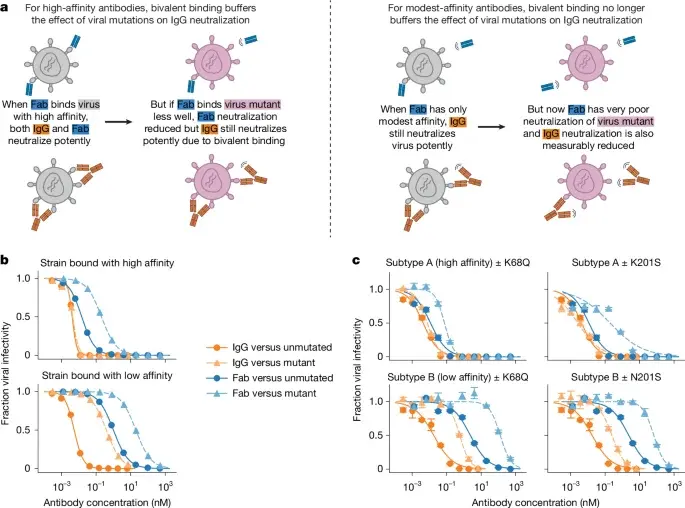
Researchers combine a biophysical model of IgG/Bivalent binding with deep-mutational scanning of RSV F to quantify how virtually every single amino-acid mutation affects viral entry and neutralization by nirsevimab, clesrovimab, and other antibodies. They show that bivalent IgG buffering reduces the impact of mutations when Fab affinity is high, explaining why nirsevimab escape is more common in RSV-B than RSV-A, and validate many mutations across subtypes with pseudoviruses. The team then builds a real-time surveillance framework (escape scores integrated into Nextstrain/Pathoplexus) to monitor natural RSV sequences for resistance, finding resistant strains to be rare but present. They also profile historical/candidate antibodies (e.g., suptavumab, RSM01, 1A2, 1B6, palivizumab) and discuss implications for designing antibody therapies resilient to viral escape and for ongoing public-health surveillance.
- Mutational constraints on RSV F and its neutralization by antibodies Nature
- Immunization to prevent RSV in infants reduced ICU admissions by 97 per cent University of Calgary
- Study supports effectiveness of RSV preventive antibodies for infants, offers new way to monitor viral resistance Medical Xpress
- RSV: Transmission, High-Risk Groups, and the Impact of National Immunisation Programmes distilledpost.com
- RSV immunization reduces infant ICU admissions by 97%, study says ca.news.yahoo.com
Want the full story? Read the original reporting
Read on Nature