Tag

Virology

All articles tagged with #virology

JC virus can trigger deadly brain disease in chronic kidney disease patients, case study reveals
health21 days ago

JC virus can trigger deadly brain disease in chronic kidney disease patients, case study reveals

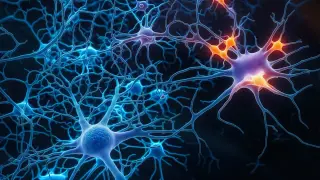
A case study reports progressive multifocal leukoencephalopathy (PML) caused by JC virus activation in a 72-year-old patient with stage-5 CKD, suggesting CKD can create noncanonical immunosuppression that predisposes to JC virus–related brain damage. The JC virus is common and usually latent but can reactivate to destroy brain myelin, diagnosed by MRI lesions and JC virus DNA in CSF; the patient died two days after diagnosis, highlighting the seriousness of PML in CKD as CKD prevalence rises.

Natural origins favored: study finds pandemic viruses can jump to humans without pre-adaptation
science1 month ago

Natural origins favored: study finds pandemic viruses can jump to humans without pre-adaptation

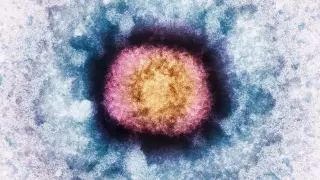
A UC San Diego‑led genomic analysis of Ebola, Marburg, mpox, influenza A, and SARS‑CoV‑2 finds no evidence that most pandemic viruses required adaptation in an animal reservoir or in a lab before infecting humans; selection changes usually appear after human transmission. The study does note a possible lab‑linked signal for the 1977 H1N1 influenza and cites palm civet–associated SARS‑CoV as a historical example, but argues SARS‑CoV‑2 likely arose through natural zoonotic transmission. The authors stress that distinguishing natural spillovers from lab mishandling relies on genomic signals and call for strengthened surveillance and spillover prevention to prepare for future pandemics, challenging theories that COVID‑19 was lab‑engineered.

Natural Spillovers Over Pre-Adaptation, UCSD Study Finds
science1 month ago

Natural Spillovers Over Pre-Adaptation, UCSD Study Finds

UC San Diego researchers analyzed genomes from influenza A, Ebola, Marburg, mpox, SARS-CoV and SARS-CoV-2 and found that most zoonotic viruses do not show adaptive evolution before jumping to humans; SARS-CoV-2 shows no lab-adaptation signal, consistent with natural spillover, while the 1977 H1N1 pandemic shows lab-adaptation signatures—together providing a framework to distinguish natural outbreaks from laboratory manipulation and guiding future outbreak surveillance.

Scientist Develops Beer-Based Vaccine for Poliovirus
science3 months ago

Scientist Develops Beer-Based Vaccine for Poliovirus

A virologist and home brewer, Chris Buck, claims to have created the world's first beer-based vaccine using genetically modified yeast, which he believes can immunize against certain viruses and potentially be used for other diseases like COVID-19 and flu. Despite concerns from the scientific community about safety and public trust, Buck has already brewed and tested his vaccine beer on himself, showing promising antibody responses, and aims to develop it further for broader use.

Caltech and Salk Institute Mourn the Loss of Nobel Laureate David Baltimore
obituary7 months ago

Caltech and Salk Institute Mourn the Loss of Nobel Laureate David Baltimore

David Baltimore, a Nobel Prize-winning virologist, former Caltech president, and influential scientist known for discovering reverse transcriptase, passed away at age 87. His groundbreaking work in molecular biology, immunology, and science policy significantly advanced medicine and biotechnology. Baltimore's leadership at Caltech and contributions to global health and science policy left a lasting legacy. He is survived by his wife Alice Huang and daughter TK Baltimore.

Nobel Laureate and Former Caltech President David Baltimore Passes Away at 87
obituaries7 months ago

Nobel Laureate and Former Caltech President David Baltimore Passes Away at 87

David Baltimore, a Nobel laureate and former Caltech president renowned for his groundbreaking work in virology and genetic engineering, passed away at 87. His career was marked by significant scientific discoveries, leadership in bioethics, and influential roles in academia and industry, leaving a lasting legacy in biology and medicine.

Rising Concerns Over Mild U.S. Bird Flu Cases and Pandemic Risks
health1 year ago

Rising Concerns Over Mild U.S. Bird Flu Cases and Pandemic Risks

Despite a significant increase in human H5N1 bird flu cases in the U.S., all have been mild, puzzling scientists given the virus's historically high fatality rate. Researchers are exploring various hypotheses, including the mode of transmission, the specific virus strain, and potential pre-existing immunity from exposure to similar viruses. The mildness of U.S. cases contrasts with more severe cases in Asia, raising questions about the virus's true pathogenicity and the accuracy of previous fatality estimates.

Scientist Uses Lab-Grown Virus to Treat Her Own Cancer, Sparking Ethical Debate
health1 year ago

Scientist Uses Lab-Grown Virus to Treat Her Own Cancer, Sparking Ethical Debate

Croatian virologist Beata Halassy successfully treated her own breast cancer using lab-grown viruses, avoiding chemotherapy. Her self-administered oncolytic virotherapy, involving measles and vesicular stomatitis viruses, led to a significant tumor reduction and a four-year cancer-free period. While her case highlights the potential of oncolytic virotherapy, it raises ethical concerns about self-experimentation and the risk of encouraging unproven treatments. Despite initial journal rejections due to ethical issues, Halassy published her findings to contribute to scientific knowledge.

Virologist Uses Lab-Grown Viruses to Treat Her Own Cancer
health1 year ago

Virologist Uses Lab-Grown Viruses to Treat Her Own Cancer

Dr. Beata Halassy, an infectious disease researcher, successfully treated her stage 3 breast cancer using a self-developed experimental vaccine combining measles and flu-like viruses. This oncolytic virotherapy approach shrank the tumor, allowing for easier surgical removal, and has kept her in remission for four years. While her results, published in the journal Vaccines, show promise, they raise ethical concerns about self-experimentation and potential risks for others attempting similar treatments without medical oversight.

"The Intriguing Social Lives of Viruses Unveiled"
science2 years ago

"The Intriguing Social Lives of Viruses Unveiled"

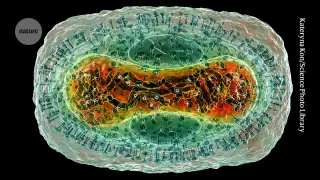
Recent research has revealed that viruses have a complex social life, engaging in behaviors such as cheating and cooperation within cells and hosts. Sociovirologists believe that viruses make sense only as members of a community, and studies have shown that incomplete viruses, previously thought to be lab artifacts, are actually abundant inside our bodies. These incomplete viruses, also known as cheaters, exploit the cooperation of other viruses to replicate, but some researchers believe they may also play a more benign role in viral societies. Understanding the social behavior of viruses could potentially be exploited to develop new antiviral strategies, although caution is advised due to the living and evolving nature of viruses.

Study Demonstrates Antibiotics' Targeting of COVID-19 in Gut Bacteria
medical-science-news2 years ago

Study Demonstrates Antibiotics' Targeting of COVID-19 in Gut Bacteria

New research suggests that antibiotics can effectively target gut bacteria that harbor the virus causing COVID-19, potentially reducing COVID-19-related symptoms and aiding in faster recovery. A study involving 211 participants found that early antibiotic treatment, specifically a combination of amoxicillin and rifaximin within the first 3 days of infection, led to quicker recovery and a lower incidence of long COVID. These findings may influence future vaccine strategies and the treatment of acute COVID-19 infections.