
25 Years Later: The Photographers Who Documented 9/11
On the 25th anniversary of the September 11 attacks, multiple outlets highlight the critical role of photographers in documenting the event. Colorado-based FEMA photographer Michael Rieger provided the first visual access to Ground Zero, while Bill Biggart, a photojournalist who died at the site, left behind a final set of images that have been added to the Imperial War Museum's permanent collection.
Key points
- Michael Rieger, a FEMA disaster-trained photographer from Colorado, was part of the team that provided the first images of Ground Zero to the public, as the site was off-limits to general press due to safety and chaos.
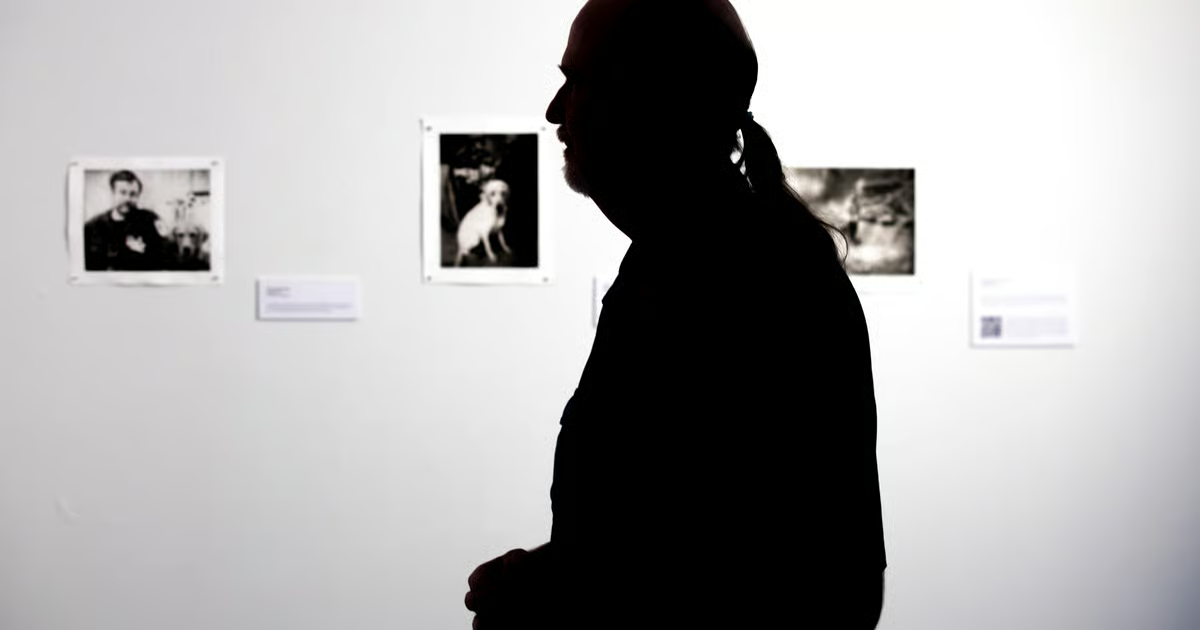
- Rieger's work is currently on display in the 'Remember the Love: Resilience After 9/11' exhibition at the CU Denver Experience Gallery, which runs through September 27.
- Bill Biggart, a photojournalist who died on 9/11, was the only professional photographer to lose his life at the World Trade Center site; his final images were recovered from his camera and added to the Imperial War Museum in London.
- The Washington Post highlighted the enduring shock of 9/11 photographs, noting that the death toll grew to nearly 3,000, and the subsequent wars killed millions.
- Rieger's editing computer, used to process his 9/11 images, was acquired by the Smithsonian Institution.
Background
This coverage coincides with the 25th anniversary of the September 11 attacks, marked by remembrance ceremonies at Ground Zero, the Pentagon, and Shanksville. Recent archive articles have highlighted the ongoing health impacts on first responders and the transformation of Lower Manhattan's skyline since 2001.
How outlets are covering it
Colorado Public Radio focuses on the behind-the-scenes access provided by FEMA photographer Michael Rieger, emphasizing his role in giving the world its first glimpse of the site. In contrast, Freedom Forum and The Observer focus on the tragic death of Bill Biggart, highlighting the personal cost of photojournalism and the recovery of his final images. The Washington Post provides a broader perspective on the enduring impact of 9/11 photography, noting the chaos and the scale of the loss.
Why it matters
The 25th anniversary of 9/11 serves as a reminder of the critical role of photojournalists in documenting historical events, both the sacrifices they make and the unique access they provide to the public.
What to watch
The 'Remember the Love: Resilience After 9/11' exhibition will continue at the CU Denver Experience Gallery through September 27, and Bill Biggart's photographs will remain in the permanent collection of the Imperial War Museum in London.
- This Colorado photographer gave the world its first glimpse of ground zero Colorado Public Radio
- Remembering Bill Biggart, the Photojournalist Who Ran Toward Danger on 9/11 Freedom Forum
- Four Post photographers rushed to cover 9/11. Here’s what they saw. washingtonpost.com
- A photographer’s final moments on 9/11 – and the last shot he took The Observer
- Axios interview: The 9/11 photographers who ran toward the danger Axios
Want the full story? Read the original reporting
Read on Colorado Public Radio