
California Pivots from Flood Defense to Water Harvesting Amid Record El Niño Threat
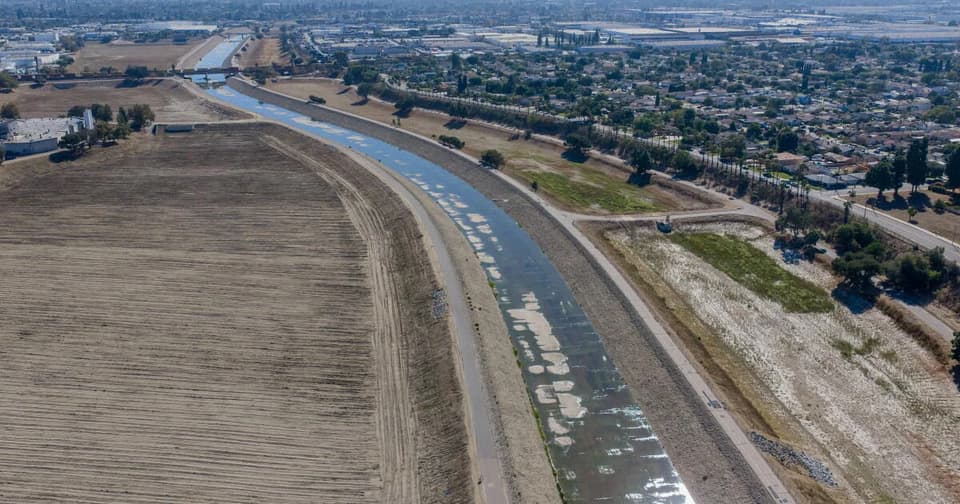
California is preparing for a potentially historic 'super El Niño' this winter, which threatens severe coastal flooding and erosion but also offers a critical opportunity to replenish depleted groundwater. Governor Gavin Newsom has declared a state of emergency to mobilize resources for flood control and infrastructure protection. Simultaneously, state agencies and local communities are leveraging the expected heavy rainfall to capture stormwater through expanded spreading grounds, restored floodplains, and farmland irrigation. While the 2025-26 season already captured significant water, experts warn that more aggressive infrastructure and flexible dam management are needed to fully capitalize on the wet conditions and mitigate long-term drought impacts.
Key points
- Gov. Gavin Newsom declared a statewide emergency on Sept. 21, 2026, to mobilize agencies for flood response, resource staging, and groundwater recharge efforts.
- NOAA forecasts a 75% chance this El Niño will be the strongest since records began in 1950, with potential impacts including 6-12 inches of coastal water level rise and 30-50% increased wave energy.
- Los Angeles County’s 27 spreading grounds captured water equivalent to annual usage for 3.3 million residents in the 2025-26 season, a strategy expected to expand with heavier storms.
- River Partners has repurposed 13,000 acres of Central Valley farmland for floodplain restoration, with plans for an additional 6,000 acres funded by the Proposition 4 climate bond.
- UC San Diego research suggests flexible dam management at 20 reservoirs could provide extra water for over 1 million households annually by optimizing storage during wet periods.
- The 2023 wet season added 4.1 million acre-feet to aquifers, exceeding Southern California’s annual usage but insufficient to reverse decades of groundwater decline.
Background
California has faced prolonged drought and groundwater depletion, prompting a shift toward aggressive water harvesting during wet periods. The 2023 flood season demonstrated the potential for large-scale recharge, leading to policy changes like suspended permit requirements for floodwater diversion. This current El Niño event is part of a broader trend of intensifying climate extremes, with El Niño events growing more potent due to global warming.
How outlets are covering it
The Los Angeles Times emphasizes the dual nature of the El Niño as both a threat and an opportunity, highlighting specific infrastructure projects like the Dos Rios State Park and Don Cameron’s farmland recharge efforts. CNN focuses on the immediate risks, citing NOAA’s 75% probability of a record-strength event and the potential for $60 billion in property damage and 170,000 additional people affected by coastal flooding. The San Diego County News Center highlights local preparedness measures, including the launch of an information hub for residents. While all sources agree on the severity of the incoming storms, the LAT and CNN differ in emphasis: the LAT prioritizes long-term water security and infrastructure investment, whereas CNN stresses immediate emergency response and coastal erosion risks.
Why it matters
This event tests California’s ability to balance disaster response with resource management. Successfully capturing water from the El Niño could mitigate future droughts, but failure to manage the floods could result in significant economic and human costs. The state’s response sets a precedent for how climate-vulnerable regions can adapt to increasingly extreme weather patterns.
What to watch
State agencies will continue to coordinate with local governments to stage emergency supplies and implement flexible dam operations. Funding from the Proposition 4 climate bond is expected to accelerate shovel-ready projects for floodplain restoration. Residents are advised to prepare for potential coastal flooding and heavy rainfall, with local hubs providing updates on safety measures.
- Will El Niño have an upside? California tries to capitalize on big storms Los Angeles Times
- California Needs Water. El Niño Might Bring Too Much. The New York Times
- California’s El Niño Emergency Begins Now as Beaches Erode Bloomberg.com
- Newsom declares state of emergency for California ahead of super El Niño storm season CNN
- County Launches El Niño 2026 Information Hub to Help Residents Prepare Early San Diego County News Center
Want the full story? Read the original reporting
Read on Los Angeles Times