
Texas execution of Reinaldo Dennes lasts 63 minutes amid vein access struggles and pain complaints
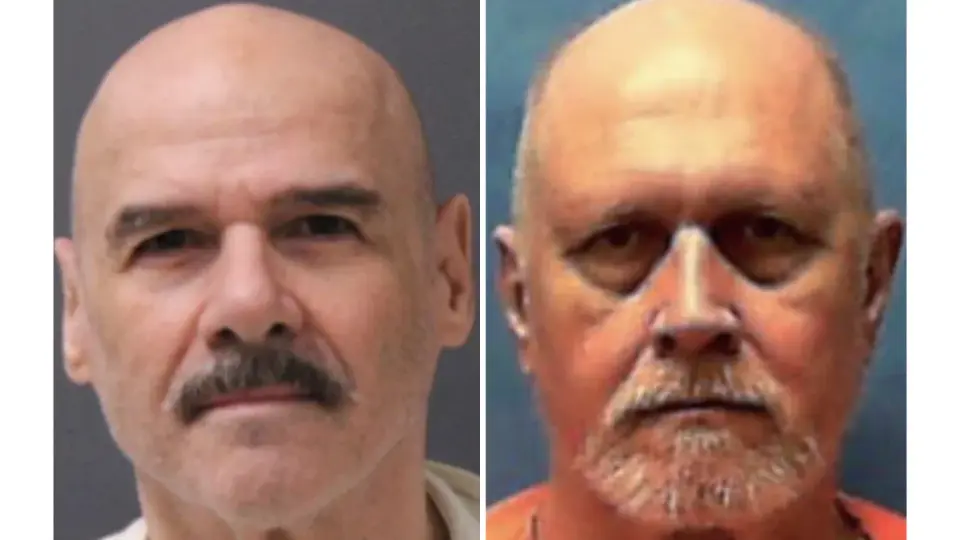
Texas executed Reinaldo Dennes on November 19, 2026, in a procedure lasting 63 minutes due to difficulties inserting intravenous needles. Dennes, convicted of the 1996 murder of diamond dealer Janos Szucs, reported severe pain during the injection, while prison officials maintained that all procedures were followed correctly. The execution occurred the same day Florida carried out its 20th execution of the year, setting a new state record under outgoing Governor Ron DeSantis. Both inmates were pronounced dead shortly after 7 p.m. and 6 p.m. respectively, continuing a national trend of increased capital punishment despite recent scrutiny following a botched execution in Tennessee.
Key points
- Texas executed Reinaldo Dennes, 70, on November 19, 2026, for the 1996 murder of diamond dealer Janos Szucs and security guard David Copeland during a robbery that stole $3.6 million in diamonds and cash.
- The lethal injection procedure took 63 minutes, with prison staff struggling to find suitable veins, ultimately using sites in Dennes' left foot and left neck.
- Dennes reported severe pain, shouting 'The pain!' and 'My right leg is killing me,' while prison officials suggested he may have exaggerated or faked the pain, noting complaints from areas without IVs.
- Florida executed Thomas Mitchell Overton, 71, earlier the same day, marking its 20th execution of the year, a new state record under Governor Ron DeSantis, who has prioritized capital punishment in his final term.
- The executions occurred amid renewed scrutiny of lethal injection methods following the failed execution of Christa Pike in Tennessee in September 2026, who survived two doses of pentobarbital.
Background
The execution of Reinaldo Dennes follows a series of high-profile capital punishment cases in the U.S. in 2026. In September, Tennessee's failed execution of Christa Pike, who survived two doses of pentobarbital, sparked national debate over the constitutionality and safety of lethal injection. Court documents revealed that execution team members warned of potential vein issues before administering the drugs, and Pike was hospitalized for over a week. This incident intensified scrutiny of execution methods, with legal experts arguing that current procedures are flawed. Dennes' execution, which used the same drug as Pike's, occurred amid this heightened attention, with witnesses and officials debating whether the prolonged procedure and reported pain indicated a botched execution or an inmate's exaggeration. Florida's record-breaking 20th execution of the year, under Governor Ron DeSantis, also highlighted the state's aggressive use of the death penalty, with opponents criticizing the governor's focus on achieving a historical record over concerns about fairness and efficacy.
How outlets are covering it
NPR and ABC7 Los Angeles reported that the execution took over an hour due to difficulties finding veins, with Dennes reporting pain and asking God to take him away. NPR noted that prison officials suggested Dennes may have exaggerated or faked the pain, while ABC7's reporter, Michael Graczyk, described the execution as 'like no other' he had witnessed, noting Dennes' dramatic reactions. USA Today cited spiritual adviser Rev. Jeff Hood, who called it 'by far the worst one' and said Dennes screamed that the drugs were 'not working like it's supposed to.' ABC13 Houston focused on the crime details, noting that the diamonds were never recovered and that Dennes' brother had pleaded guilty in 2019. All sources agreed that the execution was the ninth in Texas this year and the 39th in the U.S., and that Florida's execution of Overton set a new state record. Perspectives diverged on whether the pain complaints indicated a botched execution or an inmate's exaggeration, with prison officials maintaining that procedures were followed correctly, while witnesses and advocates raised concerns about the method's reliability.
Why it matters
The execution of Reinaldo Dennes and the record-breaking execution in Florida highlight ongoing debates about the efficacy, humanity, and constitutionality of lethal injection in the U.S. The prolonged procedure and reported pain in Texas, combined with Florida's aggressive use of the death penalty, have intensified scrutiny of capital punishment methods, particularly in the wake of the failed execution of Christa Pike in Tennessee. These cases raise questions about the reliability of lethal injection, the potential for suffering, and the political motivations behind high execution rates. As the U.S. continues to carry out executions at a higher rate than in previous years, these incidents may influence legal challenges and public opinion on the death penalty, potentially leading to further reforms or restrictions on its use.
What to watch
Florida plans two more executions in December, including Ricardo Gonzalez and Willie Seth Crain Jr., continuing its record-breaking pace under Governor Ron DeSantis, who leaves office in January. Texas may face further legal challenges or public scrutiny over its execution methods, particularly if concerns about the reliability of lethal injection persist. The case of Christa Pike in Tennessee remains unresolved, with the possibility of a second execution attempt or a commutation of her sentence to life in prison. National debates on the death penalty may intensify, with advocates and opponents using these high-profile cases to argue for or against capital punishment, potentially influencing legislative or judicial actions in other states.
- Texas execution took over an hour as staff struggled to find vein; Reinaldo Dennes moaned about pain NPR
- AP reporter Michael Graczyk says Texas execution of Reinaldo Dennes with pentobarbital was like no other he's witnessed before ABC7 Los Angeles
- Texas killer screams during execution; Florida kills record 20th inmate USA Today
- Texas executes Reinaldo Dennes for Houston jeweler's 1996 murder ABC13 Houston
- Witness says Texas execution of Houston man was "botched" KEYE
Want the full story? Read the original reporting
Read on NPR