The Trump administration has approved the execution of former Army Major Nidal Hasan by firing squad, a method not used by the U.S. military since World War II. The execution is scheduled for December 3 at Fort Hood, Texas, marking the first military execution in over 60 years.
President Donald Trump has approved the execution of former Army Major Nidal Hasan via firing squad. The decision, recommended by Defense Secretary Pete Hegseth, makes Hasan the first US soldier to face this method since World War II. The execution is scheduled for December 3 at Fort Hood, Texas.
Christa Pike, 50, remains in critical condition on a ventilator after surviving two doses of pentobarbital during a failed execution attempt in Tennessee on September 30. Her legal team alleges improperly placed intravenous lines caused severe arm injuries, while state officials maintain they followed protocol. Governor Bill Lee has halted executions for the remainder of the year and ordered an independent review, with prison commissioner Frank Strada set to resign. The incident has intensified national debate over the safety and morality of lethal injection, particularly given Pike’s history of mental illness and childhood trauma.
Tennessee Governor Bill Lee suspended all executions following the failed lethal injection of Christa Pike, who survived two doses of pentobarbital and remains unconscious on a ventilator. The incident, the second botched execution in the state this year, has intensified national debates over the efficacy and morality of capital punishment. While executions have declined nationwide, a few states continue to carry them out, highlighting a fragmented approach to the death penalty across the United States.
Tennessee Governor Bill Lee suspended all executions until the end of 2026 and ordered an independent review after Christa Pike survived two doses of pentobarbital. Pike, 50, remains in critical condition at a hospital. The failed attempt, the second botched execution in the state this year, has prompted calls for a moratorium and scrutiny of the state's secrecy regarding lethal injection protocols.
Christa Pike, the only woman on Tennessee's death row, survived an attempted execution on September 30, 2026, after two doses of lethal injection failed to kill her. She was transported to a hospital for life-saving care. Governor Bill Lee ordered a third-party review and canceled the state's final scheduled execution for the year. This marks the second failed execution attempt in Tennessee this year.
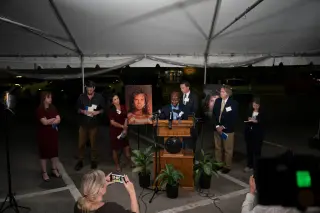
Christa Pike, 50, is scheduled for lethal injection on September 30, 2026, becoming the first woman executed in Tennessee in over two centuries. Governor Bill Lee denied clemency after reviewing arguments that her severe childhood trauma and mental illness constitute cruel and unusual punishment. While Pike’s legal team and human rights advocates emphasize her history of sexual abuse and untreated bipolar disorder, the state maintains her 1995 murder of Colleen Slemmer was a deliberate, horrific act warranting the death penalty. The execution proceeds unless the U.S. Supreme Court grants a stay, with Pike expressing peace but anxiety over the physical process.
Ron McAndrew, 88, former warden of Florida State Prison, is actively opposing capital punishment after overseeing eight executions in the 1990s. He regrets his role, particularly the botched 1997 electrocution of Pedro Medina, and now assists death row inmates with appeals. McAndrew criticizes Florida’s aggressive execution pace under Gov. Ron DeSantis, which has outpaced the rest of the nation. Despite writing to DeSantis, he has received no response, as the state prepares for its 16th execution of 2026.
Texas executed LeJames Norman, the state’s fifth death-penalty execution this year, for the 2005 killings of three people; Georgia’s scheduled execution of Stacey Humphreys was halted by a judge tied to a new abuse-resentencing law, while Florida remains the nation’s busiest death chamber with more than half of this year’s 25 executions.
Tim Blake Nelson’s The Life and Deaths of Wilson Shedd uses a fractured timeline to probe guilt, humanity, and the death penalty, following a Oklahoma inmate from childhood poverty toward a lethal sentence while Amanda Seyfried’s prison-writing teacher grows attached to him; the interwoven stories of innocent families and a looming escape complicate the question of justice, culminating in a final act that argues capital punishment is tangled with circumstance and mercy. TIFF 2026 premiere; Grade: B; the film seeks U.S. distribution.
Florida carried out its 14th execution of 2025, executing 74-year-old Harold Gene Lucas for the 1976 murder of 16-year-old Jill Piper and the wounding of two friends; Lucas, who spent about 50 years on death row, waived appeals and died at 6:18 pm from a three-drug lethal injection, as Florida remains the nation's leading executor this year with two more planned later this month.
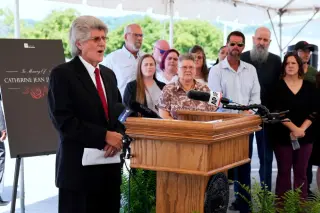
Tyler James Robinson, 23, the man accused of fatally shooting conservative activist Charlie Kirk during a Utah Valley University address, will stand trial on murder charges with prosecutors seeking the death penalty; the case hinges on evidence like surveillance footage and DNA, amid debates over political violence and accountability.
Sunao Takami, 58, who killed five people by setting fire to an Osaka pachinko parlor in 2009, was hanged in Japan—marking the first execution under Prime Minister Sanae Takaichi’s government after a 2011 murder/arson conviction and a 2016 Supreme Court upholding of the death sentence. The case highlights Japan’s continued use of capital punishment amid global criticism and calls for greater transparency, as executions are carried out in secrecy. Japan remains one of the few G7 nations with the death penalty, alongside the United States, a point noted in the coverage.
Japan has executed Sunao Takami, 58, for the 2009 arson attack on a pachinko parlour in Osaka that killed five people, marking the first death sentence carried out in over a year and the first under the Takaichi administration; authorities rejected the defense’s mental illness argument, underscoring Japan’s status as a remaining G7 nation with the death penalty.
An Alabama inmate was executed for the murder of a 5-year-old girl, the last of three U.S. executions carried out in a single day, underscoring the continuing use of the death penalty in the United States.