
NC teen indicted for aiding San Diego mosque shooters
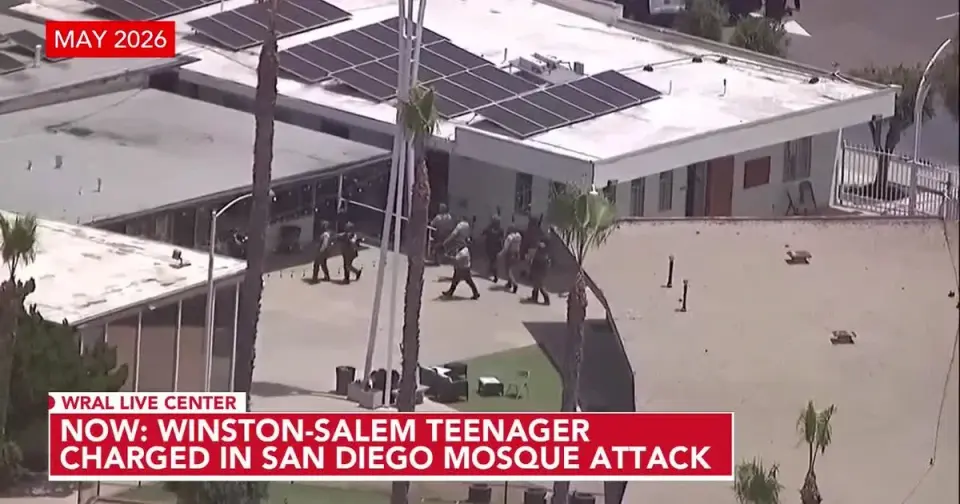
A 17-year-old North Carolina student, Sarah Lindsey Santiago, has been indicted on three counts of first-degree murder and conspiracy for allegedly aiding two teenage gunmen who killed three people at the Islamic Center of San Diego in May 2026. Prosecutors state she planned to livestream the attack, distributed the recording, and released the shooters’ white-supremacist manifesto. The case highlights concerns over online radicalization and the failure to report credible threats.
Key points
- Sarah Lindsey Santiago, 17, was arrested in North Carolina and indicted in Forsyth County on three counts of first-degree murder and one count of conspiracy to commit first-degree murder.
- The shooting occurred on May 18, 2026, at the Islamic Center of San Diego, killing security guard Amin Abdullah, Mansour Kaziha, and Nadir Awad.
- Santiago is accused of providing hate-themed patches to the shooters, coordinating the livestream, and disseminating their manifesto after the attack.
- The two shooters, Cain Clark and Caleb Vazquez, died by suicide after the shooting; investigators believe they planned to target a synagogue and a high school next.
- Santiago will be tried as an adult due to the terrorism-related nature of the charges; her defense attorney maintains her innocence.
Background
This case follows the May 2026 mass shooting at the Islamic Center of San Diego, which killed three men and injured others. The attackers, two teenagers from San Diego and Chula Vista, were found dead shortly after the incident. The current indictment marks the first arrest in the case, connecting the local violence to a broader network of online radicalization. The case also follows a similar pattern to the 2026 Zamboanga high school shooting, where a student livestreamed an attack, raising national concerns about youth access to violent content and the role of social media in radicalization.
How outlets are covering it
WRAL.com and NBC 7 San Diego emphasize the legal charges and the role of Santiago in planning and distributing the livestream. The San Diego Union-Tribune provides deeper context on the shooters’ manifesto, their planned targets (a synagogue and a high school), and the failure of schools and families to report concerning behavior. AP News focuses on the DA’s decision to prosecute under state law rather than federal law, noting that federal charges would have resulted in a shorter sentence. All sources agree on the core facts but differ in emphasis: WRAL and NBC 7 focus on the charges, the Union-Tribune on the broader conspiracy and radicalization, and AP on the legal strategy.
Why it matters
This case underscores the dangers of online radicalization and the legal consequences of aiding and abetting violent acts, even from a distance. It highlights the need for better reporting of credible threats and the role of social media in facilitating hate crimes. The case also raises questions about the adequacy of federal versus state prosecution in terrorism-related cases involving minors.
What to watch
Santiago’s next court appearance is scheduled for September 21. The case will likely focus on the evidence of her involvement in planning and disseminating the attack, as well as the legal arguments around her age and the terrorism-related charges. Investigators may continue to probe the broader network of online radicalization that led to the attack.
- Winston-Salem student accused of helping plan deadly San Diego mosque attack WRAL
- Teen girl aided San Diego mosque shooters from North Carolina, prosecutors say NBC 7 San Diego
- North Carolina teen charged with murder in Islamic Center of San Diego shooting San Diego Union-Tribune
- DA says a teen who recorded San Diego mosque shooting livestream has been charged with murder AP News
- Winston-Salem high school student who published Islamic Center shooters’ livestream charged with murder, conspiracy FOX8 WGHP
Want the full story? Read the original reporting
Read on WRAL