
US Air Force Chief Confirms First Public Acknowledgment of On-Orbit Weapons
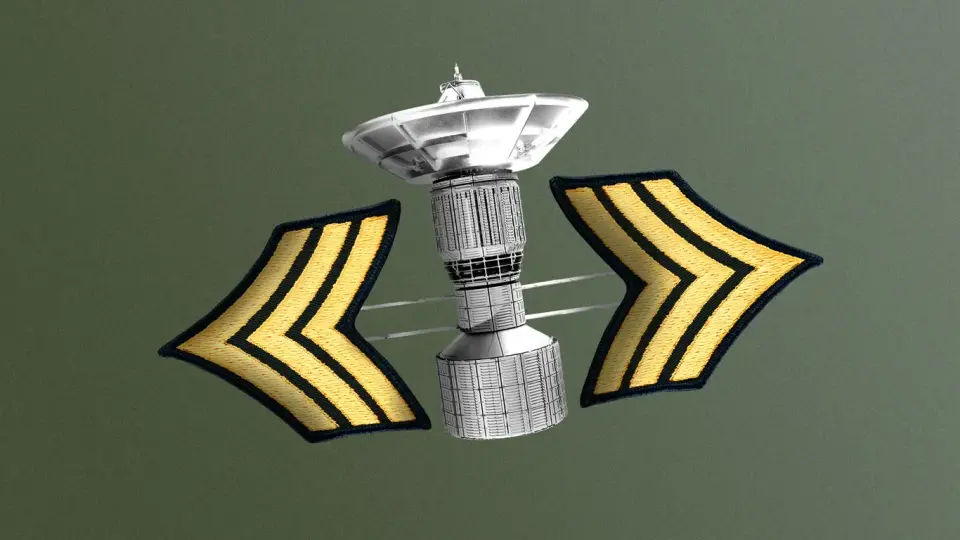
US Air Force Secretary Troy Meink confirmed for the first time that the United States has deployed 'on-orbit space control weapons' to defend against hostile actions. While the exact nature and number of these systems remain classified, the announcement marks a significant shift in US space policy and has triggered immediate diplomatic pushback from China and Russia, raising fears of an accelerated orbital arms race.
Key points
- Air Force Secretary Troy Meink stated at the Air, Space & Cyber Conference in National Harbor, Maryland, that the US possesses on-orbit weapons capable of defending the Joint Force.
- Meink refused to disclose the specific capabilities, quantity, or testing status of the weapons, citing deterrence concerns.
- A US Space Force spokesperson clarified that 'space control' includes both kinetic and non-kinetic means for offensive and defensive purposes.
- China’s foreign ministry accused Washington of preparing for war in space, while Russia’s Kremlin demanded the complete demilitarization of orbit.
- Experts warn that this public confirmation may prompt Beijing and Moscow to deploy comparable systems, potentially triggering a dangerous escalation in orbital debris and conflict.
Background
This development follows earlier reports in September 2026 regarding US space weapon declarations. Historically, space has been used for navigation, surveillance, and communications, with the 1967 Outer Space Treaty banning weapons of mass destruction but not conventional arms. Previous incidents, such as China’s 2007 and Russia’s 2021 anti-satellite tests, highlighted the risks of orbital debris. The current announcement represents a formalization of capabilities that experts had long suspected existed, shifting the US stance from implicit to explicit acknowledgment of militarized space presence.
How outlets are covering it
Axios highlights the significance of this being the first official government acknowledgment of deployed space weapons, emphasizing Meink’s refusal to provide details to maintain deterrence. The Guardian focuses on the potential for an arms race, noting that while experts like Jonathan McDowell believe the US likely already had such capabilities (possibly jammers), the public confirmation changes the strategic landscape. The Guardian also notes that the US is now accepting that adversaries will respond in kind, a shift from previous US positions. CNN’s coverage was largely obscured by technical errors in the provided source, but its headline aligns with the confirmation narrative. All sources agree that the move is provocative and likely to accelerate militarization, though they differ on whether the weapons are new or a rebranding of existing systems.
Why it matters
The explicit confirmation of US space weapons breaks a long-standing ambiguity in space policy, potentially normalizing conflict in orbit. This could undermine international efforts to establish norms for peaceful space use and trigger a reciprocal escalation by China and Russia, increasing the risk of orbital debris and kinetic conflict in a domain critical for global communications and navigation.
What to watch
Analysts expect China and Russia to respond diplomatically and potentially with their own deployments. The US may continue to expand its autonomous space systems, while international bodies may face increased pressure to negotiate new treaties or norms to prevent an orbital arms race. The exact nature of the weapons remains a key variable for future strategic assessments.
- There are American weapons in space Axios
- U.S. acknowledges for the first time that it has deployed weapons in space NPR
- Russia says there is still time to stop an arms race in space after US orbital weapons admission Reuters
- The US military said it has deployed weapons in space. Here’s what that could mean CNN
- US confirms for first time it has deployed weapons in space The Guardian
Want the full story? Read the original reporting
Read on Axios