
Air Force Awards $694M Contract to Begin Production of First Hypersonic Missile
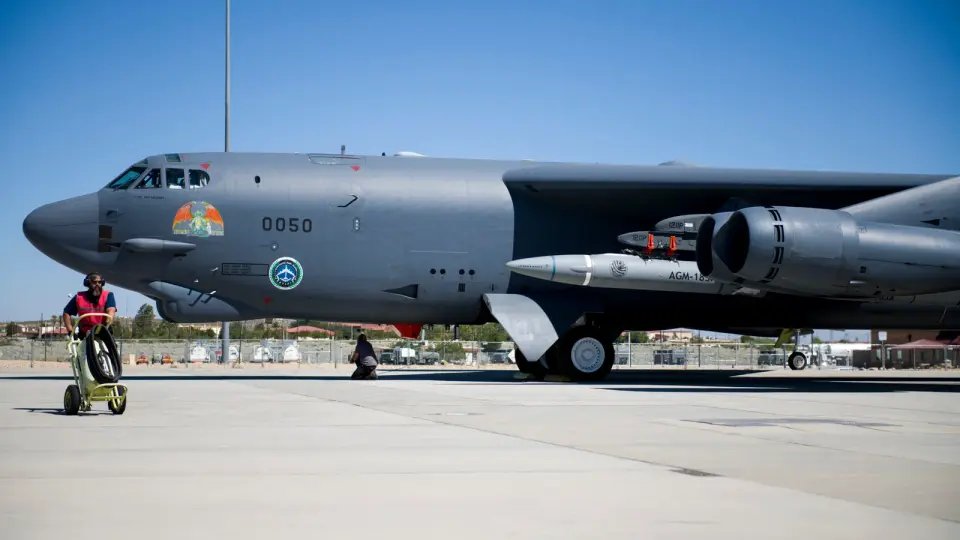
The U.S. Air Force has officially moved its first hypersonic missile, the Air-Launched Rapid Response Weapon (ARRW), from testing to production. On October 26, 2026, the service announced a $694 million contract with Lockheed Martin, signed in September, to manufacture the AGM-183A. This marks a significant milestone for a program that faced years of test failures and funding cuts. The boost-glide weapon, capable of speeds exceeding Mach 5, will be deployed on B-52 and B-1 bombers to strike time-sensitive targets in contested environments. While quantities and delivery dates remain classified, the move signals a renewed commitment to hypersonic capabilities despite previous skepticism from Air Force leadership.
Key points
- The Air Force awarded Lockheed Martin a $694 million contract on September 29, 2026, to produce the AGM-183A Air-Launched Rapid Response Weapon (ARRW), officially announced on October 26.
- ARRW is a boost-glide hypersonic missile that accelerates to Mach 5 or greater using a solid-fuel rocket booster before separating and gliding to its target.
- The weapon is designed for standoff strikes against high-value, time-sensitive targets and will initially be fielded on B-52 Stratofortress and B-1 Lancer bombers.
- Development began in 2018, but the program faced significant setbacks, including three failed launch tests in 2021 and a successful test only in May 2022.
- Funding was cut in 2021 and 2023, with Air Force leadership in 2023 stating the program would end without purchases, focusing instead on smaller cruise missiles.
- The program was revived in 2025 when then-Chief of Staff Gen. David Allvin committed to buying ARRW, leading to the current production contract.
Background
The ARRW program has a turbulent history, marked by technical failures and shifting strategic priorities. Initial development started in 2018, with the first operational flight test planned for 2020. However, the first launch test in April 2021 failed, followed by two more failures. The first successful test occurred in May 2022, but funding issues soon followed. In 2021, Congress stripped funds for 12 ARRW missiles, and the Air Force zeroed out funding for 2023. In March 2023, Air Force acquisition executive Andrew Hunter declared the program would end without purchases, shifting focus to the smaller Hypersonic Attack Cruise Missile. The program's revival in 2025, driven by Gen. David Allvin's commitment, marked a significant policy shift. This development occurs amid a broader hypersonic arms race, with China and Russia fielding operational hypersonic weapons, and North Korea conducting tests in 2026. The Air Force's move to produce ARRW signals a renewed emphasis on advanced strike capabilities to counter anti-access/area-denial systems.
How outlets are covering it
All sources agree on the core facts: the $694 million contract with Lockheed Martin, the transition to production, and the involvement of B-52 and B-1 bombers. However, they differ in emphasis and detail. Air & Space Forces Magazine provides the most comprehensive timeline, detailing the 2018 start, 2021 failures, 2023 funding cuts, and 2025 revival. It also notes the stalled 2027 budget. AF.mil confirms the contract details and quotes from Secretary Troy Meink and Gen. Ken Wilsbach, emphasizing the weapon's role in penetrating advanced defense systems. Stars and Stripes adds specific technical details, such as the 1,000-mile range and the kinetic energy warhead, and notes that testing will include the B-1B Lancer. Yahoo News Canada, via Forbes, contextualizes the move within the global hypersonic arms race, mentioning China's Changjian-1000 and Russia's capabilities, and notes the U.S. policy of not equipping hypersonics with nuclear warheads. The primary source and AF.mil are more focused on the domestic procurement and strategic implications, while Yahoo News provides a broader international context. Stars and Stripes offers the most technical specifics, such as range and warhead type.
Why it matters
The production of ARRW marks a critical shift in U.S. hypersonic strategy, reversing previous cuts and signaling a renewed commitment to advanced strike capabilities. It addresses the need for weapons that can penetrate advanced anti-access/area-denial systems, a growing concern in contested environments like the Indo-Pacific. The move also reflects a broader trend in U.S. defense procurement, with the Air Force investing in new technologies and platforms, such as the F-47 and new hypersonic engine tech. The timing is significant, as it coincides with increased hypersonic testing by China and North Korea, highlighting the urgency of the U.S. response. The stalled 2027 budget, however, introduces uncertainty about the pace of production and fielding. Overall, ARRW's production is a key step in maintaining U.S. strategic advantage in hypersonic warfare and countering emerging threats from peer competitors.
What to watch
The next steps for ARRW include the execution of the $694 million contract, with production likely beginning in 2026 or 2027. The 2027 budget request of $452 million is currently stalled in Congress, which could delay production if not resolved. The Future Years Defense Plan projects procurement from 2028 to 2031 to range from $556 million to $621 million per year, indicating a sustained investment. The Air Force will likely continue testing ARRW on B-52 and B-1 platforms, with initial operational capability expected in the late 2020s. The program's success will depend on overcoming previous technical challenges and securing consistent funding. Additionally, the Air Force is pursuing other hypersonic technologies, such as the Hypersonic Attack Cruise Missile and new engine tech, which may complement or compete with ARRW. The broader context of the hypersonic arms race will also influence the pace and scale of ARRW production, as the U.S. seeks to maintain a credible deterrent against peer competitors.
- Air Force Launches ARRW, Its First Hypersonic Weapon, into Production Air & Space Forces Magazine
- DAF awards ARRW production contract, establishes new hypersonic capabilities AF.mil
- AFRL Targets New Hypersonic Engine Tech Prototypes Within 4 Years Air & Space Forces Magazine
- Air Force hypersonic missile project moves into production Stars and Stripes
- U.S. Air Force Signs $694 Million Deal To Unleash Hypersonic Missiles Yahoo News Canada
Want the full story? Read the original reporting
Read on Air & Space Forces Magazine