
Anduril Launches $6.6B 'Arsenal-2' Shipyard to Boost Submarine Production
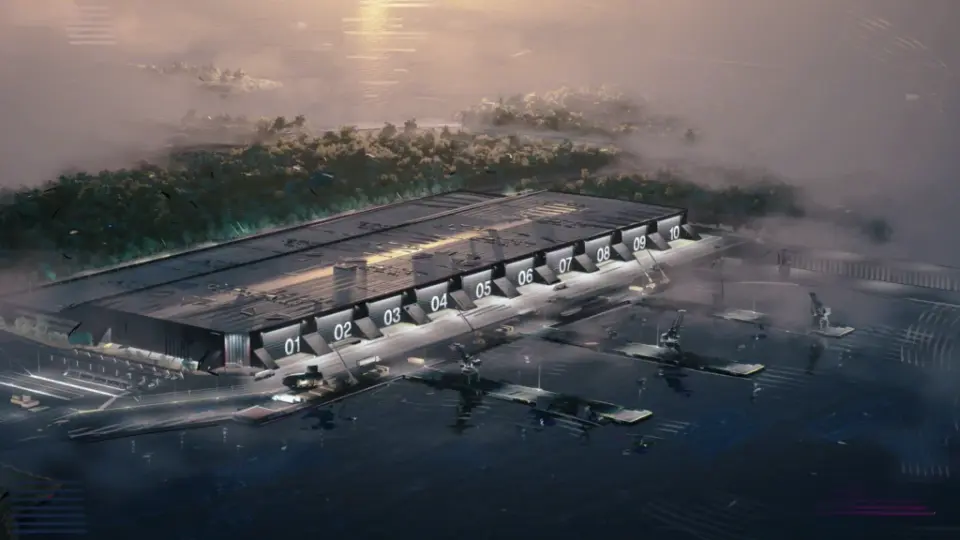
Anduril Industries has announced a $6.6 billion investment to construct a new shipyard, designated Arsenal-2, at the former Bethlehem Steel site in Sparrows Point, Maryland. The facility, which includes $3.7 billion in private capital and up to $2.9 billion from the U.S. Navy, will manufacture components for Virginia-class submarines. Operations are expected to begin in 2030, creating 3,100 direct jobs and supporting 14,000 total positions. This marks Anduril’s first entry into the legacy defense supply chain, aiming to alleviate production bottlenecks in the submarine industrial base.
Key points
- Anduril is building a 2-million-square-foot facility at Tradepoint Atlantic in Baltimore County to produce complex components and large assemblies for Virginia-class submarines.
- The project involves a $6.6 billion total investment, split between $3.7 billion in private capital and up to $2.9 billion in Navy funding.
- The shipyard is projected to create 3,100 direct jobs and support over 11,000 indirect jobs, with initial operations scheduled for 2030.
- Anduril will initially manufacture basic modules like torpedo tubes before expanding to complex sections such as bows, while a smaller facility in California will support prototyping and workforce training.
- The move addresses a GAO report highlighting that the Navy is currently producing only one Virginia-class submarine annually, missing its goal of two per year due to labor shortages and late material deliveries.
Background
The Virginia-class submarine program has faced significant challenges, including a shortage of experienced workers and late supplier deliveries, as noted in a July Government Accountability Office report. The Navy aims to increase production to two Virginia-class and one Columbia-class submarine annually by 2032. This announcement follows Anduril co-founder Palmer Luckey’s recent appointment to the Pentagon’s Project Meridian task force, raising questions about the influence of defense tech leaders in Washington. Additionally, the project coincides with a political dispute between President Trump and Maryland Governor Wes Moore, who was removed from the event's speaking lineup by the White House.
How outlets are covering it
Breaking Defense emphasizes the strategic shift of Anduril into the legacy defense supply chain, highlighting the risk-sharing structure where the company assumes execution risk. CNBC focuses on the political dimensions, noting the timing of the contract relative to Palmer Luckey’s appointment to Project Meridian and the involvement of other tech figures like Elon Musk. MS NOW highlights the political friction, reporting that President Trump removed Maryland Governor Wes Moore from the speaking program, a move Moore’s office described as a 'tantrum' over a deal that benefits the state. WBAL-TV focuses on the local economic impact, framing the project as Maryland’s largest private investment in over a decade and a major job creator for the region.
Why it matters
The establishment of Arsenal-2 represents a significant expansion of the U.S. submarine industrial base, aiming to resolve production delays and meet the Navy’s strategic requirements. By adding a new source of component manufacturing, the project seeks to increase overall capacity and resilience in the supply chain, potentially accelerating the delivery of critical naval assets. The involvement of a private tech firm in legacy defense production also signals a broader shift in how the U.S. approaches defense manufacturing and industrial policy.
What to watch
Permitting for the Arsenal-2 facility will begin immediately, with construction to follow once administrative approvals are secured. Anduril plans to utilize its California facility to develop manufacturing methods and train the workforce before the Maryland site becomes operational in 2030. The company expects to expand from basic modules to complex submarine sections over time, while the Navy continues to monitor the impact on production rates and supply chain stability.
- Anduril launches new shipyard to manufacture components for Virginia-class subs Breaking Defense
- President announces submarine shipyard plan in Sparrows Point WBAL-TV
- Anduril lands $2.9 billion Navy submarine shipyard contract days after Luckey joins Pentagon weapons group CNBC
- How a Maryland Shipyard Turned Into a Squabble Between Trump and Wes Moore The New York Times
- A private company invited Gov. Wes Moore to a Baltimore event. Trump had him removed as a speaker. MS NOW
Want the full story? Read the original reporting
Read on Breaking Defense