
Army Creates FASCOM to Accelerate Autonomous Warfare Amid Pentagon Contract Controversy
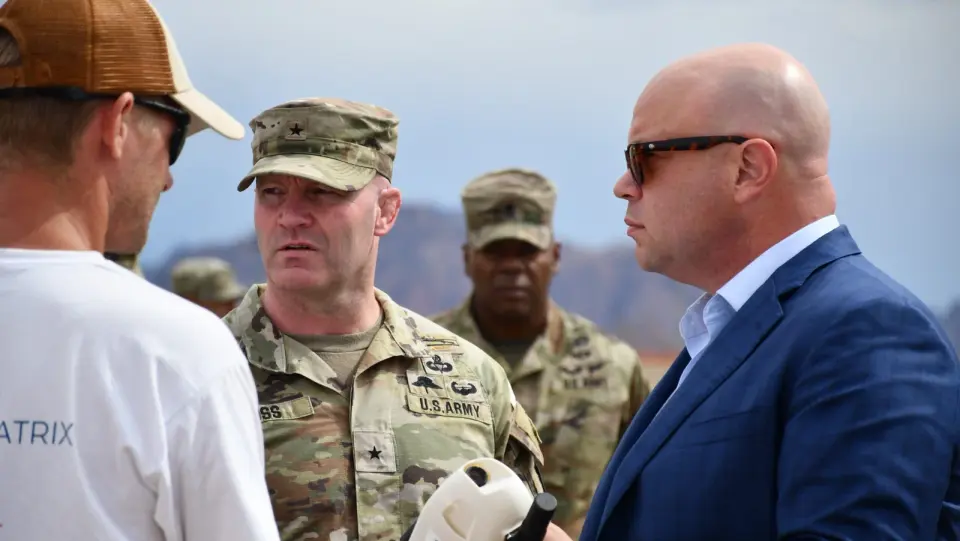
The U.S. Army has established a new command, FASCOM, to prioritize autonomous technology, following Defense Secretary Pete Hegseth's broader push for an Autonomous Warfare Command. This move coincides with controversy over a Pentagon advisory commission led by billionaire contractors Elon Musk and Palmer Luckey.
Key points
- Acting Army Secretary Adam Telle signed a memo on Oct. 1, 2026, creating the Army Futures and Autonomous Systems Command (FASCOM).
- A new Program Acquisition Executive for Autonomy will prioritize fielding autonomous fires, combat vehicles, and collaborative teaming by fiscal 2028.
- The Army will expand authorizations for 15X Tactical Unmanned Aircraft Systems Specialists and 390A Robotics Technicians across applicable units.
- These changes follow Hegseth's Sept. 30 State of the Force address announcing a four-star Autonomous Warfare Command (AUTOWARCOM).
- The initiative is part of a larger effort including the Drone Dominance program and Joint Interagency Task Force 401 (JIATF-401).
Background
This development follows the Army's earlier activation of the Capability Program Executive Office for Mission Autonomy. It aligns with Hegseth's department-wide push to institutionalize autonomous warfare, which includes the creation of a Direct Reporting Portfolio Manager for autonomy. The broader context includes the Pentagon's Drone Dominance program and the Army-led JIATF-401, aimed at scaling drone production and fielding.
How outlets are covering it
Breaking Defense and army.mil emphasize the Army's rapid modernization and the creation of FASCOM to 'dominate the future of warfare,' citing Telle's statement on ending 'bureaucratic inertia.' In contrast, Politico highlights concerns from Pentagon officials and Democrats about conflicts of interest, noting that Hegseth's separate 'Project Meridian' advisory commission includes SpaceX CEO Elon Musk and Anduril founder Palmer Luckey, both of whom hold significant Pentagon contracts. Critics argue this gives contractors undue influence over future warfare decisions, while the Pentagon states the commission will be led by MITRE with conflict-of-interest safeguards.
Why it matters
The establishment of FASCOM and the broader autonomy push signal a significant shift in U.S. military strategy toward autonomous and robotic systems. The controversy surrounding the involvement of major defense contractors in policy-making raises questions about the integrity of defense acquisition and the potential for conflicts of interest in shaping future warfare capabilities.
What to watch
The Army will implement the new force structure and acquisition priorities by fiscal 2028. The Project Meridian commission is expected to report its findings in January 2027, though some officials doubt it will impact the 2028 budget. The Pentagon will continue to monitor the implementation of FASCOM and the broader autonomous warfare initiatives.
- Army to establish new autonomy command, acquisition executive Breaking Defense
- Musk-led war commission triggers alarms in Pentagon Politico
- With Elon Musk’s Return to Washington, Possible Conflicts of Interest Resurface The New York Times
- Army announces Futures and Autonomous Systems Command army.mil
- Pentagon creates 'Autowarcom' to expand AI and drone capabilities reuters.com
Want the full story? Read the original reporting
Read on Breaking Defense