
US Navy Weighs Foreign-Built Frigates to Accelerate Fleet Rebuild
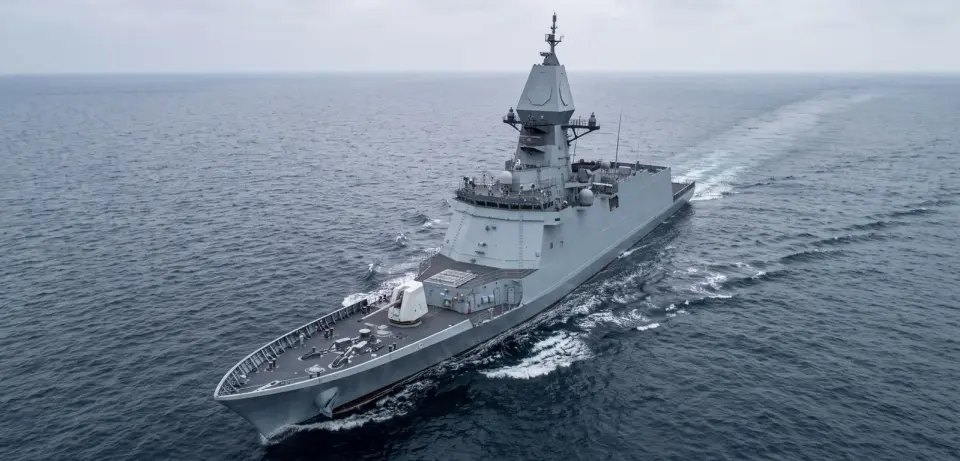
The US Navy is evaluating frigate designs from Japan, South Korea, and Turkey to address a critical shortage of surface combatants. Following an August White House memorandum, the Pentagon is considering a national security waiver that would allow the first two vessels of a new class to be built overseas before production transfers to American yards. This move, driven by the collapse of the Constellation class program and a shrinking fleet, aims to bypass domestic industrial bottlenecks. While Japan’s Mogami and South Korea’s Chungnam classes offer advanced capabilities and rapid production, Turkey’s Istanbul class is viewed as a smaller, less compatible option. Congressional resistance and the logistical challenges of integrating foreign combat systems remain significant hurdles to this historic shift in procurement policy.
Key points
- The US Navy is assessing three foreign frigate designs: Japan’s upgraded Mogami, South Korea’s Chungnam, and Turkey’s Istanbul, as reported by USNI News.
- An August White House memorandum authorized the use of a national security waiver to permit the construction of up to two warships overseas, a practice not seen in over a century.
- The initiative follows the cancellation of the Constellation class program in November 2025, which suffered from delays and rising costs due to extensive US modifications to the original design.
- The preferred model mirrors the US Coast Guard’s Arctic Security Cutter approach: initial foreign construction followed by the transfer of knowledge and facilities to establish domestic production.
- Japan’s Mogami class is favored for its compatibility with US weapons like the Mk 41 VLS and Aegis systems, while South Korea’s Chungnam offers rapid serial production capacity.
- Congressional opposition is growing, with draft legislation proposed to revoke the waiver or block funding for overseas-built US warships.
Background
This procurement shift occurs against the backdrop of a long-term decline in US naval capacity. According to Zona Militar, the US Navy’s active fleet has dropped from 594 ships in 1987 to 291 today, while China’s People’s Liberation Army Navy has expanded to over 370 vessels. The collapse of the Constellation class, a derivative of the Franco-Italian FREMM design, highlighted the risks of modifying mature foreign designs without senior approval. Meanwhile, the US Coast Guard’s recent acquisition of Finnish-built icebreakers, which included a requirement for the foreign builder to establish a US yard, provides a precedent for the proposed frigate strategy. The broader context includes a global trend of industrial partnerships, such as Sweden’s recent deal with France for FDI frigates, though the US case is unique in its scale and political sensitivity.
How outlets are covering it
Navy Lookout emphasizes the radical nature of this policy shift, noting that the US has not routinely procured major naval combatants from foreign shipyards in over a century. It highlights the 'desperation' of the administration to rebuild the fleet quickly, contrasting the 'America first' industrial policy with the reality of buying overseas. Yonhap News Agency frames the move as a strategic cooperation with trusted allies to rebuild the shipbuilding industrial base, focusing on the transition from foreign to domestic production. Zona Militar provides a comparative perspective, stressing the numerical gap between the US and China and the industrial constraints facing Washington. Briefs Finance, while primarily focused on economic markets, indirectly supports the narrative of a broader 'maritime revival' driven by legislative and executive actions. Commentators on Navy Lookout suggest that the foreign option may serve as a 'stalking horse' to pressure domestic contractors like Huntington Ingalls to improve performance, rather than a genuine intent to mass-produce foreign ships. There is a consensus that Japan and South Korea are the most viable candidates due to their existing use of US-compatible systems and high production rates, whereas Turkey’s inclusion is viewed as more surprising and less practical due to size and system incompatibility.
Why it matters
This potential policy change represents a fundamental break in US defense procurement, challenging the long-standing norm of domestic construction for major combatants. It reflects the urgent need to address fleet size deficits and industrial capacity constraints in the face of rising Chinese naval power. The success or failure of this initiative will determine whether the US can effectively leverage allied industrial capacity to restore its naval dominance, or if political and logistical barriers will prevent the necessary expansion of the fleet. The outcome of the November report will signal the administration’s willingness to prioritize speed and capability over traditional industrial sovereignty, potentially reshaping global defense supply chains.
What to watch
The Navy is expected to complete its assessment of foreign combatants and support vessels by November 12, 2026. This report will determine whether the foreign frigate competition proceeds or if the existing FF(X) program, based on the Legend class cutter, continues. Congressional action is anticipated, with draft legislation likely to be introduced to either revoke the national security waiver or restrict defense funding for overseas-built warships. The decision will also influence the future of the Constellation class, with only the first two ships under construction expected to be completed. If the foreign option is selected, the next steps will involve negotiating technology transfer agreements and establishing domestic production facilities, potentially mirroring the model used for the Arctic Security Cutters. The political battle in Congress will be a critical factor in determining whether this historic procurement strategy can be implemented.
- US Navy considers overseas-built frigates in major policy shift Navy Lookout
- S. Korea, Japanese, Turkish warships being considered for new U.S. frigate competition: report Yonhap News Agency
- US Navy's China challenge starts at home TRT World
- From nearly 600 ships to fewer than 300: How the U.S. Navy shrank as China built the world's largest fleet Zona Militar
- White House Pushes Maritime Revival with New Bill Briefs Finance
Want the full story? Read the original reporting
Read on Navy Lookout