
Senate Republicans Reject Trump’s Plan to Revert Carriers to Steam Catapults
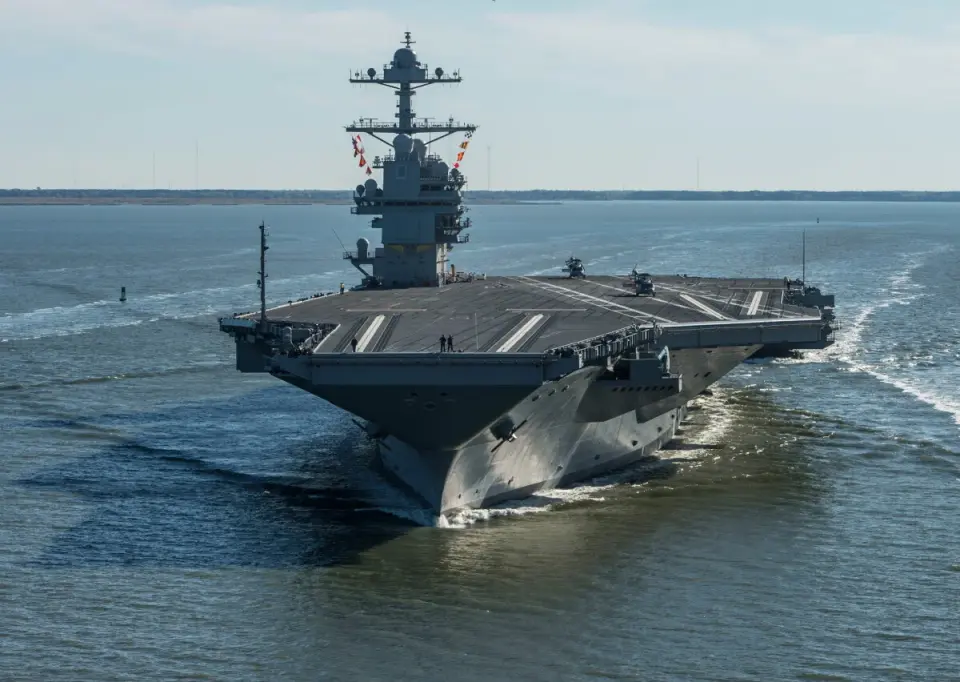
Senate Armed Services Committee Chair Roger Wicker declared a return to steam catapults on Ford-class aircraft carriers a 'non-starter,' defying President Trump’s August directive. While the White House argues electromagnetic systems delay shipbuilding, lawmakers warn that reverting to steam would cost billions and reduce combat lethality. Acting Navy Secretary nominee Hung Cao defended the directive during his confirmation hearing, but bipartisan opposition has grown in the 2027 defense appropriations bill.
Key points
- Sen. Roger Wicker (R-Miss.) stated that returning to steam catapults is a 'non-starter' during the confirmation hearing for acting Navy Secretary Hung Cao.
- The Senate Appropriations Committee’s 2027 defense bill opposes the redesign, citing billions in additional costs and years of schedule delays.
- Trump’s August memo directed the Navy to replace electromagnetic aircraft launch systems (EMALS) with steam and hydraulic systems on future Ford-class carriers, including the USS Doris Miller.
- Acting Secretary Cao argued that EMALS and electromagnetic elevators are delaying carrier delivery by seven years, though he did not explicitly endorse the steam retrofit.
- Sen. Tim Kaine (D-Va.) cited sailors on the USS Gerald R. Ford who praised the new electromagnetic system’s performance and efficiency.
Background
The debate centers on the Ford-class carrier program, which has faced significant construction delays. The USS Gerald R. Ford is the only operational ship in the class, while the USS John F. Kennedy and USS Enterprise are under construction or awaiting commissioning. Previous archive coverage noted that the USS Abraham Lincoln recently completed a record 321-day deployment in the Middle East, highlighting the strain on the current fleet. Trump has long criticized EMALS, claiming it lacks the power of older steam systems, a stance he reiterated in an August 2026 memo that also addressed shipbuilding efficiency and foreign shipyard partnerships.
How outlets are covering it
AP News and Breaking Defense emphasize the bipartisan nature of the opposition, noting that even Republican lawmakers on the Appropriations Committee are resisting the directive due to cost and capability concerns. USNI News highlights the specific financial stakes, estimating the design work for the steam retrofit at approximately $10 billion, and notes that Cao defended the move as a way to accelerate shipbuilding despite the technical challenges. The War Zone (TWZ) provides technical context, explaining that the Ford-class design is fundamentally built around electromagnetic systems, making a retrofit to steam a massive engineering undertaking that would require new piping and structural changes. While the White House, via spokesperson Olivia Wales, argues Trump is revitalizing shipbuilding, lawmakers from both parties argue the move is a costly regression that ignores recent combat data showing the superiority of the new systems.
Why it matters
The outcome of this dispute will determine the future configuration of the U.S. Navy’s most advanced warships. A return to steam catapults would not only incur billions in additional costs and delay the delivery of new carriers but also potentially reduce the fleet's combat lethality and sortie generation rates. As Democrats take control of Congress in January 2027, this issue is likely to become a major flashpoint in defense spending battles, with the administration facing significant hurdles in passing its $1.5 trillion defense budget.
What to watch
The Senate must now decide whether to confirm Hung Cao as Navy Secretary, a process complicated by his recent retirement requiring a waiver from both chambers of Congress. The 2027 defense appropriations bill will likely include provisions restricting the steam catapult directive, requiring the Navy to submit a detailed report comparing the costs and capabilities of steam versus electromagnetic systems. With Democrats taking control of the House and Senate in January, expect intensified legislative battles over defense spending and naval modernization priorities.
- Trump faces GOP pushback to his order to use steam to launch jets from aircraft carriers AP News
- Reverting Ford-class Carriers to Steam is ‘Non-Starter,’ Says SASC Chair Wicker USNI News
- Lawmakers challenge Trump’s push to bring steam catapults back to Ford-class carriers Breaking Defense
- Key Republican Rejects Trump Order on Steam-Driven Launch System Bloomberg.com
- Trump's Demand For Steam Catapults On New Carriers Is A "Non-Starter": Senate Armed Forces Chair TWZ
Want the full story? Read the original reporting
Read on AP News