
Grand Canyon Flash Flood Claims Two Texas Hikers, One Remains Missing
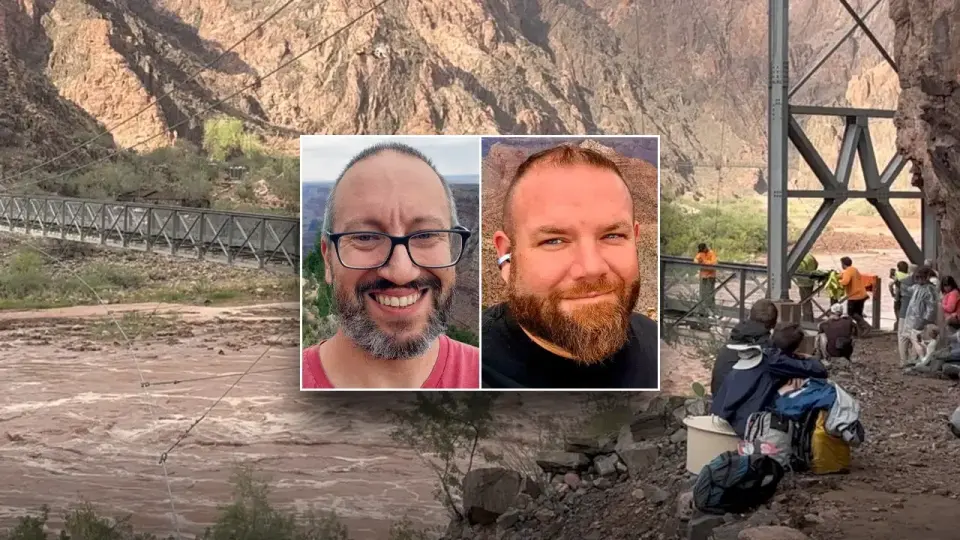
A deadly flash flood on August 29, 2026, swept through the Bright Angel Creek area of Grand Canyon National Park, killing two men and leaving one unaccounted for. The victims, John Giusti and Brent Rosenkranz, were identified by families as Texas residents who had been hiking with a third friend, Timothy Smith. Rescue operations evacuated over 80 people, but Smith remains missing as search efforts continue. The event caused significant infrastructure damage, including miles of water pipeline, and was attributed to compounding climate factors.
Key points
- Two victims, John Giusti (46) and Brent Rosenkranz (42), were identified by their families and the National Park Service.
- A third hiker, Timothy Smith (53), remains missing as of late Monday, with search efforts hindered by heavy rain.
- The flash flood occurred on August 29, 2026, along Bright Angel Creek near Phantom Ranch.
- Over 80 people were evacuated via helicopter, with 45 rescued by sunset on Saturday and 37 more on Sunday.
- The water pipeline supplying the South Rim was severely damaged, with officials estimating miles of destruction.
- The flood was likely triggered by drought, wildfire scarring, and warming Pacific Ocean temperatures.
Background
This incident follows a series of severe weather events in 2026, including recent flooding in Nepal. The Grand Canyon had previously experienced damage to its water pipeline, which was already under repair when the flood occurred. The area is a popular destination for hikers and campers, with Phantom Ranch being a key stopover for river rafters and hikers crossing the canyon.
How outlets are covering it
Fox News emphasized the personal stories of the victims, highlighting their social media posts and family tributes. CNN focused on the immediate chaos and rescue efforts, describing the rapid onset of the flood and the evacuation of dozens. The New York Times reported on the death toll and ongoing search efforts, noting the challenges posed by additional rain. The Guardian analyzed the climate factors, linking the flood to drought, wildfire scarring, and warming Pacific Ocean temperatures. All outlets agreed on the severity of the event and the number of evacuations, but differed in their emphasis on personal stories, rescue logistics, and climate analysis.
Why it matters
The flash flood highlights the increasing risks of extreme weather events in popular tourist destinations, exacerbated by climate change. The damage to critical infrastructure, such as the water pipeline, underscores the vulnerability of remote areas to natural disasters. The ongoing search for the missing hiker and the impact on local communities and visitors demonstrate the far-reaching consequences of such events.
What to watch
Search efforts for Timothy Smith will continue, potentially hindered by additional rain and monsoon moisture. The full extent of the damage to the water pipeline and other infrastructure will be assessed, with water restrictions likely to remain in place. The National Park Service will monitor the area for further flooding and may adjust access to affected trails and campgrounds.
- 2 Grand Canyon flooding victims photographed on hiking trip in days before deaths Fox News
- How a scenic enclave at the bottom of the Grand Canyon turned into an epicenter of deadly destruction CNN
- Grand Canyon flash flooding deaths spur questions over whether warnings could have come sooner CBS News
- Death Toll Rises in Grand Canyon Flood as Search Continues The New York Times
- How intense rains in the Grand Canyon turned into a deadly disaster The Guardian
Want the full story? Read the original reporting
Read on Fox News