
Southwest Colorado Floods Isolate Towns, Threaten Winter Tourism
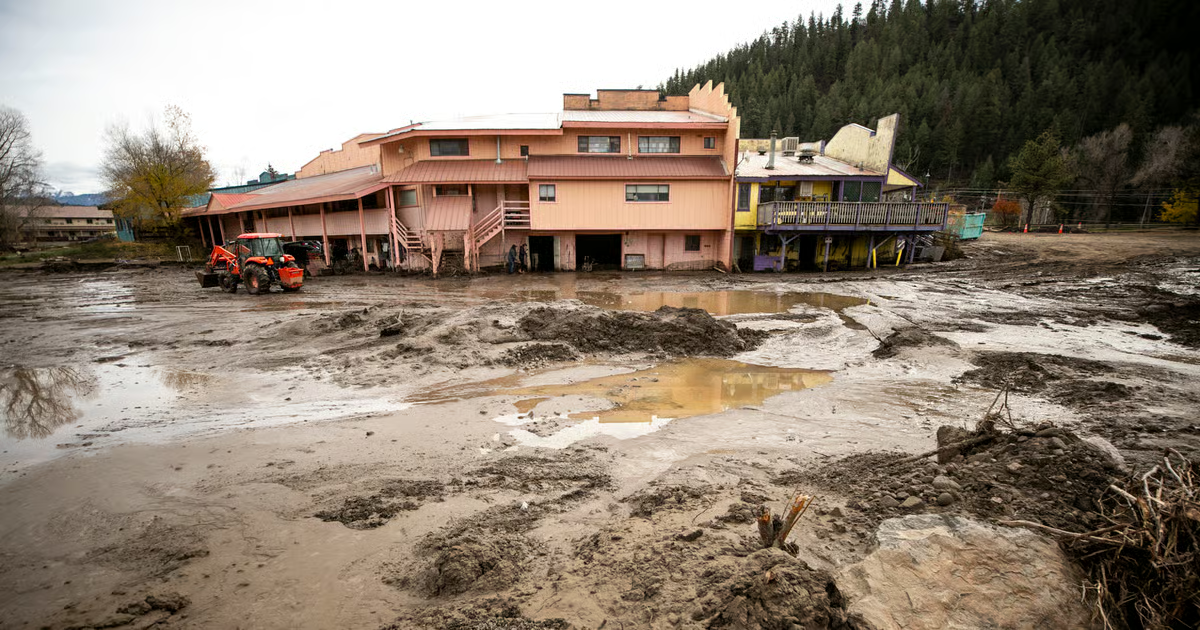
A second round of historic flooding in late October and early November 2026 has devastated southwestern Colorado, isolating towns like Pagosa Springs and Durango. Over 20 trillion gallons of rain, driven by El Niño and atmospheric rivers, caused severe damage to infrastructure, homes, and businesses. While local communities mobilized massive volunteer efforts for cleanup, residents and officials are urgently seeking federal disaster declarations and funding, which were previously denied by the White House. Key highways remain closed, threatening the region's winter tourism economy.
Key points
- More than 20 trillion gallons of rain fell on the Four Corners region in two weeks, following a summer drought.
- U.S. Route 160 and other major highways remain closed, isolating Pagosa Springs and threatening access to Wolf Creek Ski Area.
- Colorado’s congressional delegation, including Sen. Michael Bennet and Rep. Jeff Hurd, visited the area on Nov. 6 to push for a federal disaster declaration.
- The White House previously denied federal disaster funding for 2025 floods, a decision linked to political tensions between President Trump and Gov. Jared Polis.
- Volunteers, including students and local clubs, have mobilized extensively to clear mud and debris from homes and businesses.
- CDOT has requested $65 million in emergency relief from the Federal Highway Administration, receiving $6.5 million so far.
Background
This event follows a series of disasters in southwestern Colorado, including the 2025 floods and the Rio Blanco fire. In November 2025, the White House denied federal disaster funding for the region, a decision that occurred after Gov. Polis commuted the sentence of a local official, leading to a delayed release of $90 million in mitigation funds in September 2026. The current flooding is also part of a broader pattern of extreme weather in the U.S., including record-breaking tides on the Southern California coast in late October 2026, driven by El Niño.
How outlets are covering it
Colorado Public Radio and The Colorado Sun emphasize the political hurdles in obtaining federal aid, noting that previous requests were denied by the Trump administration. They highlight the frustration of residents who feel the political system is hindering recovery. The Durango Herald focuses on the massive grassroots community response, detailing how hundreds of volunteers, including students and local clubs, have mobilized to clean up mud and debris. Denver7 highlights the economic impact, specifically the threat to winter tourism and the closure of Wolf Creek Ski Area due to road damage. All sources agree on the severity of the damage and the urgent need for federal support, but they differ in emphasis: political obstruction vs. community resilience vs. economic threat.
Why it matters
The flooding has isolated communities, cut off critical supply routes, and threatened the region's tourism-dependent economy. The lack of federal disaster declaration means residents must rely on loans rather than grants for recovery, placing a heavy financial burden on individuals and businesses. The situation highlights the vulnerability of rural areas to extreme weather and the potential for political gridlock to delay disaster relief.
What to watch
CDOT aims to reopen U.S. 160 from the Wolf Creek Tunnel to South Fork and install a temporary bridge over the Piedra River within four weeks. Colorado’s congressional delegation is pushing for a federal disaster declaration. Local officials are continuing to assess damage and coordinate volunteer efforts. The region faces a critical winter season with limited infrastructure and economic resources.
- Southern Coloradans hit by floods pray for federal assistance Colorado Public Radio
- Pagosa Springs restaurant closed for weeks due to flooding 9News
- Droves of Durango volunteers put shovels to mud in wake of floods Durango Herald
- Flood-closed roads threaten Wolf Creek Ski Area, businesses banking on winter tourism Denver7
- Their town has been burned, flooded and nearly cut in half. But residents want you to know “Pagosa is here.” The Colorado Sun
Want the full story? Read the original reporting
Read on Colorado Public Radio