
Hawk Fire: 15,000-Acre Blaze Near Reno Forces 42,000 Evacuations, Leaves 6 Injured
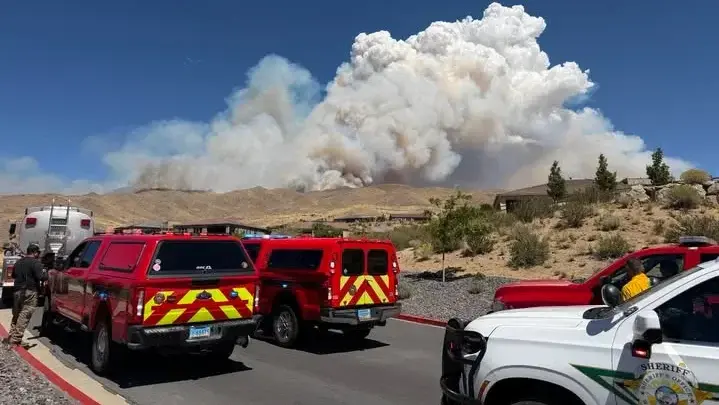
The Hawk Fire, a human-caused wildfire in Nevada's Humboldt-Toiyabe National Forest, has burned over 15,000 acres near Reno. It has forced 42,000 evacuations, injured six people, and remains 0% contained as of August 23, 2026.
Key points
- Ignition: Started August 22, 2026, in the Peavine Peak area; human-caused, origin under investigation.
- Size: Burned 15,040 acres (23 square miles) by August 23; 0% contained.
- Evacuations: 42,000 ordered to leave; 40,000 under warnings; 13,700 residences in evacuation zones.
- Casualties: Six injured (three civilians, three first responders).
- Response: 800 firefighters, National Guard deployed, state of emergency declared by Gov. Joe Lombardo.
- Impact: Structures destroyed, 14,000+ power outages, road closures, school cancellations, shelters opened.
Background
The Hawk Fire emerged during a period of widespread drought in the western U.S., with Washoe County experiencing abnormally dry conditions. It was one of 200 new wildfires reported nationally on August 22, 2026, amid large fires burning in 18 states. Prior archive coverage noted rapid expansion from 2,500 acres on August 22 to over 10,500 acres by August 23, with shifting winds driving the fire's aggressive behavior.
How outlets are covering it
USA Today and KOLO emphasize the scale of evacuations and structural losses, with KOLO noting 13,700 residences in the evacuation zone. KCRA highlights cross-state impacts, including evacuation warnings in Sierra County, California, and power outages affecting 14,000 customers. All sources agree on the fire's human-caused origin and 0% containment, but KOLO stresses the inability to assess damage due to active fire conditions, while KCRA details infrastructure impacts like railway and communication tower threats. KRXI2's source was inaccessible, but its metadata confirms focus on homes lost near Peavine Peak.
Why it matters
The Hawk Fire underscores the escalating risk of large, fast-moving wildfires in drought-prone regions, straining emergency resources and displacing tens of thousands. Its human-caused origin and rapid spread through dry brush highlight vulnerabilities in infrastructure and community safety, with potential for further expansion into Stead and other areas.
What to watch
Fire officials expect 'moderate to high intensity runs' in dense fuel areas over the next 12 hours. Damage assessment teams await safe access to quantify losses. Evacuation zones may expand as the fire spreads northeast, and authorities will notify homeowners of destroyed structures once assessments are complete.
- Wildfire near Reno, Nevada, forces tens of thousands to flee homes USA Today
- 13,700 residences are inside Hawk Fire evacuation area KOLO | 8 News Now
- Hawk Fire: Sierra County evacuation warnings for wildfire burning in Nevada KCRA
- Fire rages near Reno BBC
- HAWK FIRE: Homes lost near the base of Peavine Peak KRXI2
Want the full story? Read the original reporting
Read on USA Today