
Dartmouth Provost Resigns After Committee Finds AI Use Violated Academic Integrity
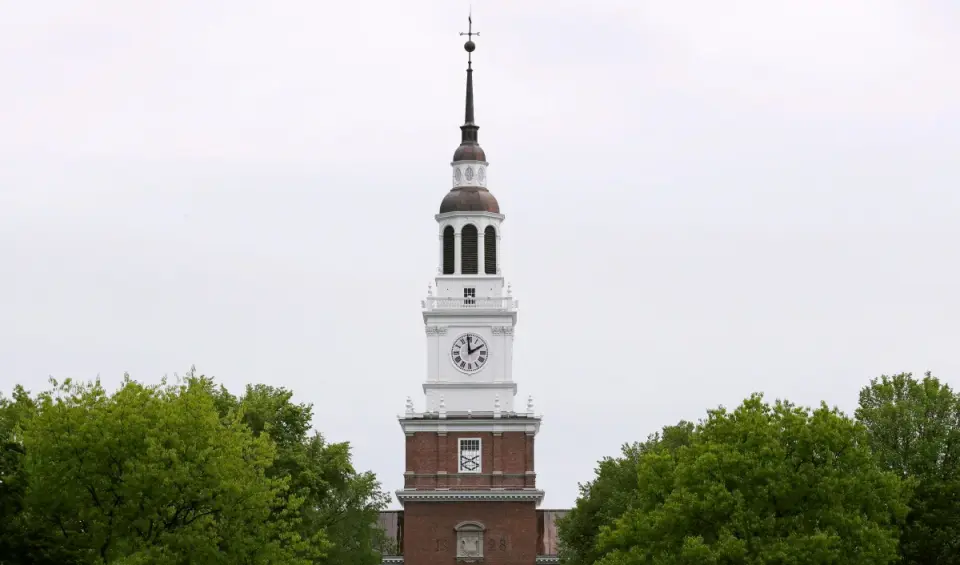
Santiago Schnell, the provost of Dartmouth College, has resigned following an independent faculty committee’s finding that he used artificial intelligence to meaningfully alter his writing and failed to disclose this usage. The investigation, triggered by student and media scrutiny, concluded that Schnell violated Dartmouth’s ethical conduct codes and the publication policies of major newspapers. His departure marks a significant moment for the Ivy League institution, which is simultaneously hosting a conference on the 70th anniversary of the birth of AI.
Key points
- Santiago Schnell, Dartmouth’s provost since May 2025, resigned on October 29, 2026, following a faculty committee review.
- The committee found Schnell used AI to 'meaningfully alter' his writing and was not forthcoming about his usage, violating Dartmouth’s Code of Ethical Conduct and Academic Honor Principle.
- A key piece of evidence was an August 2026 guest column in The Washington Post, which Schnell admitted he used ChatGPT to refine, violating the newspaper’s policy against AI-generated content.
- The Dartmouth student newspaper found that 96% of Schnell’s 2026 publications were flagged as AI-generated by the Pangram detector, while his pre-2022 works were flagged as 100% human-written.
- President Sian Leah Beilock stated the resignation was Schnell’s decision and appointed Matthew Delmont as interim provost through June 2028.
- The resignation coincides with a Dartmouth conference titled 'What Must Remain Human?' commemorating the 70th anniversary of AI research at the university.
Background
This incident follows a months-long controversy that began in September 2026 when student reporters and media outlets like Semafor investigated Schnell’s writing. Earlier coverage highlighted a sharp contrast between his pre-2022 human-written works and his 2026 output, which was largely flagged as AI-generated. Student editors had previously called for his removal, arguing that his conduct undermined the institution’s credibility and academic standards.
How outlets are covering it
AP News emphasizes the broader implications for higher education as colleges grapple with AI integration, noting the irony of the resignation occurring during a conference on the 70th anniversary of AI research. WMUR focuses on the specific findings of the faculty committee, highlighting Schnell’s lack of cooperation and the violation of specific institutional and national newspaper policies. While AP frames the event as a leadership failure in a changing environment, WMUR details the procedural breakdown and the specific ethical breaches identified by the review panel.
Why it matters
The resignation of a top administrator at a prestigious Ivy League university signals a shift in how academic institutions enforce AI usage policies. It underscores the tension between the efficiency offered by AI tools and the traditional expectations of human authorship and transparency in scholarly and public writing. The case sets a precedent for accountability among senior academic leaders, potentially influencing policy across other universities.
What to watch
Matthew Delmont will serve as interim provost until June 2028. Dartmouth will continue its 'What Must Remain Human?' conference, which began on October 29, 2026. The university may review and update its AI usage policies for faculty and staff in light of the committee’s findings.
- Dartmouth provost resigns following accusations he used artificial intelligence for writing AP News
- After AI uproar, Dartmouth’s top academic official steps down The Boston Globe
- Dartmouth College provost resigns after review into his AI use WMUR
- Senior official at Dartmouth College resigns over AI use The Washington Post
- A Top Dartmouth Leader Steps Down Over Undisclosed A.I. Use in Writings The New York Times
Want the full story? Read the original reporting
Read on AP News