
Supreme Court to Rule on Whether Race-Neutral School Admissions Can Discriminate Against Asian Students
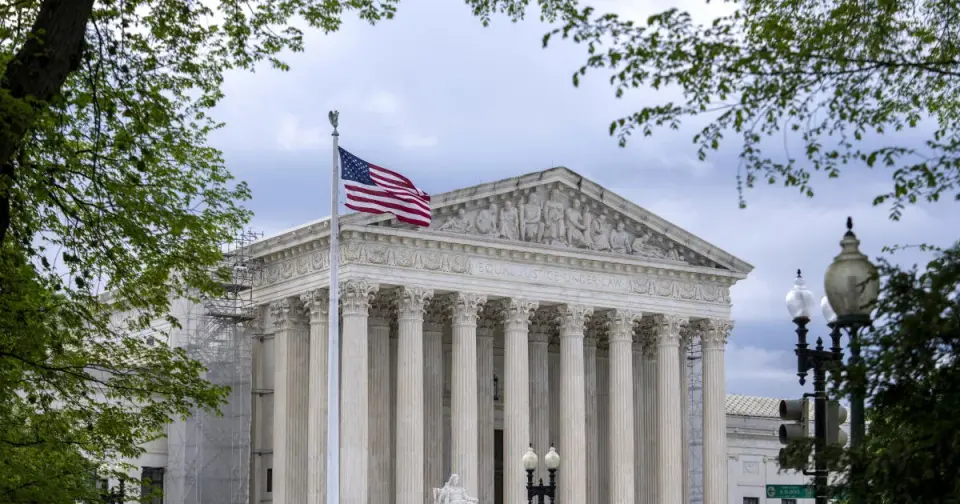
The Supreme Court agreed to hear a case challenging a race-neutral lottery system for magnet schools in Maryland, which plaintiffs argue disproportionately harms Asian American students. The decision will determine if such policies violate constitutional protections against racial discrimination.
Key points
- The Court will decide if a facially neutral admissions policy can be challenged as racially discriminatory without proof of aggregate disparate impact.
- The case stems from Montgomery County, Maryland, where a new lottery system replaced competitive testing for selective middle schools.
- Asian American parents argue the new policy, which accounts for socioeconomic status, intentionally reduces their enrollment despite high academic performance.
- The ruling could impact similar diversity policies in selective high schools and magnet programs across the country, including in California.
- The Court’s 2023 ban on affirmative action in higher education sets the backdrop for this new legal challenge in K-12 education.
Background
In 2023, the Supreme Court struck down race-conscious admissions at Harvard and the University of North Carolina, establishing that racial preferences in higher education are unconstitutional. Since then, lower courts have faced challenges regarding similar diversity efforts in K-12 selective schools, such as those in Boston and Virginia, but the Supreme Court had previously declined to review these cases. This new case extends the legal scrutiny of race-neutral policies that aim to achieve racial diversity through socioeconomic proxies.
How outlets are covering it
The Los Angeles Times highlights the broader implications for magnet programs nationwide, noting that Asian students often outperform white students academically, which complicates their classification in diversity efforts. The New York Times emphasizes the legal nuance, noting that the Court will only decide if a disparate impact is required to prove intentional discrimination, rather than the constitutionality of the policy itself. SCOTUSblog provides the procedural details, noting that the 4th Circuit Court of Appeals rejected the claim because Asian students still held a majority of seats relative to their population share. Richard Kahlenberg, a policy expert, argues that the Maryland policy is a valid race-neutral approach based on economic disadvantage, while the Association for Education Fairness contends that any policy reducing Asian enrollment is unconstitutional discrimination.
Why it matters
The ruling will define the legal boundaries for public school districts seeking to diversify student bodies without using explicit racial criteria. It could invalidate or uphold socioeconomic-based admissions systems used in selective schools across the country, directly affecting the enrollment of Asian American students and the legal framework for voluntary integration in public education.
What to watch
The Supreme Court will hear oral arguments early next year. The decision is expected before the end of the term in late June or early July 2027. The outcome will likely prompt further legal challenges or policy adjustments in school districts with similar magnet or selective admissions programs.
- Supreme Court may strike down school policies that limit Asian students Los Angeles Times
- Supreme Court to Hear New Case on Race and School Admissions The New York Times
- Supreme Court to hear arguments alleging MCPS discrimination against Asian Americans Bethesda Magazine
- US Supreme Court to hear Maryland case involving race in school admissions Reuters
- Justices take up case on race and school admissions SCOTUSblog
Want the full story? Read the original reporting
Read on Los Angeles Times