
Early Vote Surge May Not Signal Higher Midterm Turnout, Expert Says
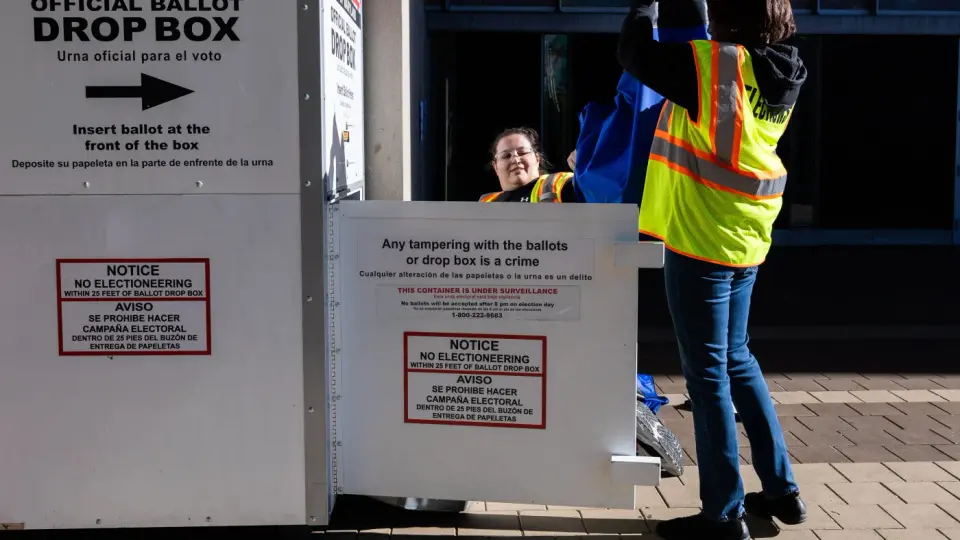
Nearly 21 million Americans have cast early ballots for the 2026 midterms, but political scientist Charles Stewart argues this surge does not guarantee higher overall turnout. He notes that many early voters would have participated on Election Day anyway, and that high campaign spending is driving current numbers. While Democrats maintain a mail voting advantage, the gap is narrowing as more shift to in-person voting. Stewart also highlighted unexpected activity in Maine and Iowa, attributing it to campaign mobilization rather than broad demographic shifts.
Key points
- As of Friday morning, nearly 21 million Americans have cast ballots in the midterm elections, according to the University of Florida's Election Lab.
- Charles Stewart, a political science professor at MIT, states that early voting surges can be misleading and do not necessarily indicate higher total voter participation.
- Stewart attributes the current numbers to both voter enthusiasm and significant campaign spending on retail politics and door-to-door mobilization.
- Democrats still hold an advantage in voting by mail, but the gap has narrowed compared to 2022 as more Democrats opt for early in-person voting.
- Republicans' slight advantage in early in-person voting may also narrow, according to Stewart.
- Unusual early voting activity in Maine and Iowa, states that are not major battlegrounds, reflects campaign efforts to mobilize supporters in areas with less recent political activity.
Background
Recent coverage indicates a historic surge in early voting, with over 18 million ballots cast by October 22, 2026. Previous analyses highlighted a significant Democratic advantage in key Senate battlegrounds like Georgia and Iowa, though experts cautioned that Republicans historically perform better on Election Day. A notable trend has been the shift from mail to in-person voting and drop boxes, particularly among Democrats and unaffiliated voters, following President Trump's attacks on mail voting and his failed attempt to use the Postal Service to restrict ballot eligibility. Additionally, Travis County in Texas shattered early voting records, and the state reached a historic 19 million registered voters despite administrative backlogs.
Why it matters
Understanding the relationship between early voting and total turnout is crucial for predicting midterm outcomes. If early surges are driven by campaign spending and mobilization of existing voters rather than new participants, the final results may differ from early indicators. This distinction affects how political analysts and the public interpret current data, especially in non-battleground states where campaign efforts are intensifying.
What to watch
The focus will shift to Election Day turnout and the final tally of mail-in ballots. Analysts will monitor whether the narrowing gap in mail voting between Democrats and Republicans impacts the final results. Additionally, the impact of campaign spending on retail politics and door-to-door mobilization will be assessed in the post-election analysis.
Want the full story? Read the original reporting
Read on NPR