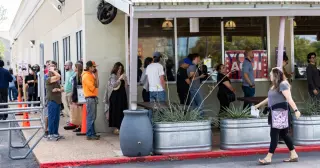
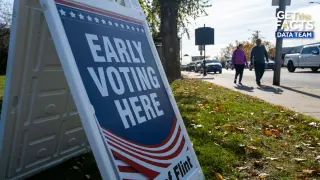
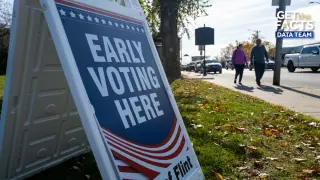
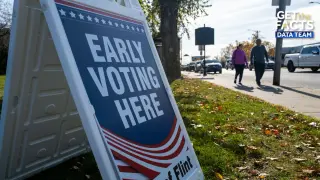
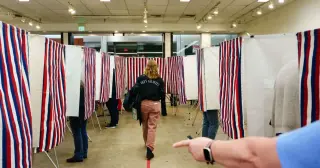
Democrat Gina Hinojosa leads incumbent Gov. Greg Abbott in early Texas returns, with 56% of counted votes compared to Abbott’s 43%. Record early turnout of 7.7 million voters signals a competitive race, though final results remain uncertain as Election Day ballots are tallied.
Travis County recorded its highest midterm early voting turnout since 1998, with over 450,000 ballots cast, surpassing the 2012 presidential election total and exceeding the 2022 midterm figure by approximately 100,000 votes. This surge follows a historic primary season and reflects high engagement in competitive state and federal races, despite earlier administrative delays in voter registration processing.
US voters decide control of Congress on November 3, 2026, with Democrats needing four Senate seats and 218 House seats to reclaim both chambers. Early voting exceeded 56 million ballots, with Democrats showing higher turnout increases than Republicans. Key battlegrounds include Texas, Michigan, and Kansas, where forecasters see shifts toward Democratic candidates. Polls close between 6 p.m. and 1 a.m. ET, with final results potentially delayed in Alaska due to ranked-choice voting and legal disputes.
As the 2026 midterm elections approach, over 54.5 million Americans have cast early ballots, nearly matching the total from 2022. Twenty-three states have already exceeded their previous early voting records, with Texas leading at 138% of its 2022 figure. High turnout is evident in competitive races across Georgia, Ohio, and Michigan, though final results remain pending.
More than 54.5 million Americans have cast early ballots for the 2026 midterm elections, nearly matching the total from 2022. Twenty-three states have already exceeded their previous early voting records, with Texas leading at 138% of its 2022 total. High turnout is evident in competitive races across Georgia, Ohio, and Michigan, though final results remain pending.
More than 54.5 million Americans have cast early ballots for the 2026 midterm elections, nearly matching the total from 2022 and setting a new record. Twenty-three states have already exceeded their previous early voting totals, with Texas leading at 138% of its 2022 figure. While early voting does not determine final outcomes, high turnout in competitive states like Georgia, Ohio, and Michigan suggests intense competition for control of Congress. Democrats have cast 43% of early ballots compared to 31% for Republicans, though party registration does not guarantee vote choice. The election will decide the balance of power in the Senate and House, with key races in Texas, Georgia, and Michigan closely watched.
New York early voting totals reached 1.96 million, up nearly 70% from 2022. Turnout more than doubled in the 21st District, where VP JD Vance campaigned for Republican Anthony Constantino against Democrat Blake Gendebien. Statewide races include governor and attorney general, with polls open Tuesday.
More than 54.5 million Americans have cast early ballots for the 2026 midterm elections, nearly matching the total from 2022. Twenty-three states have already exceeded their previous early voting records, with Texas leading at 138% of its 2022 total. High turnout is evident in competitive races across Georgia, Ohio, and Michigan, though final results remain pending.
On the eve of the 2026 midterm elections, the nonpartisan Cook Political Report rated Democrat Abdul El-Sayed as the favorite in Michigan, shifting the overall Senate majority projection to Democrats. President Trump delivered a closing speech at the Lincoln Memorial Reflecting Pool, focusing heavily on capital renovations rather than campaign issues. Early voting totals show a significant surge, with approximately 50 million ballots cast, outpacing previous midterm cycles in key battlegrounds. The Supreme Court rejected the administration's emergency bid to segregate 20,000 California ballots, while Republicans expressed concern over turnout and economic discontent among voters.
As of November 2, 2026, 54.5 million Americans have cast early ballots for the midterm elections, nearly matching the 2022 total. Twenty-three states have exceeded their 2022 early voting numbers, with Texas leading at 138% of its previous early vote. High turnout is observed in competitive races across Texas, Georgia, Ohio, and Michigan, though early voting does not determine final results.
54.5 million Americans have voted early for the 2026 midterm elections, nearly matching the total early vote count from 2022. Twenty-three states have already exceeded their 2022 early voting numbers, with Texas leading by casting 138% of its previous early total. While early voting does not determine final results, high turnout in competitive states like Texas, Georgia, and Ohio suggests intense competition for control of the Senate and House.
As the 2026 midterm elections approach, approximately 50 million Americans have cast early ballots, a record surge that outpaces the 2022 cycle in every major Senate battleground. While Democrats lead in early voting shares and national polls, Republicans face a critical final push. Key races in Texas, Michigan, and Georgia remain tight, with significant spending from Elon Musk and last-minute endorsements shaping the outcome.
In Virginia's 5th Congressional District, early voting data reveals a significant turnout gap, with Democratic strongholds approaching presidential-year levels while Republican counties lag. This disparity, highlighted by Cardinal News, suggests a potential 'blue wave' that could unseat incumbent John McGuire, though the final outcome depends on Election Day mobilization.
A record 7.4 million Texans voted early, giving Democrats a turnout lead in urban areas and forcing Republicans to rely on independents. Analysts note that 54% of independents must vote GOP for the party to break even, a threshold deemed unlikely. In the Rio Grande Valley, shifting Latino support threatens Republican gains, while some conservatives in Tarrant County are considering skipping the ballot due to dissatisfaction with party leadership.
Over 43 million Americans have voted early ahead of the November 3 midterms, a record high that signals deep dissatisfaction with President Trump. Democrats are casting ballots at significantly higher rates than Republicans, particularly in competitive Senate states like Texas, Georgia, and South Carolina. While the surge suggests a potential shift in congressional control, analysts note that early voting trends do not always predict final outcomes, and Republicans are making last-minute efforts to limit losses in key swing states.