
Tarrant County cuts 30% of polling sites despite voter protests
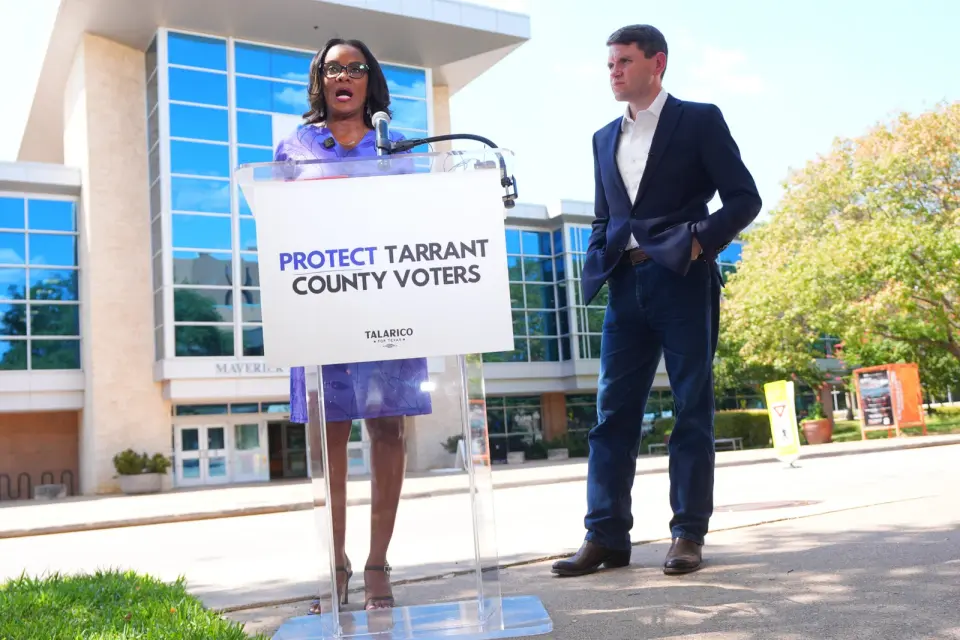
Tarrant County commissioners approved a 30% reduction in polling locations for the November midterms, cutting Election Day sites from 316 to 224. The 3-2 vote split along party lines, with Republicans citing efficiency and Democrats arguing the cuts disproportionately burden low-income and minority communities. Public outcry forced officials to retreat from a more drastic initial plan, but the final decision still eliminated key sites like the University of Texas at Arlington campus.
Key points
- Tarrant County commissioners voted 3-2 to approve 224 Election Day polling locations, down from 316 in 2022, and 47 early voting sites, down from 50.
- Republican County Judge Tim O’Hare and Commissioners Matt Krause and Manny Ramirez supported the plan, while Democratic Commissioners Roderick Miles Jr. and Alisa Simmons opposed it.
- The final plan eliminated 92 sites compared to 2022, a reduction from the initial proposal that would have cut nearly half of all locations.
- Specific closures included the University of Texas at Arlington campus and Bethlehem Baptist Church, which had tripled its voter turnout since 2024.
- Opponents argued the cuts disproportionately affect low-income areas, with the poorest ZIP codes losing 41% of their sites compared to 15% in wealthier areas.
Background
Tarrant County, home to Fort Worth and over 1.3 million registered voters, has shifted from a Republican stronghold to a competitive battleground. This follows a special election victory by Democrat Taylor Rehmet in January and high turnout in March primaries. In August, officials initially proposed cutting sites to 176 but tabled the decision after intense public backlash and arrests during a chaotic hearing. The current vote occurred amid a pivotal U.S. Senate race between James Talarico and Ken Paxton.
How outlets are covering it
Supporters, including County Judge Tim O’Hare and Elections Administrator Clint Ludwig, framed the reduction as a necessary efficiency measure to eliminate low-turnout sites and save taxpayer money. They argued that remaining sites meet accessibility standards and that voters can cast ballots at any location. Opponents, including Democratic commissioners and voting rights groups like the NAACP and ACLU, characterized the cuts as deliberate voter suppression. They highlighted that the reductions disproportionately impact minority and low-income communities, with some neighborhoods losing all local sites. State Rep. Chris Turner called the closure of the UTA site a 'deliberate barrier' for young voters, while Commissioner Roderick Miles Jr. compared the new obstacles to 'modern-day poll taxes.'
Why it matters
The decision affects over 1.3 million voters in a key swing county ahead of a competitive U.S. Senate race. The cuts may influence turnout in low-income and minority communities, potentially impacting the outcome of the November midterms. The controversy also highlights ongoing tensions in Texas regarding voting access and the role of local officials in shaping election logistics.
What to watch
Voters in Tarrant County will use the 224 approved polling locations for the November 3 election, with early voting running from October 19 to 30. The registration deadline is October 5. County Judge Tim O’Hare faces a re-election challenge from Democratic Commissioner Alisa Simmons, who has criticized the polling site cuts as a political maneuver to reduce voter access.
- ‘A deliberate barrier’: Texas battleground county cuts 30% of midterm voting locations Democracy Docket
- Tarrant County commissioners to vote on new plan reducing polling locations CBS News
- Tarrant County approves plan to reduce polling locations in 3-2 vote NBC 5 Dallas-Fort Worth
- Talarico, Simmons speak against proposal to cut almost a third of Tarrant County voting sites KERA News
- Tarrant County removes 92 polling sites ahead of November election The Texas Tribune
Want the full story? Read the original reporting
Read on Democracy Docket