
Scientists Challenge EPA 'Zero' Lead Readings After Iowa Army Detonation
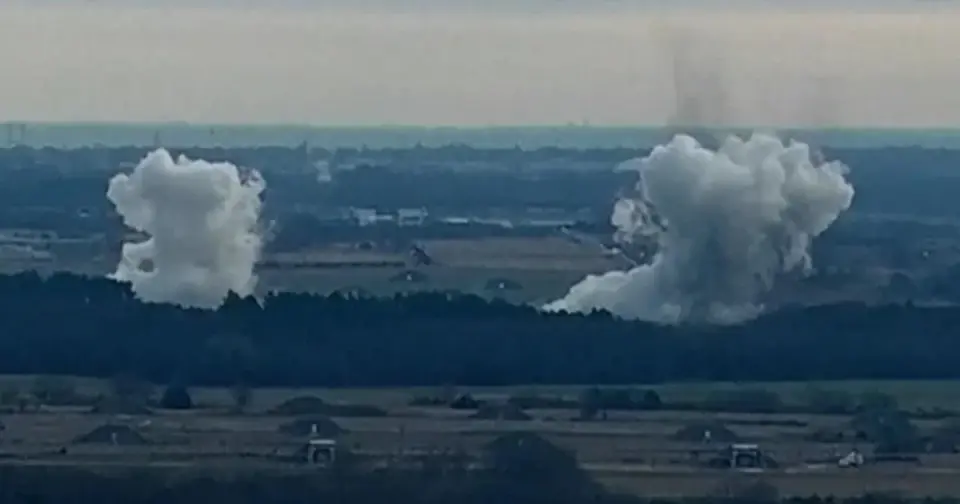
The U.S. Army detonated approximately five tons of degraded lead azide at the Iowa Army Ammunition Plant in Middletown on November 25, 2026. While the EPA reported zero airborne lead in initial real-time monitors and FEMA issued an all-clear, independent scientists and toxicologists are questioning the reliability of these readings. Dr. Devra Davis, a prominent toxicologist, argues that 'zero' is not a real number but a limit of detection, and has filed a Freedom of Information Act request for transparency on testing equipment and other chemicals used. The EPA is awaiting laboratory results from over 1,000 post-detonation samples, which are expected to begin arriving on November 27, 2026. Independent testing groups, including the Blue Shirt Justice League, are conducting their own assessments and warn that particles may remain suspended in the air for weeks.
Key points
- The U.S. Army detonated approximately five tons of lead-based explosive chemicals at the Iowa Army Ammunition Plant in Middletown, Iowa, on November 25, 2026, forcing hundreds of residents to evacuate before Thanksgiving.
- The EPA reported that all real-time Xact air monitors detected zero airborne lead throughout the region following the detonation, and FEMA issued an all-clear for the area at approximately 5:30 p.m. on November 25, 2026.
- Dr. Devra Davis, a toxicologist and former member of the U.S. Chemical Safety and Hazard Investigation Board, stated that 'zero isn't a real number' and is the limit of detection, questioning the sufficiency of the EPA's testing equipment.
- The EPA collected 1,591 pre-detonation samples and over 1,000 post-detonation samples, including air, water, soil, and dust, and expects to begin receiving laboratory results as early as November 27, 2026.
- Independent testing groups, including the Blue Shirt Justice League, are conducting their own tests and have expressed concerns about the EPA's use of the lowest action level rather than a hard safety limit, as well as the potential presence of 'forever chemicals' from the 'green foam' used to suppress the blast.
Background
The detonation was planned for November 24, 2026, but was delayed due to a federal court hold on the EPA's emergency permit. The Army cited dropping temperatures as an immediate threat that could cause spontaneous explosions of the unstable lead azide. Environmental groups had argued that the Army rejected safer chemical neutralization options and failed to adequately inform the public about potential lead exposure risks. The detonation occurred on November 25, 2026, after the Army invoked an emergency exemption.
How outlets are covering it
The EPA and the U.S. Army reported that the detonation 'exceeded expectations' and that initial real-time air monitors detected zero airborne lead, leading to an all-clear for residents. However, independent scientists, including Dr. Devra Davis, are skeptical of these early readings, arguing that 'zero' is a limit of detection and that the EPA's testing equipment may not be sufficient to detect microscopic amounts of lead. The University of Massachusetts Boston professor Alexander More identified seven nonzero readings in the underlying data on the EPA's website that were rounded down to 0.0 micrograms per cubic meter on the public dashboard. The Blue Shirt Justice League, an independent testing group, is concerned about the EPA's use of the lowest action level and the potential presence of 'forever chemicals' from the 'green foam' used to suppress the blast. The New York Times reported on the human impact, noting that a family in southeast Iowa gathered for an unusual Thanksgiving the day after the detonation, preparing dinner as they sheltered in place.
Why it matters
The detonation of lead azide, a known neurotoxin, raises significant concerns about long-term environmental and public health impacts. Lead can be toxic at parts per billion, and heavy metals do not biodegrade, remaining in the environment indefinitely. The EPA's initial 'zero' readings may not accurately reflect the presence of microscopic amounts of lead, and the potential release of other chemicals, including 'forever chemicals' from the 'green foam' used to suppress the blast, could have damaging effects on the food supply and animals. The outcome of the laboratory results and independent testing will be crucial in determining the extent of contamination and the safety of the surrounding communities.
What to watch
The EPA expects to begin receiving laboratory results from post-detonation sampling as early as November 27, 2026, although it remains unclear when they will be made public. The Blue Shirt Justice League plans to hold a town hall once it receives its independent test results, which are expected in the next three to four weeks. Dr. Devra Davis is waiting for responses to her organization's public records requests and will be watching for the independent test results. The EPA will continue its presence on the ground for as long as needed to ensure proper environmental monitoring and will continue communicating with community members and the media as more information becomes available.
- Scientists Question EPA 'Zero' Lead Readings After Iowa Army Chemical Blast CBS News
- EPA Provides Update on Sampling Following Yesterday’s Controlled Detonation at Iowa Army Ammunition Plant U.S. Environmental Protection Agency (.gov)
- Trump to visit site for new semiconductor factory in Arizona The Washington Post
- US Army releases post-detonation maps of potential lead dust exposure WQAD
- After the Iowa Detonation, a Family Gathered for an Unusual Thanksgiving The New York Times
Want the full story? Read the original reporting
Read on CBS News