
Vance and Rubio Face Political Dilemmas as 2028 GOP Field Widens
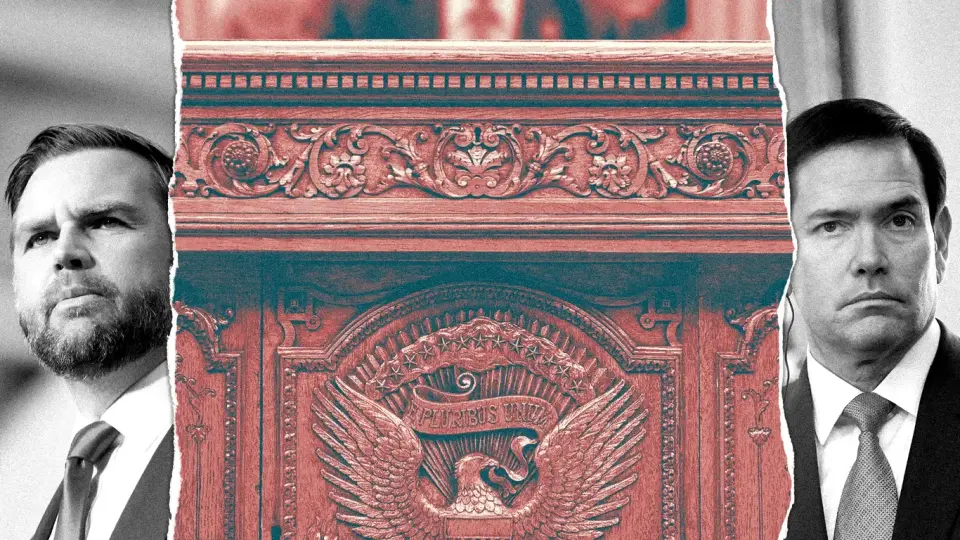
Vice President JD Vance and Secretary of State Marco Rubio face conflicting political identities as they navigate the 2028 Republican presidential race. Vance’s opposition to the Iran war clashes with his loyalty to President Trump, while Rubio’s hawkish stance on foreign policy and involvement in the Jensen Huang reinstatement complicate his image. Following the GOP’s midterm losses, the field has widened to include Ron DeSantis, Ted Cruz, and Glenn Youngkin, with Rubio gaining poll support among primary voters.
Key points
- Vance opposed the Iran war and blamed it for GOP midterm losses, but publicly deferred to Trump’s decision to continue the conflict.
- Rubio warned Trump about national security risks regarding Jensen Huang but later supported his reinstatement as Nvidia CEO.
- An Emerson poll shows Rubio leading Vance 36% to 20% among Republican primary voters, reversing previous trends.
- The 2028 field has expanded to include Ron DeSantis, Ted Cruz, and former Virginia Governor Glenn Youngkin.
- Rubio has indicated he will not run if Vance does, while Vance has delayed his decision until after the new year.
Background
The 2028 race is shaped by the lingering influence of President Trump, who remains a central figure despite being term-limited. Republicans lost control of both chambers of Congress in the 2026 midterms, with Democrats seizing strongholds in Kansas and Texas. Vance’s support collapsed from 54% to 20% in recent polls after he criticized the Iran war, while Trump publicly praised both Vance and Rubio as 'fantastic' successors. The Nvidia board reinstated Jensen Huang on November 23, 2026, following Trump’s intervention, despite Rubio’s earlier warnings about Huang’s ties to a suspected Chinese spy.
How outlets are covering it
Axios emphasizes the internal conflict between Vance and Rubio’s political identities and their loyalty to Trump. The Hill highlights the widening field, noting that Vance’s proximity to Trump may now be a disadvantage, while Rubio’s poll surge reflects a shift in GOP sentiment. Fox News focuses on House Republicans actively pushing Rubio to run, citing his charisma and ability to unify the party. The Spectator argues that Rubio’s pro-war stance is a liability, suggesting he may defer to Vance or wait until 2032 to avoid being blamed for the unpopular Iran conflict.
Why it matters
The 2028 Republican nomination is critical for the party’s recovery after its midterm losses. Vance and Rubio’s decisions will shape the party’s direction on foreign policy and economic issues, with the Iran war and Nvidia scandal serving as key flashpoints. The widening field introduces uncertainty, as candidates like DeSantis and Cruz seek to differentiate themselves from the administration’s unpopular policies.
What to watch
Vance is expected to announce his 2028 decision after the new year, potentially as late as spring. Rubio may consider running if Vance does not, or he may defer to 2032. The GOP will continue to debate the merits of the Iran war and the administration’s handling of the Nvidia scandal, with House Republicans pushing for a candidate who can unify the party and address economic anxiety.
- Vance and Rubio learn the price of loyalty to Trump Axios
- Ranking the top 5 GOP candidates for president The Hill
- Marco Rubio's 2028 stock surges among House Republicans as Trump insiders split on Vance Fox News
- Rubio and the NeverVance coalition The Spectator
- Top Trump official now emerges as ‘next great hope’ for GOP in 2028 NJ.com
Want the full story? Read the original reporting
Read on Axios