
EPA argues Army can bypass court order to detonate lead azide in Iowa
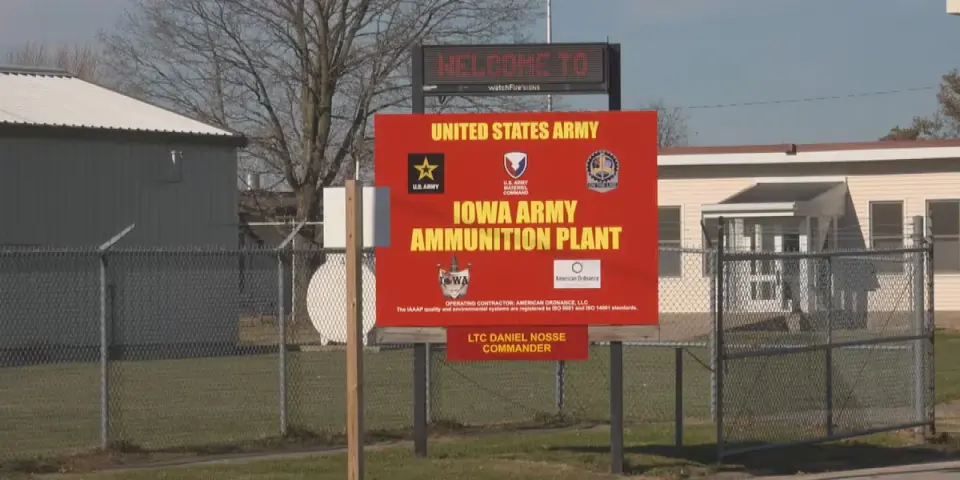
The U.S. Environmental Protection Agency (EPA) filed a court response suggesting the U.S. Army may proceed with detonating five tons of unstable lead azide at the Iowa Army Ammunition Plant in Middletown, despite a recent Eighth Circuit Court of Appeals order blocking the operation. The EPA argues that the court’s administrative stay only applies to its emergency permit, not to the Army’s independent authority to act in emergencies. The Army had delayed the planned blast from Friday to Monday, citing public safety and communication issues, but has not provided specific timing. Environmental groups, including the Iowa Environmental Council and Sierra Club, sued to halt the detonation, arguing that residents were not given adequate notice or an environmental impact statement. The material, stored for over 20 years, became unstable after water evaporation, creating a risk of accidental explosion. A toxic lead plume could affect parts of Iowa and Illinois, prompting evacuations and health warnings.
Key points
- The EPA filed a response on Friday arguing that the Army may detonate the lead azide without its permit, as the court order only stayed the EPA’s emergency permit.
- The U.S. Eighth Circuit Court of Appeals issued an administrative stay on Thursday, blocking the EPA permit that allowed the controlled detonation.
- The Army delayed the detonation from Friday to Monday, citing public safety concerns and the need for better communication with officials, including Iowa’s governor.
- The Iowa Environmental Council and Sierra Club sued to block the detonation, alleging that residents were not given adequate notice or an environmental and health impact statement.
- The lead azide, stored for over 20 years, became unstable after water evaporation, making it prone to accidental explosion. The Army warns that cold weather further destabilizes the material.
- A toxic lead plume from the detonation could drift across parts of Iowa and Illinois, affecting farms, homes, and playgrounds. Residents in Middletown were asked to evacuate or stay indoors.
Background
The U.S. Army had originally planned to detonate 68 barrels of degraded lead azide at the Iowa Army Ammunition Plant in Middletown on November 20, 2026. The material, stored for over 20 years in earthen-covered containers, became unstable after water evaporation caused it to recrystallize, making transport too risky. The EPA granted an emergency permit for the operation, stating the unstable material posed an imminent threat. Residents in Middletown and nearby areas were advised to evacuate or stay indoors due to risks of toxic lead dust plumes, shattered windows, and long-term soil contamination. Schools in the path of the plume canceled classes, and a bipartisan group of elected officials from Illinois and Iowa urged the Pentagon and EPA to delay the detonation and explore safer alternatives.
How outlets are covering it
KCRG reports that the EPA’s Friday filing suggests the Army may proceed with the detonation despite the court order, emphasizing the increasing danger of the lead azide exploding on its own. The outlet notes that the Army has not detailed timing or specifics for the new Monday timeframe and has not responded to repeated requests for information. CBS News reports that the detonation has been put on indefinite hold by the federal court, with the stay not setting a specific date until the case is heard and ruled upon. The outlet highlights that the environmental groups challenged the validity of the EPA’s emergency permit, arguing that residents had extremely short notice and that the evidence used to justify the detonation had not been made public. CBS also notes that a bipartisan group of elected officials, including Senators Dick Durbin and Tammy Duckworth, and Representatives Darin LaHood and Mary Miller, urged the Pentagon and EPA to delay the detonation and find safer alternatives. The two outlets differ in their emphasis: KCRG focuses on the EPA’s legal argument that the Army may bypass the court order, while CBS focuses on the indefinite nature of the court’s stay and the broader political and environmental opposition to the detonation.
Why it matters
The case highlights the tension between immediate safety concerns and long-term environmental and public health risks. The Army argues that the unstable lead azide poses an imminent threat of accidental explosion, while environmental groups and lawmakers argue that the controlled detonation could cause widespread lead contamination and that safer alternatives should be explored. The EPA’s legal argument that the Army may act without its permit in emergencies raises questions about the scope of environmental regulations and the balance between emergency response and public participation. The outcome could set a precedent for how agencies handle unstable hazardous materials and the role of courts in balancing safety and environmental protection.
What to watch
The U.S. Eighth Circuit Court of Appeals will hear the emergency motion for stay and rule on whether the EPA’s permit should remain blocked. The Army has not provided specific timing for the detonation, but it has indicated that cold weather makes the lead azide more unstable and prone to an unplanned explosion. The environmental groups are expected to continue their legal challenge, arguing that the Army should provide an environmental and health impact statement and explore safer alternatives. The EPA may continue to argue that the Army has the authority to act in emergencies without its permit. The outcome of the case will determine whether the detonation proceeds or is indefinitely delayed.
- Appeals court pauses lead azide detonation KCRG
- Lawsuit petitioners to hold press conference on lead azide detonation delay KWQC
- Lead azide detonation in Iowa by U.S. Army paused indefinitely after lawsuits are filed CBS News
- POSTPONED: Army releases new maps showing potential locations of lead exposure during Friday's controlled detonation WQAD
- Army delays lead azide detonation until Monday, says 'public safety' is a top priority Iowa Public Radio
Want the full story? Read the original reporting
Read on KCRG