
SS United States settles upright in Gulf after delayed scuttling
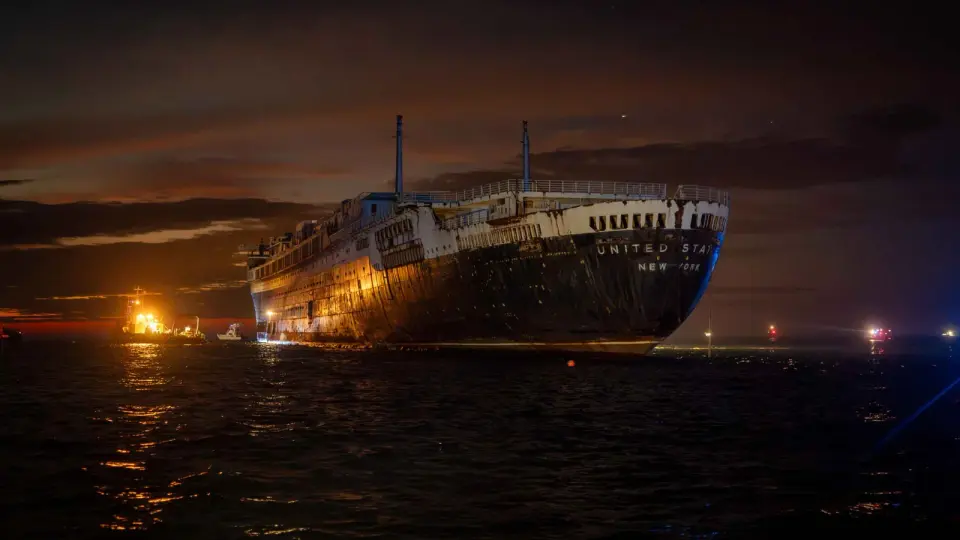
The 990-foot ocean liner SS United States was successfully sunk to become the world's largest artificial reef on Nov. 11, 2026. Despite delays, the vessel settled upright at a depth of 180 feet, 22 nautical miles off Destin, Florida. Sonar and underwater vehicles confirmed the placement, though rough weather postponed public diving access. The project, valued at $13.5 million, aims to boost tourism and marine biodiversity, marking the end of decades-long preservation efforts for the former transatlantic speed record holder.
Key points
- The SS United States sank at approximately 9 p.m. on Nov. 11, 2026, hours later than the scheduled 1 p.m. start, due to additional time required to fill tanks for stabilization.
- Sonar imaging and a remotely operated vehicle confirmed the ship landed upright at a depth of 180 feet, with the upper deck accessible to divers at 60 feet.
- The vessel is located at coordinates 30° 07.148' N, 86° 46.755' W, approximately 22 nautical miles southwest of Destin-Fort Walton Beach.
- Okaloosa County purchased the ship for $1 million in 2024 and invested an additional $13 million in environmental remediation and preparation, totaling a $13.5 million project.
- Rough weather prevented dive teams from conducting full underwater inspections on Nov. 12, delaying public access and final coordinate verification for the U.S. Army Corps of Engineers.
- The SS United States, designed by William Francis Gibbs, holds the transatlantic speed record and carried over one million passengers before retiring in 1969.
Background
The SS United States had been docked in Philadelphia for nearly three decades after retiring in 1969, facing repeated failed attempts at restoration or relocation. In 2024, Okaloosa County acquired the vessel for $1 million, initiating a $13.5 million project to remediate environmental contaminants and prepare it for scuttling. The ship was towed to Mobile, Alabama, for 20 months of preparation before being moved to Florida. The sinking follows a federal lawsuit filed by the SS United States Preservation Foundation, which was denied by a judge on Nov. 6, 2026. The project is part of a broader trend in Florida, where over 4,000 artificial reefs have been created since 1940, with the SS United States now surpassing the USS Oriskany as the largest such structure.
How outlets are covering it
Pensacola News Journal emphasized the technical challenges of the sinking, noting that delays were necessary to fill additional tanks with seawater to ensure the ship settled correctly, and highlighted the emotional farewell from preservation advocates. FOX10 News focused on the confirmation of the ship's upright landing, quoting the City of Destin's celebratory message, and noted the ship's 20-month preparation period in Mobile. NPR highlighted the economic potential of the reef, citing Okaloosa County tourism director Jennifer Adams, who expects the $10 million investment to be recouped in a few years, and noted the ship's historical significance, including its transport of presidents and the Mona Lisa. NPR also featured the perspective of Susan Gibbs, granddaughter of the ship's designer, who described the sinking as a 'dignified solution' compared to scrapping, while the SS United States Preservation Foundation called the outcome a tragic failure for preservationists. All sources agreed on the ship's upright landing and its status as the world's largest artificial reef, but differed in emphasis: Pensacola News Journal on the technical process, FOX10 on the confirmation, and NPR on the economic and historical implications.
Why it matters
The sinking of the SS United States marks a significant milestone in maritime preservation and artificial reef creation, as it is now the world's largest such structure. The project is expected to generate substantial economic benefits for Northwest Florida, with tourism officials anticipating increased revenue from diving, fishing, and related services. The reef is also expected to boost marine biodiversity, attracting species such as grouper, snapper, and tuna. The event concludes a decades-long effort to preserve the ship, which had faced multiple failed restoration attempts and legal challenges. The planned museum and the ship's historical significance, including its transatlantic speed record and celebrity passengers, ensure its legacy will continue above and below water. The project also highlights the growing trend of using artificial reefs to drive tourism and economic development in coastal regions, with Okaloosa County planning to sink five to six additional reefs in the future.
What to watch
Dive teams from Destin-Fort Walton Beach and Woods Hole Oceanographic Institution are expected to survey the ship to establish its exact resting position, with coordinates to be provided to the U.S. Army Corps of Engineers. Public access for recreational divers was postponed due to rough weather, with officials still determining when visits will be permitted. The SS United States Conservancy plans to open a land-based museum using over 10,000 preserved artifacts, while the SS United States Preservation Foundation intends to continue efforts to preserve the ship's history. Okaloosa County is planning to sink five to six additional artificial reefs in the future, aiming to capitalize on the tourism boom generated by the SS United States. The ship's upper deck, accessible at 60 feet, is expected to become a major attraction for divers and anglers, with tourism officials anticipating increased economic benefits for the region.
- SS United States sinks after delays, lands upright in Gulf Pensacola News Journal
- WATCH: SS United States, once world’s fastest ocean liner, sinks to become reef off Florida PBS
- ‘Our big-bottomed beauty landed upright!’: City of Destin shares SS United States update FOX10 News
- World's fastest ocean liner is sunk to break another record: largest artificial reef NPR
- A very, very slow and final bon voyage for the SS United States along the Florida Panhandle Inquirer.com
Want the full story? Read the original reporting
Read on Pensacola News Journal