
California's phased ban on watering ornamental grass begins in 2027
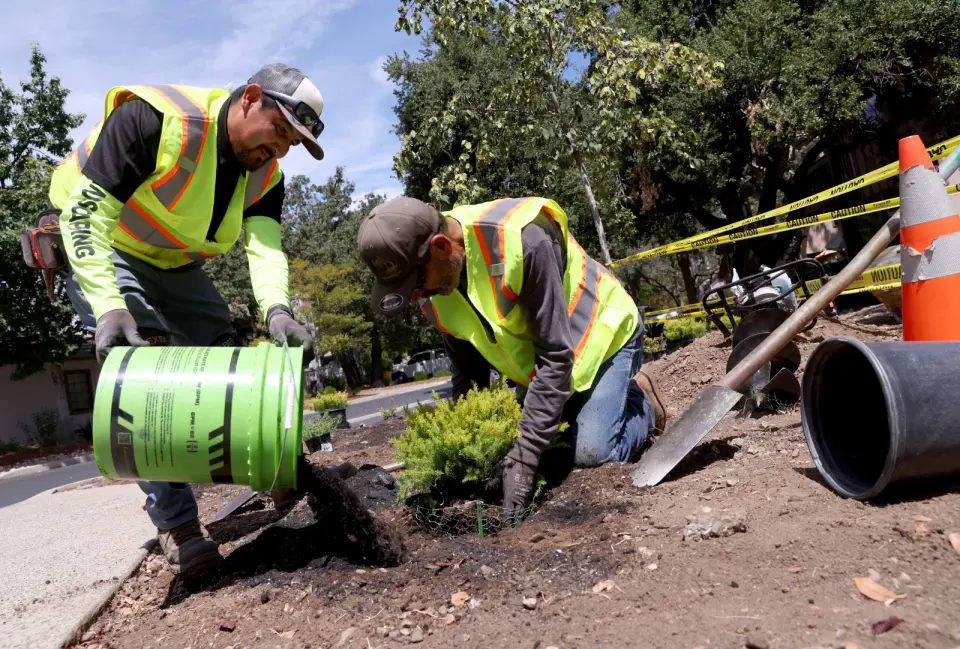
California Assembly Bill 1572, signed in 2023, mandates a phased ban on using potable water to irrigate decorative grass. The ban takes effect in stages, starting with government agencies in 2027, followed by commercial properties in 2028, and homeowners associations in 2029. While supporters view it as a necessary long-term investment for water security, critics argue the law is premature given current high reservoir levels and lack of local government readiness.
Key points
- The ban applies to 'ornamental turf' on government, commercial, and HOA properties, excluding functional turf like sports fields and residential lawns.
- Enforcement begins with local and regional government agencies on January 1, 2027, with fines up to $1,000 per day for violations.
- Commercial businesses and colleges must comply by January 1, 2028, while homeowners associations are subject to the ban starting January 1, 2029.
- The Santa Clara Valley Water District offers rebates up to $135,000 to help entities replace turf with water-efficient landscaping.
- A survey found that 80% of property owners are still waiting for direction or avoiding the subject, indicating low awareness among some stakeholders.
Background
California has experienced three severe droughts since 2007, leading to increased scrutiny of water usage. The law was signed by Governor Gavin Newsom in 2023 as the state emerged from a harsh three-year drought. While current reservoir levels are above average and a strong El Niño may bring significant rainfall this winter, proponents argue that locking in water savings now is essential for future resilience. The legislation is modeled on a 2021 Nevada law that banned the use of Colorado River water on ornamental grass, which has faced legal challenges from homeowners associations.
How outlets are covering it
Supporters, including the Natural Resources Defense Council and Heal the Bay, emphasize that the law targets 'low-hanging fruit' by eliminating water waste on purely ornamental grass, preserving drinking water for essential uses. They argue that climate change makes future droughts inevitable, making proactive measures necessary. Conversely, opponents like the Howard Jarvis Taxpayers Association criticize the law as 'knee-jerk legislation' enacted under different circumstances, arguing that local governments lack the budget and readiness to replace grass. They suggest voluntary incentives and reservoir expansion would be more effective. The San José Spotlight highlights the financial assistance available, framing the transition as an opportunity for innovation and cost savings, while some commenters express concerns about the impact on individual rights and the potential for water to be redirected to data centers.
Why it matters
The ban represents a significant shift in California's approach to water conservation, moving from emergency measures during droughts to permanent regulations. It affects a wide range of properties, from government buildings to commercial campuses and homeowners associations, potentially saving millions of gallons of water annually. The phased implementation and available rebates aim to ease the transition, but the law's success depends on widespread compliance and the effectiveness of enforcement. As climate change continues to impact water availability, such measures may become a model for other states facing similar challenges.
What to watch
Local and regional government agencies must comply with the ban starting January 1, 2027, with enforcement expected to be light initially. Commercial businesses and colleges will face the ban in 2028, followed by homeowners associations in 2029. The State Water Resources Control Board and retail water providers will oversee compliance, with a focus on education rather than immediate fines. Property owners are encouraged to take advantage of rebates and virtual office hours offered by water districts to plan and implement water-efficient landscaping.
Want the full story? Read the original reporting
Read on The Mercury News