
Front Range ozone days triple in 2026, prompting new clean air strategy
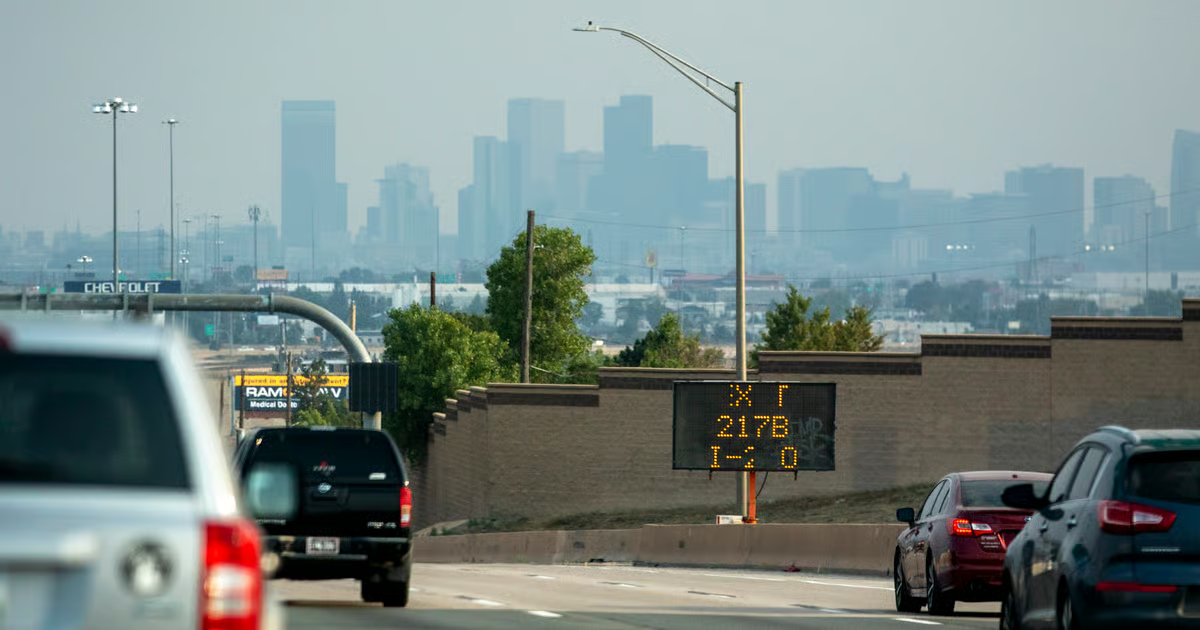
The Denver Front Range experienced its worst air quality in years, with over 60 days of unhealthy ozone levels in 2026, nearly triple the previous year. While wildfire smoke contributed, officials cite vehicle and oil and gas emissions as the primary drivers. A new health impact assessment estimates that meeting federal standards could save $211 million to $580 million annually in health costs, while a significant increase in pollution could cost over $1.9 billion. In response, the Regional Air Quality Council has released a draft blueprint to guide the state toward stricter regulations for oil and gas operations, commercial lawn equipment, and refineries to meet federal standards by 2032.
Key points
- The 2026 summer season recorded over 60 days of unhealthy ozone levels on the Front Range, nearly three times the 24 days recorded in 2025.
- Mike Silverstein of the Regional Air Quality Council attributes the spike primarily to vehicle and oil and gas emissions, with wildfire smoke playing a secondary role.
- A July 2026 health impact assessment by the Colorado School of Public Health found that meeting federal ozone standards could save $211 million to $580 million annually in health costs, while a large increase in ozone could cost over $1.9 billion.
- The Regional Air Quality Council released a draft 2026 Control Strategy Blueprint to guide the state toward measures to meet federal standards, including new rules for oil and gas operations and commercial gas-powered lawn equipment.
- Over 81% of Coloradans live in communities with unhealthy levels of ozone and particle pollution, according to the American Lung Association.
Background
The Front Range has struggled with air quality for years, failing to meet federal health-based standards for ground-level ozone for 14 straight years. In 2022, the U.S. Environmental Protection Agency classified the Front Range as a 'severe' ozone violator, giving the area until 2032 to meet a federal ozone standard set at 70 parts per billion. While ozone levels trended down in the past 10 years, the 2026 season bucked that trend. The region's geography, with plains below mountains, makes the accumulation of chemicals from oil and gas emissions particularly strong, and high heat and sunlight in the summer trigger chemical reactions that form ground-level ozone. Previous regulations have included stricter air quality and leak detection requirements for oil and gas operators, increasing regulations for high-polluting vehicles, and restricting the use of gas-powered lawn and garden equipment.
Why it matters
The 2026 air quality crisis highlights the urgent need for stricter environmental regulations in Colorado. The significant economic and health costs associated with poor air quality, as detailed in the health impact assessment, provide a compelling case for policymakers to implement the recommendations in the 2026 Control Strategy Blueprint. Failure to act could result in continued health issues for Coloradans, including asthma attacks, emergency department visits, and lost work days, as well as substantial economic losses. The crisis also underscores the importance of transitioning to electric vehicles and equipment to reduce emissions.
What to watch
The Colorado Air Quality Control Commission will consider new rules for oil and gas operations, commercial gas-powered lawn equipment, and oil refinery emissions in the coming months. The Regional Air Quality Council hopes the results of the health impact assessment will convince policymakers to take more action. Advocates are also pushing for state, local, and regional leaders to help Coloradans take advantage of incentives and discounts for getting electric cars and trucks on the road and for getting more electric lawn equipment.
Want the full story? Read the original reporting
Read on Colorado Public Radio