
Portland Air Quality Ranks Worst Globally as Wildfire Smoke Blanks Pacific Northwest
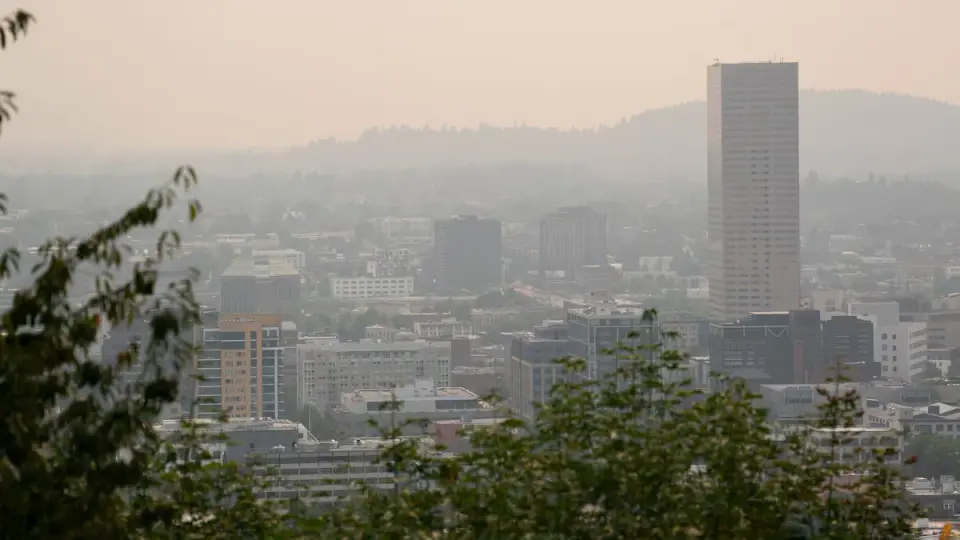
Portland’s air quality briefly ranked as the worst among 120 major global cities on Wednesday, August 4, 2026, with an Air Quality Index (AQI) of 160. The severe pollution stems from over 2 million acres of active wildfires in Oregon, including the massive Rowe Creek Complex and the Grasshopper Fire near Mount Hood. While Portland’s ranking improved to fifth by 10 a.m. as other cities worsened, hazardous conditions persisted in Central Oregon, where some areas recorded AQI levels exceeding 460. Authorities issued advisories across 27 Oregon counties and parts of Washington, warning of health risks and urging residents to stay indoors. Relief is expected to begin Wednesday night as winds shift, though smoke is forecast to linger through Thursday.
Key points
- IQAir listed Portland as having the worst air quality among 120 tracked major cities at 7 a.m. on August 4, with an AQI of 160, before dropping to fifth place by 10 a.m. as other cities’ conditions deteriorated.
- The Rowe Creek Fire Complex in Central Oregon, burning 329,012 acres, and the Big Grass Fire in southeastern Oregon, the state’s largest at 358,959 acres, are primary sources of the smoke, with 49 large fires active across Oregon and Washington.
- The Grasshopper Fire, burning 39,439 acres east of Mount Hood, is the closest major fire to Portland, prompting Level 3 evacuation orders for Mt. Hood Meadows and Level 1 orders for Government Camp and Timberline Lodge.
- In Post, Oregon, near the Rowe Creek Complex, a monitoring station recorded a hazardous AQI of 460, while Prineville registered a 'very unhealthy' 200. In Clackamas County, areas like Welches and Rhododendron saw AQI levels exceed 700 as smoke from the Grasshopper Fire arrived.
- The Oregon Department of Environmental Quality issued air quality advisories for 27 of 36 counties, overlapping with heat advisories in the Portland metro area where temperatures may reach triple digits. Washington County opened additional shelter capacity for homeless residents in Hillsboro and Tigard through Thursday noon.
- National Weather Service meteorologist Noah Alviz stated that a wind shift from the west will begin pushing smoke eastward starting Wednesday night, but the clearance will be gradual, with much of the smoke expected to clear by Thursday night.
Background
This event follows a pattern of severe air quality crises in North America during 2026. In July, Chicago and Toronto both ranked as the world’s worst for air quality due to wildfire smoke from Canada and northern Minnesota, with Chicago reaching an AQI of 402. Those earlier events highlighted the transboundary nature of smoke plumes and the strain on public health infrastructure. The current Pacific Northwest crisis is distinct in its scale, with over 2 million acres burning in Oregon alone, and is compounded by simultaneous heat advisories and red flag fire warnings in areas like Medford, creating a dual threat of smoke inhalation and new ignition risks.
How outlets are covering it
OPB emphasizes the global ranking of Portland and the immediate health impacts, detailing specific AQI readings in residential areas like Clackamas and Washington counties, as well as the social response, such as the opening of homeless shelters. KATU focuses on the operational scale of the fires, providing specific acreage, containment percentages, and personnel numbers for the five largest fires in Oregon, and highlights the upcoming weather shift that could increase wildfire threat by Friday. Both sources agree on the severity of the smoke and the advisories in place, but OPB highlights the human and urban impact in the metro area, while KATU provides a broader regional overview of the fire management status and future weather risks.
Why it matters
The event underscores the escalating public health and infrastructure challenges posed by large-scale wildfires in the Pacific Northwest. The overlap of hazardous air quality, extreme heat, and active evacuation orders strains emergency services and public health resources. The global ranking of Portland highlights the international visibility of the crisis and the potential long-term health consequences for residents, particularly those with pre-existing heart and lung conditions. The forecasted wind shift introduces a new risk of fire spread, indicating that the crisis is not yet contained and may worsen before improving.
What to watch
A wind shift from the west is expected to begin pushing smoke eastward starting Wednesday night, with a gradual clearance of smoke across western Oregon by Thursday night. However, a dry cold front is forecast for Friday and Saturday, bringing gusty west winds that could elevate the wildfire threat again. Residents are advised to monitor air quality forecasts, limit outdoor activities, and follow medical advice for those with heart or lung conditions. Authorities will continue to issue advisories as conditions evolve, with the ozone pollution advisory expected to last until 10 p.m. Thursday.
- Portland air quality is among the worst for major cities worldwide Oregon Public Broadcasting - OPB
- Hot and smoky: Here's when air quality will improve in Seattle KING5.com
- Portland has the worst air quality of any major city in the world KGW
- 49 large fires burn in Oregon and Washington as smoke worsens air quality KATU
- Pickles fans adapt to smoky skies as Portland air quality worsens KOIN.com
Want the full story? Read the original reporting
Read on Oregon Public Broadcasting - OPB