
SS United States sinks in Gulf of Mexico to become world's largest artificial reef
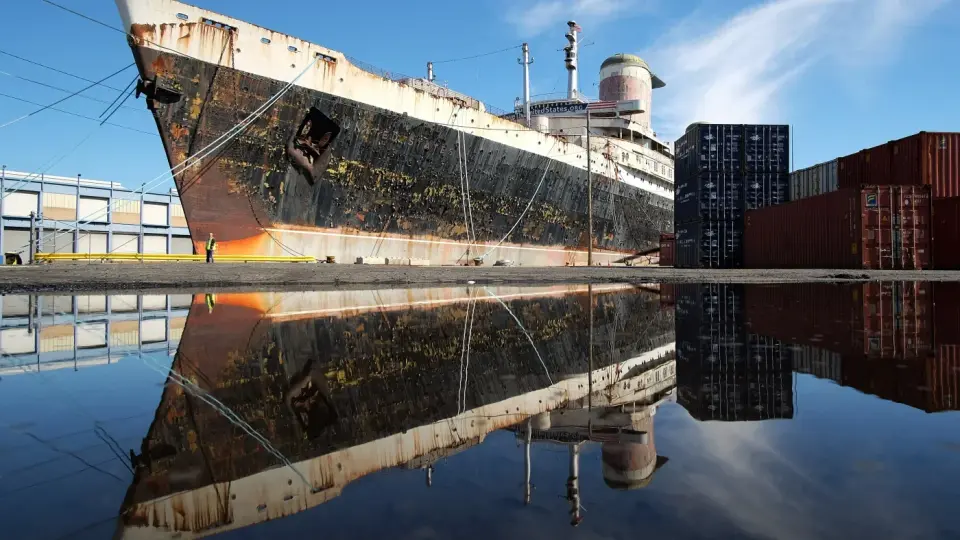
The retired ocean liner SS United States was deliberately sunk in the Gulf of Mexico on November 11, 2026, to create the world's largest artificial reef. The 990-foot vessel, which holds the transatlantic speed record, rests 180 feet underwater off the coast of Florida. The project, led by Okaloosa County and marine engineering firm Coleen Marine, aims to boost marine biodiversity and tourism while preserving the ship's legacy through a planned museum.
Key points
- The SS United States, a 990-foot former luxury liner, was sunk at 9 p.m. ET on November 11, 2026, approximately 22 nautical miles southwest of Destin, Florida.
- The vessel now rests upright at a depth of 180 feet, with its upper decks accessible to beginner divers at around 60 feet, creating a multi-level underwater habitat.
- The sinking process took over four hours, longer than the estimated 45 minutes, as crews managed the release of air and water through the ship's original seawater intake system.
- Okaloosa County and Coleen Marine spent 18 months preparing the ship, including cleaning rust, removing hazardous materials, and cutting holes in the hull to ensure a controlled, upright descent.
- The SS United States Conservancy is planning a land-based museum in Florida to preserve the ship's history, including its removed smokestacks, while the wreck serves as a marine habitat.
Background
The SS United States, designed by William Francis Gibbs, launched in 1952 and held the transatlantic speed record for decades. After retiring in 1969, it spent nearly 30 years docked in Philadelphia before being sold to Okaloosa County in 2024. Previous efforts to convert it into a hotel or museum failed due to financial and legal issues. The ship joins the Florida Panhandle Shipwreck Trail, following the USS Oriskany, which was sunk as a reef in 2006.
How outlets are covering it
NPR emphasizes the emotional and historical significance of the ship's transformation, highlighting the mixed feelings of Susan Gibbs, granddaughter of the ship's designer. WEAR-TV focuses on the immediate impact on local tourism and diving, noting that recreational divers can access the site within 24 hours. The Pensacola News Journal provides technical details on the sinking process, including the use of the ship's original seawater intake system and the delays caused by weather. All sources agree on the ship's new role as a marine habitat, but NPR and WEAR-TV highlight the cultural and economic benefits, while the Pensacola News Journal focuses on the engineering challenges.
Why it matters
The sinking of the SS United States represents a significant shift in how historic vessels are repurposed, prioritizing environmental and economic benefits over traditional preservation. The project aims to boost marine biodiversity, support local tourism, and create a new attraction for divers and researchers. It also sets a precedent for other large vessels, demonstrating that controlled sinking can be a viable option for preserving historical artifacts while contributing to marine ecosystems.
What to watch
Divers and charter boat captains are expected to begin exploring the reef within 24 hours, with initial surveys conducted by teams from Destin-Fort Walton Beach and Woods Hole Oceanographic Institution. The U.S. Army Corps of Engineers will receive the ship's exact location after the survey. Marine biologists predict that algae, coral, and fish will begin colonizing the wreck within months, creating a thriving ecosystem by spring. The SS United States Conservancy will continue planning the land-based museum, which will feature the ship's removed smokestacks and other artifacts.
- The SS United States takes its final voyage to the bottom of the Gulf of Mexico NPR
- Divers plan to access SS United States reef as soon as Friday after 24-hour safety wait WEAR-TV
- WATCH: SS United States, once world’s fastest ocean liner, sinks to become reef off Florida PBS
- A very, very slow and final bon voyage for the SS United States along the Florida Panhandle Inquirer.com
- SS United States took 4 hours to sink. Here's a recap Pensacola News Journal
Want the full story? Read the original reporting
Read on NPR