
Federal Mandate Sets 1.25 Million Acre-Feet Annual Cuts for Lower Basin States
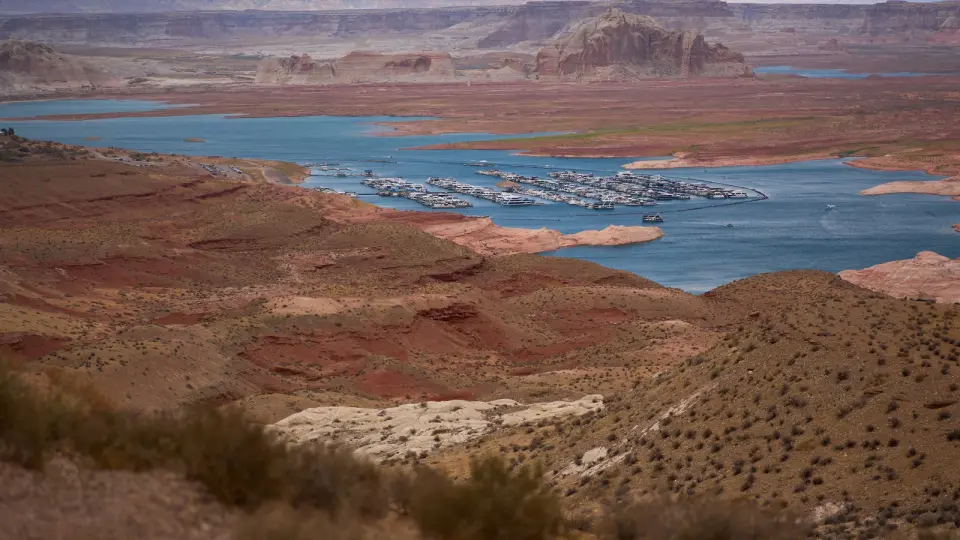
The U.S. Department of the Interior has finalized a two-year water allocation plan for the Colorado River, mandating annual reductions of 1.25 million acre-feet for Arizona, California, and Nevada starting in 2027. This decision follows the failure of seven states to reach a consensus before the previous operating rules expired in October. Arizona faces the largest share of the cuts, while upstream states are not subject to mandatory reductions but are encouraged to cooperate voluntarily. The measures aim to stabilize Lake Mead and Lake Powell, which recently hit record-low levels, though officials warn that further cuts may be necessary if conditions worsen.
Key points
- The Bureau of Reclamation announced mandatory water cuts for 2027 and 2028, totaling 1.25 million acre-feet annually for the Lower Basin states.
- Arizona will absorb the largest portion of the reduction, with California and Nevada facing smaller but significant cuts, based on a voluntary agreement reached in May.
- Upstream states, including Colorado, Utah, Wyoming, and New Mexico, are not subject to mandatory cuts but are requested to manage reservoirs to support downstream flows.
- The plan includes a goal to maintain Lake Powell levels above 3,510 feet to preserve hydropower generation capabilities at Glen Canyon Dam.
- Mexico is required to reduce its intake by 250,000 acre-feet annually under a separate treaty provision.
Background
This announcement concludes a period of intense negotiation following the expiration of previous operating rules in October 2025. Earlier in 2026, the federal government proposed a more aggressive 10-year framework that could have reduced water by up to 3 million acre-feet annually, a scenario that faced significant pushback from state leaders concerned about agricultural and economic impacts. The current two-year plan represents a compromise that provides near-term certainty while leaving room for future adjustments based on hydrological conditions.
How outlets are covering it
ABC7 Los Angeles and ABC News emphasize the severity of the cuts and the record-low status of the region's major reservoirs, highlighting the urgency of the situation. CNN frames the decision as a necessary federal intervention after the failure of the seven states to reach a consensus, noting that the final cuts are less severe than the worst-case scenario proposed in July. Officials from Arizona, California, and Nevada have expressed relief at the stability provided by the two-year window, describing it as a bridge to longer-term solutions, while conservation groups in Nevada warn that the cuts may already be impacting local development projects.
Why it matters
The Colorado River supplies water to over 40 million people and supports critical agricultural and industrial sectors across the American West. The mandated reductions reflect the escalating impact of a 26-year drought and climate change on the region's water infrastructure. Failure to implement these measures could lead to deeper cuts in the future, potentially threatening hydropower generation and exacerbating economic instability in major metropolitan areas and rural communities dependent on the river.
What to watch
The Department of the Interior will monitor water levels and hydrological conditions to determine if additional cuts are necessary beyond the 2028 period. Negotiations for a long-term consensus among the seven basin states will continue, with the next review cycle expected to assess the effectiveness of the current measures and adjust allocations accordingly.
- Federal officials announce water cuts in California, Nevada and Arizona as Colorado River supplies continue to plunge ABC7 Los Angeles
- Three Colorado River states must take big water cuts as biggest US reservoirs plunge to record lows CNN
- US imposes deep Colorado River water cuts to California, Nevada and Arizona Reuters
- Federal government orders steep Colorado River water cuts for Arizona, California and Nevada ABC News - Breaking News, Latest News and Videos
- Arizona to bear the brunt of Colorado River cuts for two years as long-term talks continue Arizona Mirror
Want the full story? Read the original reporting
Read on ABC7 Los Angeles