Water policy has eclipsed traditional partisan issues like abortion in Arizona’s 2026 midterm races. Candidates are leveraging the state’s severe drought and Colorado River cuts to attack opponents, while new tools from Arizona State University aim to clarify local water risks for voters.
Arizona has filed a motion to join Nevada’s lawsuit against the federal government over new Colorado River management rules. The federal plan mandates 20% water cuts for lower-basin states through 2028, with potential 40% reductions later. Arizona, facing the largest share of these cuts, argues the Bureau of Reclamation violated procedural laws by ignoring warnings from state leaders. While the suit challenges the legality of the plan, it does not seek an immediate pause on the rules, which take effect on January 1, 2027. Arizona and Nevada remain in negotiations with California to share the burden of these reductions.
The Colorado River is nearing a critical flow threshold that could trigger Supreme Court litigation over the 1922 Compact. Experts warn that legal battles would replace negotiations, potentially forcing severe water cuts for Upper Basin states like Colorado, while Lower Basin cities like Glendale, Arizona, rely on decades of infrastructure planning to mitigate federal reductions.
The Bureau of Reclamation has imposed mandatory two-year water cuts on Arizona, California, and Nevada, with Arizona facing the largest reduction of approximately 30% of its supply. These cuts, effective in 2027 and 2028, threaten Yuma County’s status as the source of 90% of the nation’s winter leafy greens. While senior water rights may protect some farms initially, the broader crisis risks disrupting national food supplies and exacerbating water shortages for tribal nations and urban areas.
The Bureau of Reclamation’s two-year plan mandates significant water cuts for Arizona, California, and Nevada to address record-low reservoir levels. Arizona faces a 30% reduction in its Colorado River supply, threatening its status as a major winter produce hub. Nevada has sued to block the plan, arguing it unfairly burdens lower-basin states while upper-basin states face no mandatory cuts. Lake Mead and Lake Powell are at all-time lows, exacerbating uncertainty for cities and farmers.
Nevada sued the Department of the Interior over new Colorado River water cuts, arguing the plan unfairly burdens Lower Basin states while sparing Upper Basin states. Arizona is evaluating its options, noting the plan has legal flaws but offers a temporary reprieve. Experts warn that litigation could delay urgent solutions for the drought-stricken river.
Nevada has filed the first lawsuit challenging the Trump administration’s new Colorado River operating plan, which mandates 20% water cuts for downstream states while sparing upstream regions. The state argues the plan violates environmental laws and would devastate Las Vegas, which relies on 90% of its water from the river. As reservoirs hit record lows, Arizona and California are evaluating similar legal challenges, signaling a potential multi-year court battle over water allocation.
Nevada has filed the first legal challenge against the Trump administration’s new federal plan to reduce Colorado River water use. The state argues the plan unlawfully imposes severe cuts on lower-basin states while sparing upper-basin states, threatening its economy and water supply.
Nevada has sued the federal government to block new Colorado River water cuts, arguing the plan unfairly burdens lower-basin states. Simultaneously, Arizona faces a unique legislative hurdle: a 1980 statute may require the state legislature to approve the federal plan, though experts debate the scope of that power. The federal plan imposes roughly 20% cuts on Arizona, California, and Nevada, while upper-basin states face no mandatory reductions.
Nevada has filed a lawsuit against the Trump administration over mandatory water cuts for the Colorado River. The federal plan, effective in 2027, requires Lower Basin states to reduce usage by 1.25 million acre-feet annually. Nevada faces a 50,000 acre-foot reduction, while Arizona and California bear larger cuts. The move follows failed negotiations among seven states and aims to protect record-low reservoir levels.
The US Department of the Interior has issued a new two-year operating plan for the Colorado River, mandating significant water cuts for Arizona, California, and Nevada through 2028. This federal intervention follows years of failed negotiations among the seven basin states and comes as Lake Mead and Lake Powell have both reached historic low levels. The plan imposes the steepest reductions on Arizona, while upper basin states face no mandatory cuts, a decision that has sparked mixed reactions and raised concerns about future litigation.
The U.S. Department of the Interior has finalized a two-year water allocation plan for the Colorado River, mandating annual reductions of 1.25 million acre-feet for Arizona, California, and Nevada starting in 2027. This decision follows the failure of seven states to reach a consensus before the previous operating rules expired in October. Arizona faces the largest share of the cuts, while upstream states are not subject to mandatory reductions but are encouraged to cooperate voluntarily. The measures aim to stabilize Lake Mead and Lake Powell, which recently hit record-low levels, though officials warn that further cuts may be necessary if conditions worsen.
The Bureau of Reclamation released a two-year operating plan for the Colorado River, mandating significant water cuts for Lower Basin states while sparing Upper Basin states from mandatory reductions. Lake Powell and Lake Mead are at historic lows, prompting a 1.25 million acre-foot annual reduction for Arizona, California, and Nevada. The plan includes a 10-year framework to allow future consensus agreements and voluntary conservation measures.
The U.S. Department of the Interior has finalized a two-year operating plan for the Colorado River, mandating significant water cuts for Arizona, California, and Nevada. While Arizona faces the largest reduction, the plan avoids the maximum potential cuts by incorporating voluntary state agreements. Upper Basin states face no mandatory reductions, and the framework requires renegotiation every two years through 2036.
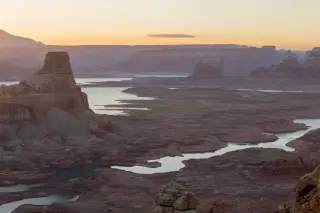
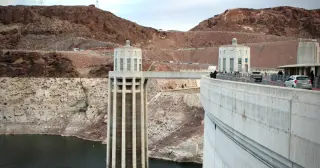
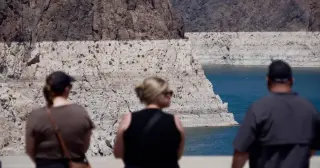
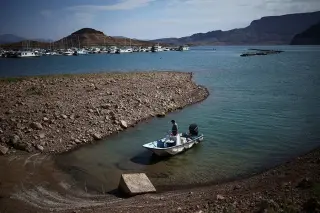
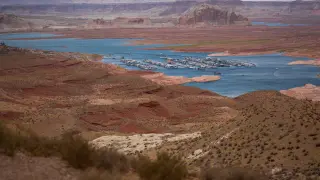
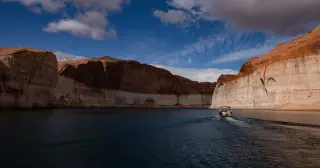
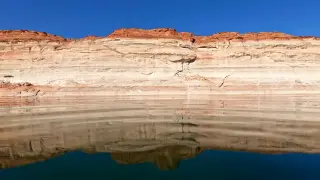
Lake Powell, the second-largest reservoir in the U.S., has reached a record-low water level of 3,519.8 feet, surpassing the previous low set in April 2023. This decline, which is part of a broader crisis affecting the Colorado River basin, threatens hydropower generation and water supplies for millions. The U.S. Bureau of Reclamation projects the level could drop further by March 2027, approaching the minimum threshold required for electricity production. Concurrently, Lake Mead, the nation's largest reservoir, has also hit a record low, dropping over 23 feet since the start of the year. These developments highlight the severe impact of a 25-year drought and heavy water usage on the region's infrastructure.