
Copenhagen and Nuuk reject Trump’s claim of imminent 'massive' Greenland drilling
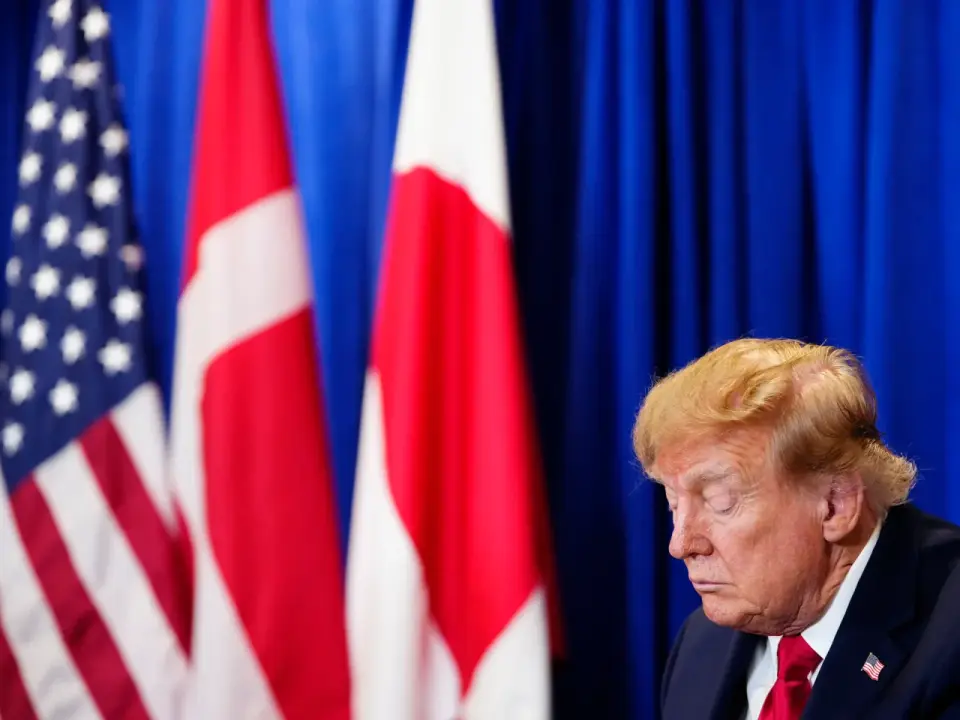
Denmark and Greenland have officially pushed back against President Donald Trump’s assertion that 'massive' oil and mineral exploration is about to begin in the Arctic territory. While Trump claimed on Truth Social that extraction is imminent, Danish and Greenlandic officials emphasized that the September 2026 security agreement does not grant the US preferential rights to natural resources. Greenland’s deputy mining minister stated that current activities are small-scale and that large-scale extraction is years away due to logistical and environmental hurdles.
Key points
- The Danish Foreign Ministry stated that the September 22 agreement between the US, Denmark, and Greenland does not alter extraction rules or grant US investors preferential treatment over other NATO or EU partners.
- Greenland’s deputy mining minister, Jørgen Hammeken-Holm, told CNN that while US companies are active, the territory is 'very far away' from 'massive' exploration, citing remote locations, thick ice, and high costs.
- The 10-page agreement signed at the UN General Assembly focuses on military modernization, including the Pituffik Space Base and new bases, but contains no explicit provisions for oil or gas drilling.
- Greenland banned uranium mining and future oil exploration in 2021; its government is currently reviewing whether a Texas firm, Greenland Energy, can use pre-ban permits for a 2027 drilling plan.
- Trump’s post on Truth Social described Greenland as 'our new and beautiful Greenland' and claimed that any future attack on the US would have to pass through the island, where US defense systems would intercept threats.
Background
This dispute follows the September 2026 security pact signed by US President Donald Trump, Danish Prime Minister Mette Frederiksen, and Greenlandic Prime Minister Jens-Frederik Nielsen. That agreement resolved months of tension over Trump’s annexation threats by reaffirming Danish sovereignty and Greenlandic self-determination while expanding US military presence. The current conflict arises from a divergence between Trump’s public rhetoric regarding resource extraction and the legal reality of the signed treaty, which prioritizes security and mineral cooperation without granting drilling rights.
How outlets are covering it
Al Jazeera highlights the Danish government’s firm stance that the agreement excludes mining rights and that Trump’s comments may signal unchanged intentions to control the island. CNN focuses on the direct contradiction from Greenland’s deputy mining minister, who emphasized the physical and economic barriers to 'massive' extraction, noting that 80% of the island is covered in ice. AP News frames the situation as a clash between Trump’s optimistic claims about easily accessible reserves and the cautious, slow-paced reality of Arctic resource development. Analysts cited by Al Jazeera, such as Richard Weitz, suggest Trump 'backed down' from annexation but achieved significant military gains, while others warn that the ambiguity in the agreement’s language regarding 'minerals cooperation' leaves room for future disputes.
Why it matters
The disagreement underscores the fragility of the US-Denmark-Greenland security framework and the potential for future diplomatic friction over Arctic resources. If the US attempts to bypass existing environmental bans or preferential treatment clauses, it could strain NATO alliances and challenge the sovereignty principles established in the September pact. Additionally, the volatility in Greenland-linked stocks, such as the 75% surge in Greenland Energy Company, indicates that market speculation is outpacing regulatory reality, creating risks for investors and local communities.
What to watch
The Danish government is expected to continue monitoring US activities to ensure compliance with the agreement’s terms. Greenland’s authorities will likely proceed with their review of pre-2021 permits held by firms like Greenland Energy. Diplomatic channels may be used to clarify the scope of 'minerals cooperation' mentioned in the treaty to prevent unilateral interpretations by the US administration.
- Denmark pushes back as Trump touts Greenland oil and mineral deals Al Jazeera
- Greenland contradicts Trump’s claim that ‘massive’ oil and gas drilling is about to begin there CNN
- Denmark says US resource exploration in Greenland must respect local laws Reuters
- 'The island is second to none': Trump says oil, gas and mineral exploration to begin in Greenland Fortune
- Trump says oil, gas and mineral exploration in Greenland is set to begin. It’s not that simple AP News
Want the full story? Read the original reporting
Read on Al Jazeera