
geopolitics-and-energy6 min read
ITLOS Hears Bid to Halt Sea Lion Oil Drilling Amid UK-Argentina Sovereignty Clash
12 days ago•Source: Al Jazeera
View original source
The latest geopolitics and energy stories, each synthesized from multiple sources with added background and context.

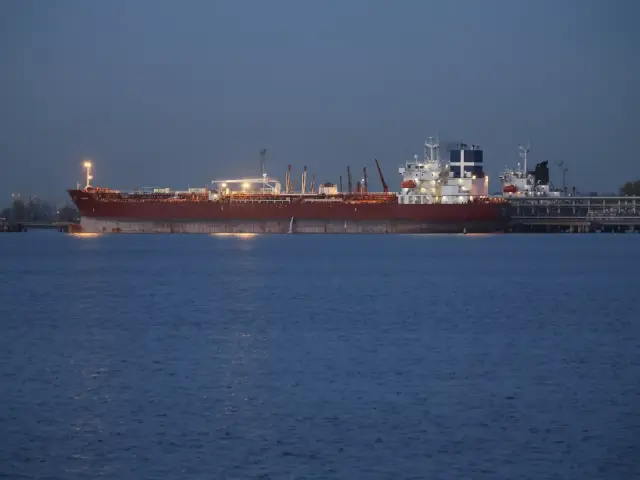
Greece has authorized new seabed surveys for the Great Sea Interconnector, a €1.9 billion project linking Cyprus to the European electricity grid, after French diplomatic intervention eased tensions with Turkey. Although Ankara previously claimed the surveys were unlawful, Turkish officials signaled a de-escalation, allowing the French-flagged research vessel to proceed from Crete. The project, which aims to end Cyprus’s energy isolation and eventually connect to Israel, faces ongoing challenges from broader maritime disputes and cost-sharing disagreements between Athens and Nicosia.
Business Insider•1 month ago
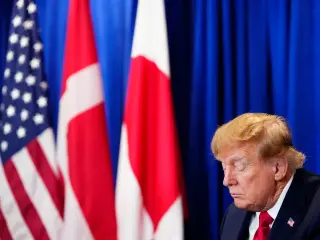
Denmark and Greenland have officially pushed back against President Donald Trump’s assertion that 'massive' oil and mineral exploration is about to begin in the Arctic territory. While Trump claimed on Truth Social that extraction is imminent, Danish and Greenlandic officials emphasized that the September 2026 security agreement does not grant the US preferential rights to natural resources. Greenland’s deputy mining minister stated that current activities are small-scale and that large-scale extraction is years away due to logistical and environmental hurdles.
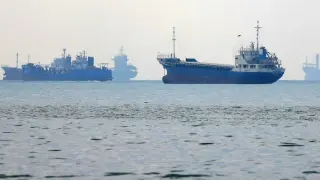
The Singapore-registered container ship GFS Pride sank in the Strait of Hormuz on Wednesday after being struck by an unidentified projectile. While all 21 crew members were evacuated safely, the incident marks a significant escalation in Iranian attacks on commercial vessels. Crude oil exports through the strait have dropped nearly 40% below pre-war levels, with officials suggesting Iran is intensifying its campaign to disrupt shipping ahead of the US midterm elections.

President Trump claimed on Truth Social that 'massive' oil, gas, and mineral exploration is about to begin in Greenland, but the territory's deputy mining minister directly contradicted this, stating that only small-scale explorations are currently underway. While Trump cited experts claiming vast, easily accessible reserves, local officials emphasized that remote locations, thick ice, and high costs make large-scale extraction difficult and years away. This dispute occurs months after a US-Denmark-Greenland security agreement that acknowledged Danish sovereignty and focused on security and mineral cooperation, without explicitly mentioning oil drilling.
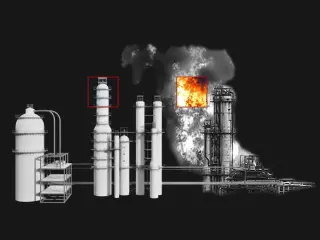
Ukraine’s targeted drone strikes on Russian oil refineries have crippled the country’s energy sector, idling up to 50% of refining capacity and causing a severe fuel shortage. By focusing on specific components like desalting and distillation units, Kyiv exploits international sanctions that prevent Moscow from easily repairing the damage. This strategy has driven up fuel prices and inflation in Russia, prompting President Trump to ease US restrictions on Russian diesel imports, a move criticized by former US envoy Keith Kellogg as a concession to Moscow.

President Trump announced a deal with Vladimir Putin to release Russian diesel stocks to lower US fuel prices before the November midterms. The move reverses recent sanctions, causing a diplomatic rift with Ukraine and raising doubts about Russia’s ability to supply the promised volumes.
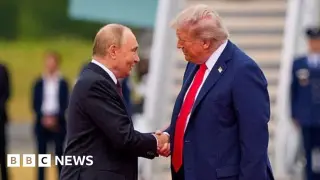
US President Donald Trump announced a deal with Russian President Vladimir Putin to release over 4 million tonnes of diesel into global markets, a move condemned by Ukrainian President Volodymyr Zelensky as funding for the war. The US Treasury suspended sanctions on Russian diesel exports until April 2027, aiming to lower soaring fuel prices ahead of midterm elections. Critics argue the deal benefits Moscow without de-escalation, while analysts question its impact on US pump prices.

A tanker was struck by multiple projectiles off the north coast of Qatar, causing unknown casualties, as Iran declared it would close specific transit routes in the Strait of Hormuz. This incident coincides with a surge in attacks on vessels in the strait, reaching the highest weekly level since the US-Israel war on Iran began in February 2026. While Iran claims full control of the waterway, US officials assert that oil flows have nearly returned to pre-war levels, supported by a significant US military presence. Brent crude prices have exceeded $100 per barrel amid these tensions, despite reports that Middle East crude exports have reached or surpassed pre-war averages. The US has announced it will not resume military strikes on Iran before the midterm elections, maintaining a blockade on Iranian ports while allowing oil to flow through the strait.
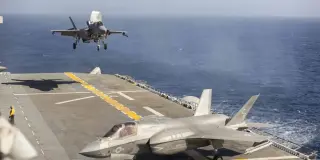
Middle East crude exports have recovered to approximately 98% of prewar levels, driven by US naval escorts, ship-to-shuttle transfers, and pipeline diversions. However, Iran’s own exports remain near zero due to a US blockade. Analysts warn that while the US has restored flow, it cannot guarantee regional security, leaving Iran with potential leverage to escalate through a 'scorched earth' campaign if diplomatic off-ramps are rejected.
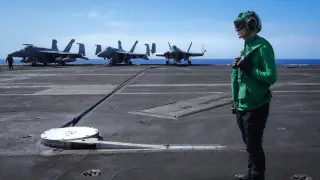
Crude oil prices surged Thursday after reports that the U.S. is sending a third aircraft carrier strike group to the Middle East. Brent crude jumped 4.4% to $102.31 per barrel, while U.S. West Texas Intermediate futures rose 2.7% to $92.87. The deployment of the USS Theodore Roosevelt, along with up to 10,000 additional troops, is expected to arrive by late November. This move signals a potential escalation in the U.S. conflict with Iran, particularly as President Trump has indicated plans to resume bombing campaigns after the November midterm elections. The price increase occurs despite a recovery in Middle Eastern crude flows, though maritime security agencies report at least three tanker attacks in the Strait of Hormuz this week. Global fuel supply disruptions are also being exacerbated by Ukrainian strikes on Russian refineries and Chinese cancellations of gasoline and jet fuel exports.
Oil flows through the Strait of Hormuz have rebounded to nearly 80% of prewar levels, driven by US military escorts and alternative routes. While this undermines Iran's economic leverage, global inventories are depleting, and analysts warn the current supply arrangement is unsustainable without a diplomatic resolution.