
China’s military fears US AI could expose its nuclear missiles, NYT reports
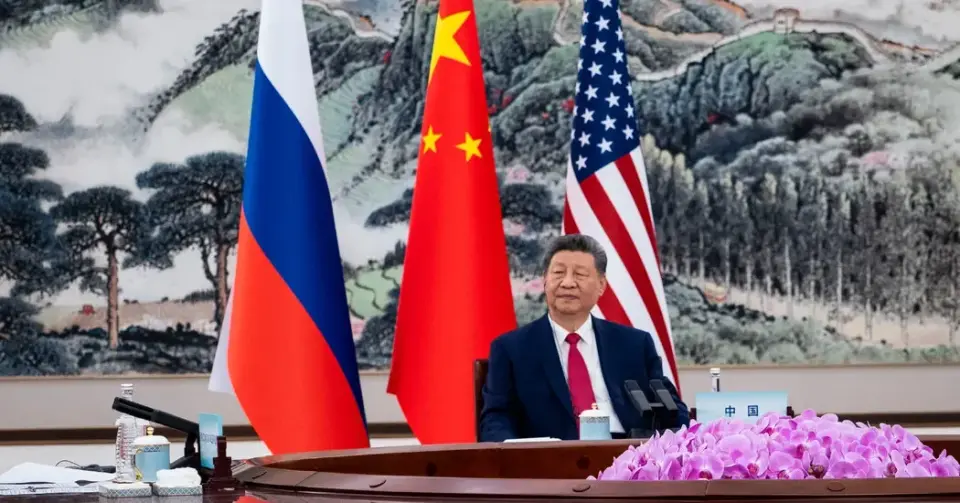
Chinese military researchers are increasingly worried that American advances in artificial intelligence could undermine Beijing’s nuclear deterrent. The core concern is that US AI could make it easier to detect, track, and destroy Chinese nuclear missiles, potentially allowing Washington to neutralize China’s second-strike capability. This anxiety persists despite China’s own rapid expansion of its nuclear arsenal and its efforts to harden its launch sites. While the recent Shenzhen summit between Trump, Xi, and Putin did not address AI in nuclear weapons, the underlying strategic tension remains high.
Key points
- Chinese military strategists fear US AI could identify and destroy Chinese nuclear missiles, weakening Beijing’s deterrence.
- China has expanded its nuclear arsenal to approximately 620 warheads, with forecasts of reaching 1,000 by 2030.
- US AI could compress nuclear decision-making time from 15-30 minutes to under 90 seconds, according to Chinese researchers.
- The recent Shenzhen summit between Trump, Xi, and Putin did not discuss AI’s role in nuclear weapons.
- China is also racing to develop AI for its own military, including hypersonic weapons and missile evasion tactics.
Background
This story follows the first-ever trilateral summit between US President Donald Trump, Chinese President Xi Jinping, and Russian President Vladimir Putin in Shenzhen on November 19, 2026. While the summit focused on nuclear arms reduction, AI in nuclear weapons was not discussed. The broader context includes China’s decade-long expansion of its nuclear forces and its recent test-launch of a long-range submarine missile. Additionally, the US has been pressing China to comply with chip restrictions, with a recent US commission noting China’s military interest in Nvidia’s advanced chips.
How outlets are covering it
The New York Times and The Next Web emphasize the strategic vulnerability China faces due to US AI advancements, highlighting specific concerns about missile detection and decision-making speed. Vox, in contrast, focuses on the broader implications of AI regulation, drawing parallels to nuclear nonproliferation regimes and arguing for transparency in AI development. The Washington Post’s opinion piece, while not directly related, reflects on historical Cold War close calls involving faulty technology, underscoring the risks of automation in nuclear contexts. The outlets differ in their focus: NYT and TNW are concerned with immediate military threats, while Vox advocates for long-term regulatory frameworks.
Why it matters
The intersection of AI and nuclear strategy could fundamentally alter global deterrence dynamics. If US AI can effectively neutralize China’s nuclear deterrent, it may shift the balance of power and increase the risk of miscalculation. This could also influence future arms control negotiations and the development of AI governance frameworks, as nations seek to manage the risks of autonomous systems in high-stakes environments.
What to watch
Expect continued discussions on AI’s role in military strategy, potentially at future US-China or US-Russia talks. China may accelerate its own AI development to counter US advantages, while the US could push for transparency measures in AI deployment. The lack of progress at the Shenzhen summit suggests that concrete agreements on AI and nuclear weapons remain distant, but the underlying tensions will likely persist.
- Behind China’s A.I. Anxieties, Fear of a Nuclear Checkmate The New York Times
- Opinion | Can people take the reins from tech? Look to this brush with Armageddon. The Washington Post
- The US helped the world rein in nuclear weapons. Could it do the same for AI? Vox
- China’s military fears US AI could expose its nuclear missiles, NYT reports The Next Web
- Nuclear Fission and Fusion Trajectories Illuminate the Future of Artificial Intelligence Bioengineer.org
Want the full story? Read the original reporting
Read on The New York Times