Rajan Menon argues that Putin’s four-year war in Ukraine is floundering: Ukrainian drones are eroding Russian advances, Russia’s economy is slowing, and domestic anxiety is rising as security crackdowns tighten control, suggesting the conflict could undermine the Kremlin rather than secure its triumph.
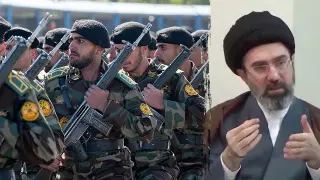
Beijing argues the U.S. war with Iran shows Washington cannot easily convert battlefield gains into durable political outcomes, even as the Strait of Hormuz remains effectively closed and U.S. munitions stocks dwindle. China leverages its open-strait diplomacy to pressure Tehran while maintaining leverage with both sides, arguing that force alone won’t reshape politics and that Taiwan presents a more complex test. The conflict underscores a growing multipolar balance as Asia‑focused security concerns rise and Beijing refines its narrative of global stability under autocracy.
Experts say the Iran conflict provides a sobering playbook for China: inexpensive drones can penetrate modern defenses, high-tech U.S. weapons can inflict heavy damage, and battlefield wins don’t automatically translate into political outcomes. The takeaway for Beijing is to harden key sites, prepare for drone‑heavy warfare, and anticipate broader global spillovers if Taiwan becomes involved, all while acknowledging China’s limited combat experience and the ways adversaries will adapt and learn from every action.
As Washington fights in Iran, U.S. defense officials say Beijing is studying American warfighting to identify vulnerabilities, track how missiles and naval power are employed, and anticipate how to deter or exploit the United States in a future Indo-Pacific conflict; the Iran war underscores strategic gaps, the endurance of U.S. ally networks, and China's rapid military buildup, all as the U.S. weighs its own policy and the looming Xi‑Trump meeting.
Andrew Latham argues that China’s military modernization is built for regional denial—through an A2/AD architecture, sea denial, and land-based missiles—to make the Western Pacific too costly to contest and to shield Taiwan, with Asia’s economic heft enabling global influence. The piece urges Washington to shift from chasing global power projection to a posture that blocks Beijing’s regional aims in the Indo-Pacific.
Germany's defence minister Boris Pistorius unveiled the Bundeswehr's first national military strategy, shifting to capability-based planning with a focus on speed, air defence, long-range precision strikes, and greater use of AI. The plan calls for a significant expansion to 460,000 personnel (active plus reserves) and a more agile bureaucracy, with deep-strike assets like long-range missiles to hit targets behind front lines; many details remain secret and the strategy is described as a living document responsive to evolving threats and Russia's invasion of Ukraine.
Germany unveiled a sweeping 20-year overhaul for the Bundeswehr, including its first standalone military strategy, a flexible capability profile, and a large ramp-up of personnel and reserves aimed at making Germany Europe’s strongest conventional force by 2039. Framed around a ‘Responsibility for Europe’ doctrine, it treats Russia as the top threat and adopts a ‘one theater’ view across Europe, the Middle East, and the Indo-Pacific, shifting from rigid hardware quotas to effects-based planning (long-range strike, air defense, drones). The plan envisions active troops rising to about 260,000 and reserves to 200,000 (total ~460,000), with conscription a fallback if targets aren’t met, plus an EMA26 modernization drive to cut bureaucracy and boost AI-enabled administration. Implementation will face global procurement constraints and changing demand for air-defense systems.
The Conversation explains why the US hasn’t used force to reopen the Strait of Hormuz: securing the chokepoint would require a two‑phase, high‑risk campaign to first neutralize Iran’s ability to target shipping (via airpower, ISR, and striking coastal radar/command hubs) and then provide aerial/waterborne protection and mine-clearing, all while guarding against drones and surface mines. Four pragmatic constraints help explain the hesitation: pulling assets away from broader objectives (destroying Iran’s missiles, nuclear capabilities and proxies), needing land-side security along the strait, requiring a sizable escort fleet, and risking U.S. crews in a costly confrontation. Despite Iran’s attacks and reinforcements, a direct military move to secure Hormuz has not been pursued.
Behnam Ben Taleblu argues that Iran is at a historic low after recent strikes and widespread protests, and the United States should pursue a two‑stage plan: first, use covert operations to empower Iranian dissidents and undermine regime cohesion; then, launch air and missile strikes to degrade air defenses, destroy missile and nuclear infrastructure, and target political‑security institutions, with the aim of fracturing the regime and enabling Iranians to finish the transition themselves. The piece warns that limited strikes won’t suffice, calls for sustained US action, and acknowledges risks of escalation while insisting that allowing Iranians to lead the outcome is the best path to change.
Gen. Dan Caine, Trump’s top military adviser, warns that a U.S. strike on Iran could trigger a costly entanglement and a prolonged conflict, as advisers split between caution and action; while diplomacy is being pursued, no decision has been made and a small White House team is weighing options.
Russian forces are unable to build a strategic reserve and are limited to slow, grinding advances in Ukraine, with ongoing missile strikes targeting Ukrainian infrastructure; Ukraine has made recent gains in Kupyansk, and both sides are engaged in information warfare and diplomatic efforts, with Russia refusing to deviate from its war demands.
The article discusses how optimistic battlefield briefings are boosting Vladimir Putin's confidence amid the Ukraine conflict, highlighting the impact of military updates on leadership morale and strategic decisions.
NATO is considering adopting a more aggressive stance against Russia's hybrid warfare tactics, reflecting increased concerns over Russia's unconventional military strategies.
The Russian offensive near Pokrovsk in Ukraine's Donetsk region is intensifying, with Russian forces leveraging drones, air superiority, and infiltration tactics to weaken Ukrainian defenses, threaten logistics, and potentially seize the city, which is crucial for further Russian advances in the region.
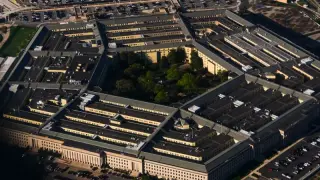
The Pentagon is experiencing significant disarray, with concerns over uncoordinated decisions, leadership departures, and reduced transparency, raising alarms about the stability and effectiveness of US military strategy and civil-military relations.