
Trump-Xi Summit Focuses on AI Standoff as Chip Smuggling and Spending Gaps Loom
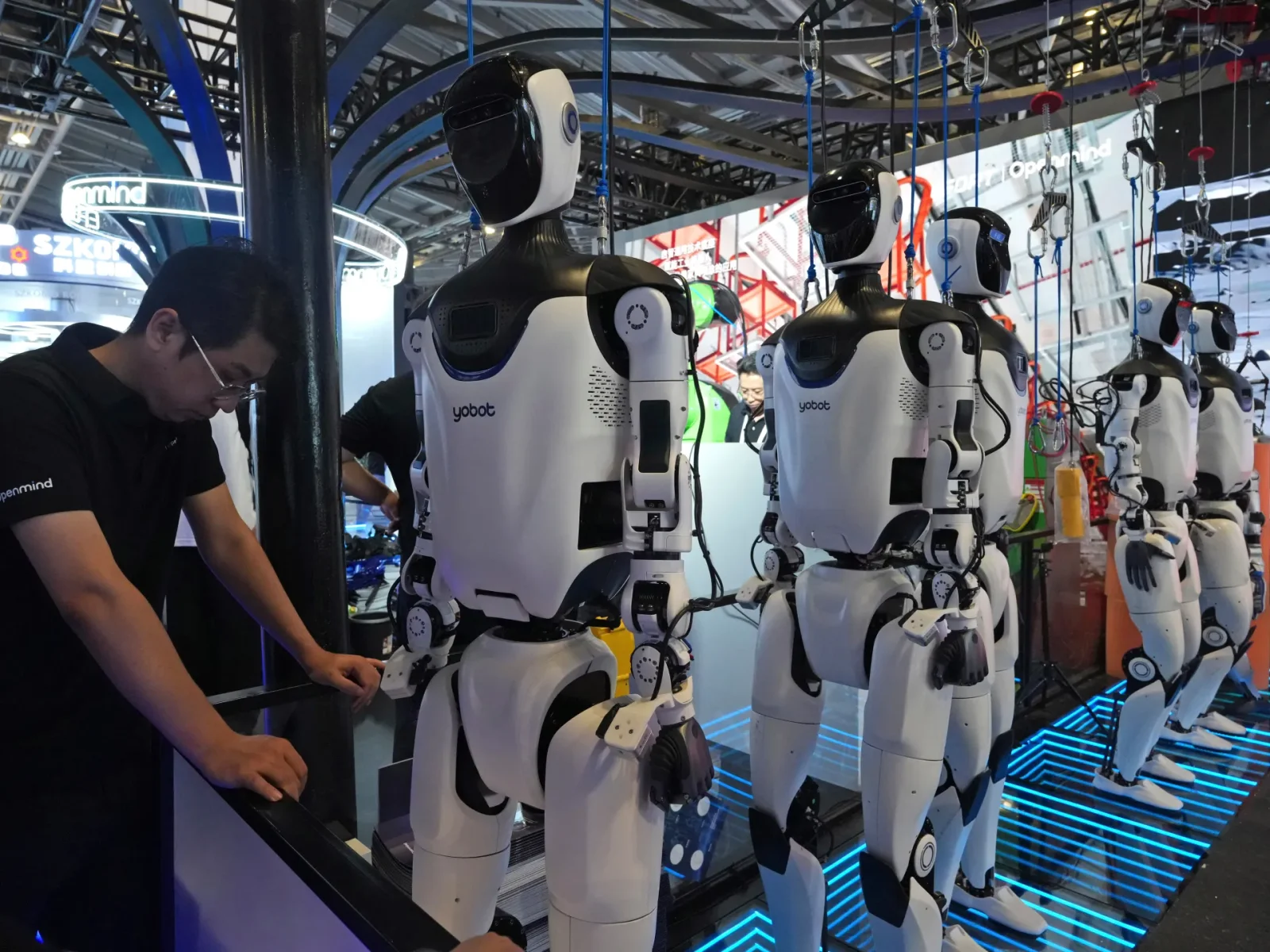
US President Donald Trump and Chinese President Xi Jinping are meeting in Washington to discuss AI, with Trump stating he wants to 'leave it exactly where it is' while proposing a security hotline. The US dominates AI computing power and spending, but China leads in research output and is closing the gap in model performance. Meanwhile, Congress pushes for stricter chip controls to combat smuggling in Southeast Asia, a move industry groups warn could undermine US global competitiveness.
Key points
- Trump and Xi are set to meet in Washington, with AI described as a major topic; Trump proposed an AI 'notification mechanism' or hotline for security incidents.
- The US holds nearly 75% of global AI computing power and spends approximately $764bn on infrastructure in 2026, compared to China's $102bn, though Chinese spending is growing faster.
- China leads in AI research publications and talent training, while Chinese models are gaining ground in real-world usage, though US frontier models remain slightly ahead.
- Congress is advancing the Chip Security Act to track advanced chips and prevent smuggling to China, particularly through Southeast Asia, despite industry warnings that such measures could harm US business interests.
- Top US tech leaders, including Jensen Huang and Sam Altman, are expected to attend a state dinner for Xi, signaling continued engagement despite regulatory tensions.
Background
Recent months have seen escalating tensions over AI intellectual property, with US agencies accusing Chinese firms of distilling American models, a claim Beijing rejects. Prior to the summit, US Treasury Secretary Scott Bessent engaged in New York talks regarding shared AI risks and safety standards, laying the groundwork for the current Washington meeting.
How outlets are covering it
Al Jazeera emphasizes the quantitative gap in US infrastructure and spending versus China's strength in research and model adoption, noting that Chinese models are now 'months, not years' behind US leaders. U.S. News & World Report highlights Trump's diplomatic stance, focusing on his desire to maintain the status quo and his reliance on the Department of Justice for guardrails, while noting industry leaders' attendance at the state dinner. Politico focuses on the legislative and enforcement challenges, detailing the bipartisan push for the Chip Security Act to combat smuggling in Southeast Asia, contrasting this with industry groups who argue that strict controls and tracking mechanisms could drive global partners away from US technology.
Why it matters
The outcome of the Trump-Xi summit and the passage of the Chip Security Act will define the future of US-China tech competition. If smuggling controls are tightened, it may slow Chinese AI advancement but could also reduce the global reach of US chips. Conversely, if the status quo is maintained, the US retains its computing advantage but faces rising risks from illicit chip transfers and Chinese model parity.
What to watch
Watch for the formal outcome of the Trump-Xi summit regarding AI cooperation or restrictions. Monitor the Senate's progress on the Chip Security Act and related bills like the AI OVERWATCH Act. Observe if the proposed AI 'notification mechanism' is formalized into a bilateral agreement. Track any new enforcement actions in Southeast Asia regarding chip smuggling as US and regional authorities coordinate.
- China vs US: Who is winning the AI race, in four charts Al Jazeera
- Opinion | The U.S. and China Are Far Apart on A.I. Safety The New York Times
- Trump Says He'll Discuss AI With Xi but Wants to 'Leave It Exactly Where It Is' U.S. News & World Report
- Trump Says No Moves Toward US, China AI Guardrails in Xi Summit Bloomberg.com
- America’s AI push in Southeast Asia faces a China problem Politico
Want the full story? Read the original reporting
Read on Al Jazeera