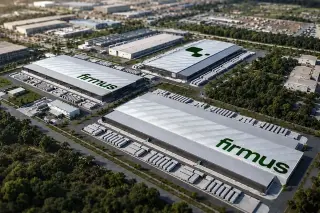
The planned Australian listing of AI data center firm Firmus has stalled after investors rejected its initial $11 per share price, threatening a potential $30 billion valuation. The collapse highlights growing skepticism toward AI infrastructure valuations, with critics citing unproven revenue models and heavy reliance on Nvidia.
Applied Digital reported fiscal Q1 2027 revenue of $341.9 million, up 322% year-over-year, significantly exceeding analyst expectations. The company achieved adjusted EBITDA of $64.4 million and expanded live capacity at its North Dakota campuses to 250 MW. Key developments include a $5.2 billion lease with a hyperscaler in Alabama and the first international power agreement in Finland.
Finnish authorities have ordered Google to suspend construction at two data center sites in Muhos and Kajaani until mandatory environmental impact assessments are completed. The halt follows reports that Google’s subsidiary, Tuike Finland Oy, cleared over 300 hectares of forest without proper permits. This move interrupts a €13 billion investment plan, described as Google’s largest in Europe, which aims to support AI infrastructure by 2028.
D.A. Davidson raised its price target on Micron Technology to $3,000, implying a 187% gain from recent levels. The firm cites a persistent shortage of memory chips driven by artificial intelligence infrastructure needs. Micron shares rose 4% on Wednesday, reaching $1,087.17, after opening lower due to strike concerns at a Taiwan plant. Analysts project demand will outstrip supply through 2028, supported by long-term customer contracts.
Amazon eliminated fewer than 1,000 positions across its retail, customer service, and engineering divisions on October 7, 2026. This latest reduction follows the elimination of approximately 30,000 jobs earlier in the year and occurs simultaneously with a planned $220 billion investment in AI infrastructure. The cuts primarily affected the Stores business unit, with notifications sent via internal channels causing widespread uncertainty among staff regarding severance and future roles.
SpaceX’s credit default swap spreads have surged to a record 194 basis points, reflecting investor anxiety over the company’s aggressive debt accumulation. The spike follows reports that SpaceX plans to raise $40 billion to purchase Nvidia chips for artificial intelligence infrastructure. This move comes just months after the company issued $25 billion in debt and completed an $86 billion initial public offering. While the borrowing spree signals a major pivot toward AI, it has triggered concerns about financial leverage and repayment capacity, causing bond yields to rise and prompting skepticism among some institutional investors regarding the viability of SpaceX’s AI ambitions.
Seven major technology companies signed a voluntary pledge to cover the electricity and grid upgrade costs for their AI data centers, aiming to prevent rate hikes for residential consumers. While the agreement includes a 'take-or-pay' clause to protect utilities from stranded assets, it lacks specific financial commitments and relies on state-level enforcement. Critics argue the voluntary nature of the pledge is insufficient, as state utility commissions remain the primary battleground for cost allocation, and some lawmakers have blocked federal legislation that would have made such protections mandatory.
Finnish authorities have ordered Google to suspend construction on two data center sites in Muhos and Kajaani until mandatory environmental impact assessments are completed. The halt follows reports that Google’s subsidiary, Tuike Finland, cleared over 300 hectares of forest without proper permits. This move interrupts a €13 billion investment plan, described as Google’s largest in Europe, which aims to support AI infrastructure by 2028.
SpaceX stock fell 4.19% after reports emerged that the company is raising $40 billion in new debt to purchase Nvidia AI chips. The financing structure is expected to include $10 billion in bank loans and $30 billion in investment-grade debt, with Apollo leading the transaction. This massive capital raise highlights the intense competition for advanced AI processors, while Nvidia shares rose slightly in response.
Micron Technology has fundamentally shifted its business model from consumer electronics to AI-driven data center memory, with cloud and data center units now accounting for 63% of revenue. While the company has locked in over 75% of its 2027 production through long-term contracts, investors remain cautious about a potential memory price peak in mid-2027 due to rising Chinese supply and new capacity from Samsung and SK Hynix.
Finnish authorities have ordered Google to suspend construction on two data center sites in Muhos and Kajaani until mandatory environmental impact assessments are completed. The halt follows reports that Google’s subsidiary, Tuike Finland Oy, cleared over 300 hectares of forest without proper permits. This move interrupts a €13 billion investment plan, described as Google’s largest in Europe, which aims to support AI infrastructure by 2028.
AMD CEO Lisa Su announced in Taipei that the company will substantially increase chip supply in 2027, though she acknowledged current demand still outpaces production. Su stated that AMD now plans capacity three to five years ahead, up from one to two years previously, and emphasized the critical need for advanced wafer capacity and CoWoS packaging. The company has committed over $10 billion to its Taiwan supply chain, a figure Su indicated will grow. While Su singled out CPUs as facing high demand, she did not specify if the increased supply will reach consumer Ryzen or Radeon products. This announcement follows AMD’s recent surge to a $1 trillion market cap and its acquisition of World Labs for $8.2 billion to secure AI model expertise.
National Compute, a new entity pooling resources from major tech firms, will donate $100 million in computing credits to the Trump administration. The funds support the 'Genesis Mission,' a government-wide effort to use AI for scientific discovery. The donation aims to help smaller labs and researchers access capacity that is currently locked up by long-term contracts with large AI firms.
Constellation Energy and Google announced a 20-year power purchase agreement to add 890 MW of nuclear capacity via uprates at 11 reactors, triggering a 12% stock surge for Constellation and broad gains across the utility sector.
A new industry of public relations consultants is emerging to counter widespread American opposition to AI data centers. These firms use targeted community engagement, strategic lobbying, and reframing narratives to overcome local resistance, which has blocked or delayed $130 billion in projects in early 2026. While some experts argue the backlash will eventually subside as technology evolves, others warn that the current hostility is a permanent barrier to expansion.