
Lukoil Sale Tied to Ukraine Peace Talks
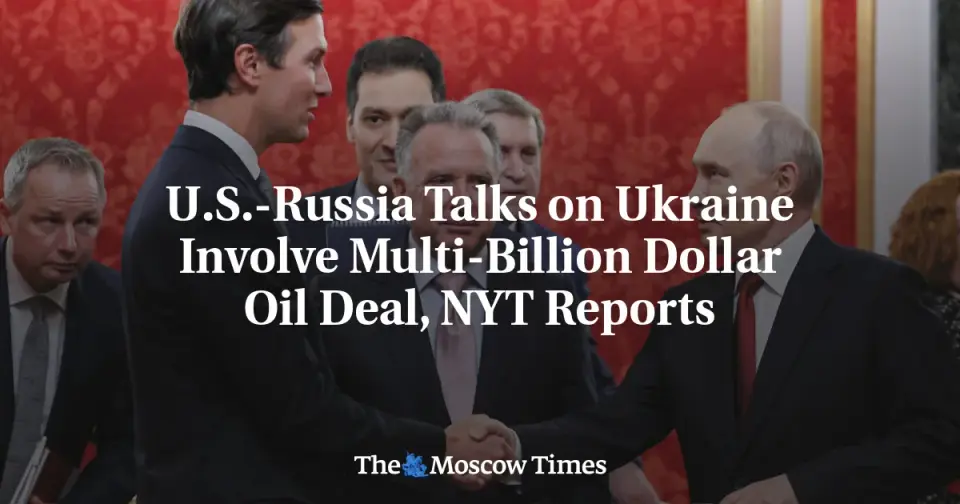
The New York Times reports that U.S.-Russia negotiations to end the war in Ukraine now include a multibillion-dollar sale of Russian energy giant Lukoil’s global assets. The deal, which requires approval from both Washington and Moscow, involves oil fields, refineries, and gas stations worldwide. Key participants include U.S. investor Todd Boehly and Middle Eastern groups linked to U.S. negotiators Steve Witkoff and Jared Kushner. Russian President Vladimir Putin raised the proposal during a September 5 meeting, framing it as a way to demonstrate business ties with the U.S. while potentially lowering global energy prices. The transaction remains contingent on U.S. Treasury approval and lifting of sanctions, which would significantly increase the assets' value.
Key points
- The New York Times reports that U.S.-Russia peace talks have expanded to include a multibillion-dollar deal for the sale of Lukoil’s global assets, including oil fields, refineries, and gas stations.
- The deal requires approval from both the U.S. government and the Kremlin, with the final decision widely considered to rest with Presidents Trump and Putin.
- The buying group includes U.S. billionaire Todd Boehly, two Middle Eastern entities with ties to negotiators Witkoff and Kushner, and a U.S. government arm.
- Vladimir Putin proposed the deal during a September 5 Kremlin meeting, suggesting it would show Russians they can do business with the U.S. and help lower energy prices.
- U.S. approval would lift sanctions on the assets, instantly boosting their value, though the White House and Treasury did not comment outside regular business hours.
Background
This development follows Trump’s imposition of new sanctions on Russian oil companies, including Lukoil, in October 2025, and subsequent extensions of deadlines for asset sales. The U.S. has previously extended the deadline for Lukoil asset sales to September 19, subject to Treasury approval. Broader energy tensions have also seen Trump urge Ukraine to halt strikes on Russian refineries due to U.S. diesel price surges, while India has urged dialogue over oil disputes amid U.S. tariff threats on Russian oil buyers.
How outlets are covering it
The New York Times and European Pravda both report the core facts of the Lukoil deal and its linkage to peace talks, citing sources familiar with the matter. However, European Pravda adds that the deal highlights close links between personal business interests and geopolitics, noting that while there is no evidence Witkoff or Kushner profit personally, the arrangement raises conflict-of-interest concerns. The NYT emphasizes the deal’s role in building relations with the Kremlin and lowering energy prices, while Pravda notes the transaction’s complexity, involving assets from Cameroon to New Jersey, and the critical role of U.S. sanctions relief in boosting asset value. Both outlets agree the deal is contingent on high-level approvals and remains unconfirmed by official sources.
Why it matters
The potential sale of Lukoil assets could reshape global energy markets by lifting sanctions and increasing supply, potentially lowering oil prices. It also raises questions about the intersection of personal business interests and U.S. foreign policy, particularly given the involvement of figures close to the Trump administration. The deal’s success could signal a shift in U.S.-Russia relations, while its failure may prolong the war and keep energy markets volatile. Additionally, the transaction’s scale and the involvement of Middle Eastern investors could influence global energy trade dynamics and sanctions enforcement.
What to watch
The deal’s progress depends on approvals from the U.S. Treasury’s Office of Foreign Assets Control and the Kremlin. If finalized, it could lead to a significant shift in global oil supply and potentially ease energy price pressures. However, if the deal fails, it may prolong the war and keep sanctions in place, maintaining market volatility. Further developments may include official statements from the White House, Treasury, or Lukoil, as well as reactions from international partners and sanctions enforcement bodies.
- U.S.-Russia Talks on Ukraine Involve Multi-Billion Dollar Oil Deal, NYT Reports The Moscow Times
- U.S.-Russia Talks on Ukraine Now Involve an Oil Deal Tied to Trump Allies nytimes.com
- US and Russia are negotiating multibillion-dollar deal on Lukoil assets, says NYT Українська правда
- US, Russia talks on Ukraine involve oil deal tied to Kushner, Witkoff: Report The Hill
- Putin envoy, US officials discussed Ukraine war and energy initiatives, US official says Reuters
Want the full story? Read the original reporting
Read on The Moscow Times