Unclaimed airstrikes spark questions as US ends attacks on Iran
Unclaimed airstrikes hit Iran after the US ended its attacks, leaving questions about who carried them out and what this means for regional tensions and accountability.
All articles tagged with #geopolitics

Unclaimed airstrikes hit Iran after the US ended its attacks, leaving questions about who carried them out and what this means for regional tensions and accountability.

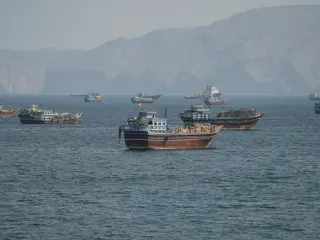
Core to the renewed US-Iran conflict is control over the Strait of Hormuz and how the MoU to keep it open should be implemented. Iran argues navigation should be coordinated with Tehran and could entail tolls, while the US seeks uninterrupted passage through international routes. Despite the truce, ship attacks and retaliatory strikes persist, underscoring the MoU's ambiguous language and competing interpretations. Both sides face domestic pressures that could prevent a full-scale war, but the risk of a longer confrontation remains.
Oil prices rebounded after Trump declared the Iran ceasefire over, stoking fears of renewed supply disruptions through the Strait of Hormuz; tanker traffic showed resilience but analysts warned volatility could persist and gasoline prices may rise ahead of elections as geopolitical risk resurges.

Iran struck 85 U.S.-aligned military sites in the Gulf, triggering a global market selloff and a jump in oil prices (Brent near $78 a barrel) as traders weigh the risk of wider conflict and potential disruption to Strait of Hormuz shipping; the U.S. response and any ceasefire remain uncertain, with stocks sliding across major regions.

Oil prices rose over 3% to above $70 a barrel after reports of tanker attacks in the Strait of Hormuz, including drone and missile strikes on vessels; U.S. yields climbed, and stock indices fell before modestly rebounding, as investors weighed geopolitical risk and its impact on energy and tech shares.

Post-Iran conflict, oil markets show resilience as the global economy absorbs costs, but signals are murky: missing-barrel math, a surprising drop in China’s imports, and rising emphasis on reserves and reliable supply chains suggest continued volatility. Prices sit around $70 with potential moves toward $80 to sustain momentum, dependent on eventual buyer reentry, inventory recovery, and a pause in emergency stock releases.

Oil prices rose after reports of an Iranian attack on ships in the Strait of Hormuz, underscoring ongoing tensions as the US and Iran negotiate a peace path. Brent traded around $72.49 per barrel and WTI about $68.94, with Axios citing unnamed U.S. officials and UKMTO reporting an incident near Oman; no casualties were reported and the reports were not independently verified.

China’s navy fired a ballistic missile from a nuclear-powered submarine with a dummy warhead into the Pacific as part of its annual training, pre-notified to relevant governments. New Zealand said the missile landed in the South Pacific Nuclear Free Zone, prompting condemnation from Australia and Japan and underscoring worries about Beijing’s expanding naval reach in the Asia-Pacific.

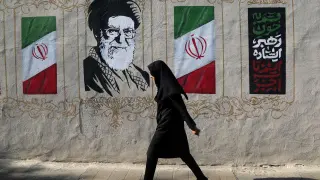
Live updates show massive Tehran crowds for the funeral of Iran’s slain Supreme Leader Ayatollah Ali Khamenei, who was killed in a US-Israel airstrike on Feb. 28. Mourners wave religious and political banners, including the Ya Hussein flag, as the coffin moves along a route from Tehran to Karbala, Iraq, and then Mashhad, with further rites planned in Qom and Najaf in a six‑day procession. Analysts say the display reinforces the regime’s messaging of martyrdom and resilience amid broader regional tensions.

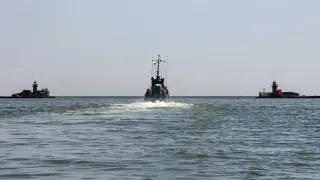
Several ships attempting to exit the Persian Gulf reverse course along the Oman coast, underscoring that reopening the Strait of Hormuz remains fragile as Iran asserts control over the corridor. A crude tanker, two product tankers, and a bulk carrier redirected via Iran’s designated route, while others continued with warning from Iranian forces. Tehran has repeatedly said vessels must use the authorized Iranian route, and U.S.-backed transit along the Omani coast continues. Traffic is rising since a mid‑June reopening deal, but remains well below pre-war levels, with about 34 commodity vessels per day recently and 59 of 65 ships crossing the Omani side between June 30 and July 1 supported by the U.S., highlighting how tanker operators’ risk tolerance is crucial to restoring normal oil flows.

Russia is grappling with a fuel shortage—rations, long lines at gas stations and higher prices—after Ukrainian drone strikes targeted energy infrastructure. In response, social media users are circulating memes that mock the crisis, officials' blame on the West, and the idea of alternate apps, while Moscow seeks to stabilize supplies by importing gasoline from India.

Iran is staging a weeklong, large-scale funeral across five cities in Iran and Iraq for Supreme Leader Ali Khamenei, with massive government mobilization and security to project the regime's power and resilience, while weighing Mojtaba Khamenei's potential public debut amid questions about attendance by foreign leaders.

A newcomer to the Polymarket prediction market is betting big that Russian President Vladimir Putin will step down by year-end, as Ukraine's drone strikes deepen into Russian territory and odds on his downfall rise.
Bosnia and the United States meet in the World Cup knockout round, but the game doubles as a geopolitical mirror: Bosnian diaspora pride and memories of the Dayton peace deal mix with critiques of current U.S. policy toward nationalist leaders; fans’ solidarity with Palestine and other global issues shade the match, while refugees' stories across Utica, St. Louis, and beyond show how sport and history intertwine.

Oil prices are on track for the steepest quarterly decline since the COVID-19 crash, with Brent around $70 as hopes for sustained Hormuz access erase much of the geopolitical risk premium; markets imply about a 20% monthly drop and a 30% quarterly plunge, though analysts warn that renewed disruptions remain a risk.