
Dartmouth Provost Resigns After AI Use Breaches Academic Integrity Standards
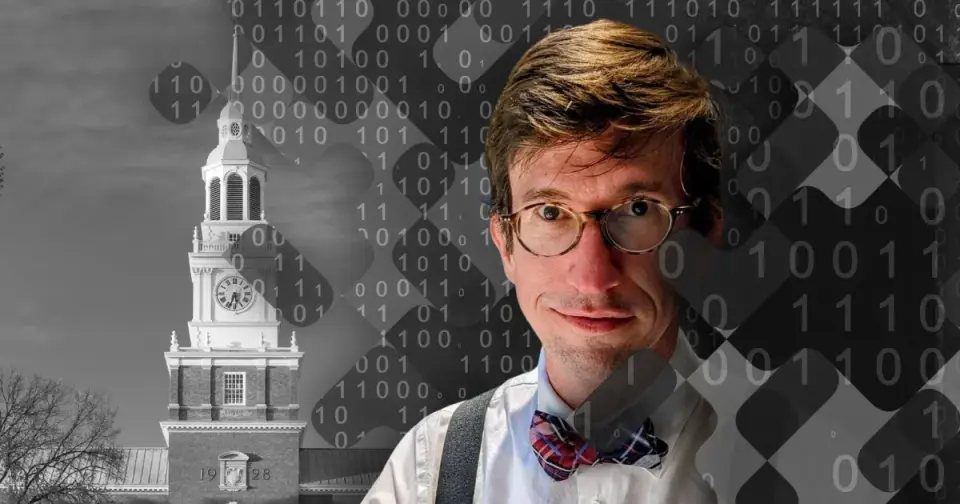
Santiago Schnell, Dartmouth College’s provost, resigned on October 28, 2026, after a faculty committee determined he violated ethical standards by using generative AI in published work without disclosure. The resignation occurred just days before Dartmouth’s 'AI at 70' conference, highlighting a conflict between the institution’s push for AI integration and its demand for transparency.
Key points
- Santiago Schnell resigned as Dartmouth provost on October 28, 2026, following a faculty committee finding that he failed to disclose AI use in academic and editorial writings.
- The committee found Schnell was not forthcoming about his AI usage and refused to provide logs from personal large language model accounts, though he did cooperate with the review of his college-provided Claude account.
- President Sian Beilock stated that leaders must model transparency and human judgment, emphasizing that Dartmouth’s embrace of AI requires strict adherence to ethical standards.
- Schnell’s lawyers argued he was not given a meaningful opportunity to present his account, contradicting the committee’s claim that he refused to cooperate.
- The resignation coincides with Dartmouth’s 'AI at 70' conference, which began on October 29, featuring speakers like Yann LeCun and Mira Murati, and focusing on human judgment in AI.
Background
This incident follows earlier reports in September 2026 when Dartmouth’s student newspaper and media outlets like Semafor revealed that Schnell’s 2026 publications showed high levels of AI-generated content. Previous archive coverage noted that Schnell had been positioning Dartmouth as a leader in AI, with President Beilock advocating for increased AI use in higher education. The controversy escalated as faculty members planned a no-confidence vote, and critics questioned whether the administration’s aggressive AI strategy lacked clear boundaries for leadership conduct.
How outlets are covering it
The Chronicle of Higher Education and The New York Times emphasize the breach of ethical standards and the lack of disclosure, framing the resignation as a necessary step to uphold academic integrity. Ars Technica highlights the irony of Schnell’s public stance on AI cheating versus his own undisclosed AI use, noting that his AI usage involved significant editorial and structural changes, not just minor edits. Dartmouth’s official communications focus on the 'AI at 70' conference and the need for 'role-appropriate rules,' while critics like Matthew Garcia and Jennifer Frey question whether clear boundaries for AI use in academia actually exist. Schnell’s lawyers argue that the investigation was procedurally flawed, claiming he was denied a fair hearing.
Why it matters
Schnell’s resignation sets a precedent for how higher education institutions will adjudicate AI misuse, particularly regarding disclosure and the distinction between AI-assisted editing and AI-generated content. It underscores the tension between institutions promoting AI integration and the need for transparent ethical guidelines. The incident may influence policy development across colleges as they navigate the evolving landscape of AI in academic and public writing.
What to watch
Dartmouth will continue its 'AI at 70' conference, which includes a hackathon and discussions on AI’s impact on education. The university may review and update its AI usage policies for faculty and leadership. The broader higher education community may develop clearer standards for AI disclosure and usage in academic publishing. Schnell’s legal team may pursue further action or commentary regarding the investigation process.
- Dartmouth Provost’s Resignation May Set a Precedent for AI Transparency The Chronicle of Higher Education
- After AI uproar, Dartmouth’s top academic official steps down The Boston Globe
- Dartmouth’s provost warned us about AI cheating—but his own AI use cost him his job Ars Technica
- Dartmouth Convenes Landmark ‘AI at 70’ Conference Dartmouth
- A Top Dartmouth Leader Steps Down Over Undisclosed A.I. Use in Writings The New York Times
Want the full story? Read the original reporting
Read on The Chronicle of Higher Education