
Jefferson's Hair Confirms Paternity of Hemings Children in New Study
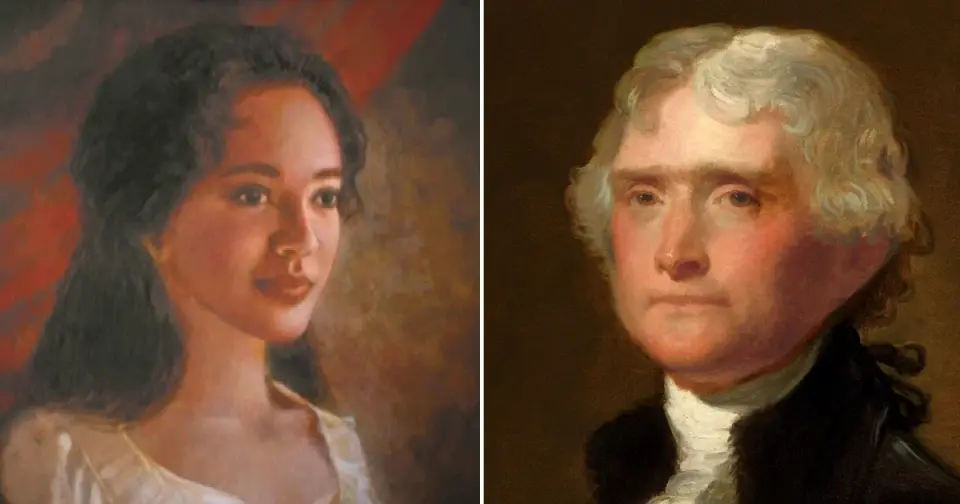
A 15-year Smithsonian-led project has concluded with 99.9% certainty that Thomas Jefferson fathered children with Sally Hemings. Researchers sequenced Jefferson's genome from hair found at Monticello and compared it to living descendants. While the findings validate long-standing historical theories, the release has sparked controversy over ethical protocols and the premature publication of results before peer review.
Key points
- Smithsonian scholar Richard Kurin announced a 99.9% probability that Jefferson fathered Hemings' children, based on DNA from a hair packet found at Monticello.
- The study utilized advanced ancient-DNA sequencing techniques developed by UC Santa Cruz scientists to extract a full genome from Jefferson's hair.
- The findings were published in the book 'History by a Hair' on September 22, 2026, ahead of a peer-reviewed scientific paper.
- Mary Lee Brady-Atkins, the oldest living Hemings descendant, withdrew her consent, citing ethical concerns about the publication timeline and lack of transparency.
- The research confirms previous 1998 Y-chromosome studies but provides definitive proof by comparing Jefferson's direct genome to descendants.
Background
The question of Jefferson's paternity has been a subject of historical debate for over two centuries. In 1998, a Y-chromosome study suggested a link, but skeptics argued it could have been another male Jefferson relative. In 2018, Monticello declared the matter settled based on historical evidence, but definitive genetic proof remained elusive until this recent breakthrough.
How outlets are covering it
TODAY.com and The New Yorker emphasize the scientific breakthrough and the emotional validation for descendants who have long suspected the truth. However, The Chronicle of Higher Education highlights the ethical backlash, noting that 98-year-old descendant Mary Lee Brady-Atkins withdrew her consent, arguing that publishing a book before peer review violates scientific conventions. While Kurin and the Smithsonian maintain the results are robust, critics argue the process lacked transparency and treated participants as props rather than subjects.
Why it matters
This study resolves one of America's most enduring historical controversies, providing definitive scientific proof that the author of the Declaration of Independence fathered children with an enslaved woman. It underscores the complexities of American founding narratives and the ethical boundaries of historical research involving descendant DNA.
What to watch
The peer-reviewed scientific paper is expected to be published in the Proceedings of the National Academy of Sciences. Kurin plans to make Jefferson's genome publicly available online, which may help identify other descendants who passed as white. The Smithsonian has canceled a planned lecture by Kurin following the controversy.
- In a DNA Breakthrough After 200 Years, Thomas Jefferson’s Hair Links Him to Sally Hemings’ Children TODAY.com
- Two Centuries On, Smithsonian Connects Jefferson’s Hair to Hemings’s Children The New York Times
- The Lost Descendants of Thomas Jefferson The New Yorker
- Sally Hemings’s Oldest Descendant Gave the Smithsonian Her DNA. She Says It Lost Her Trust. The Chronicle of Higher Education
- Thomas Jefferson’s hair ‘proves he had children with slave’ The Times
Want the full story? Read the original reporting
Read on TODAY.com