
Smithsonian DNA Study Confirms Jefferson Fathered Children with Sally Hemings
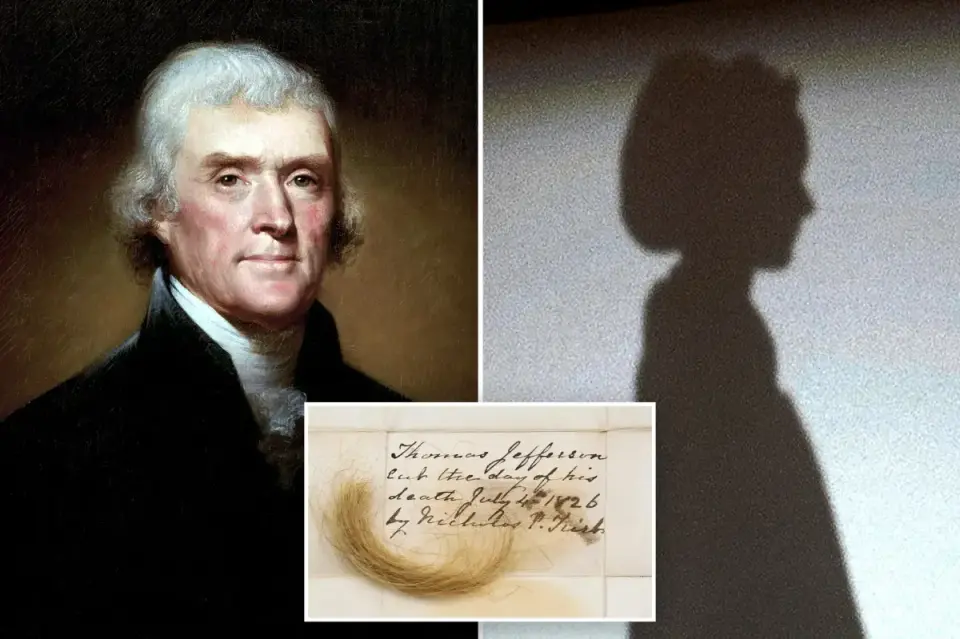
A 15-year Smithsonian-led study using ancient DNA techniques on Thomas Jefferson’s hair has provided 'extraordinary proof' that he fathered children with enslaved woman Sally Hemings. The findings, detailed in a new book and pending scientific paper, compare Jefferson’s genome with descendants of Hemings’s sons, showing a paternity probability of over 99.9%. While the research has advanced forensic DNA methods, it faces criticism over the premature release of results before peer review and the withdrawal of a key descendant’s consent.
Key points
- Researchers sequenced Jefferson’s genome from hair found in his Bible and a lock cut from his head at death in 1826.
- The study compared this DNA with samples from 13 living descendants of Hemings’s sons, Madison and Eston.
- Statistical simulations indicated less than a 1 in 1,000 chance that Jefferson did not father these children.
- The techniques used were also applied to solve the Gilgo Beach and Golden State Killer cases.
- The project began in 2011 when a hair was discovered in Jefferson’s personal Bible.
Background
Debates over Jefferson’s relationship with Hemings have persisted since the 19th century. A 1998 Y-chromosome study suggested a link but could not definitively exclude other male Jefferson relatives. In 2018, the Thomas Jefferson Foundation declared the matter settled, but this new study provides the first comprehensive genomic validation. The archive notes unrelated recent DNA tests in entertainment and family reunions, highlighting the growing prevalence of genetic testing in public discourse.
How outlets are covering it
The New York Post and The Atlantic emphasize the scientific breakthrough and the 'extraordinary proof' provided by the 15-year effort, noting that the DNA techniques also aided in solving high-profile criminal cases. The Chronicle of Higher Education highlights the controversy surrounding the release, focusing on Mary Brady-Atkins, a 98-year-old descendant, who withdrew her consent and demanded her DNA be destroyed. She criticized the team for publishing a book before peer review, arguing the process violated scientific conventions. While the Post and Atlantic present the findings as conclusive, the Chronicle notes that some descendants and skeptics still question whether another male relative, such as Jefferson’s brother Randolph, could be the father, though the new statistical analysis strongly favors Jefferson.
Why it matters
This study resolves a two-century-old historical debate using modern forensic technology, potentially reshaping the understanding of American founding figures and slavery. It also demonstrates the dual-use nature of advanced DNA sequencing, which is now applied to both historical mysteries and criminal investigations. The controversy over publication ethics raises questions about the balance between public interest and scientific rigor in historical research.
What to watch
A scientific paper detailing the methodology is under review at the Proceedings of the National Academy of Sciences. The Smithsonian has canceled a planned lecture by lead researcher Richard Kurin following the descendant’s withdrawal. The book 'History by a Hair' is set for release, though it is unclear if it will be updated to reflect the removed data. A pending legal petition to exhumate the remains of Jefferson’s brother Randolph’s son in Nashville may provide further comparative data.
- Thomas Jefferson DNA test 'proof' he fathered kids with slave New York Post
- Researchers Say They’ve Found the Truth About Thomas Jefferson The Atlantic
- Two Centuries On, Smithsonian Connects Jefferson’s Hair to Hemings’s Children The New York Times
- Sally Hemings’s Oldest Descendant Gave the Smithsonian Her DNA. She Says It Lost Her Trust. The Chronicle of Higher Education
- Thomas Jefferson’s hair ‘proves he had children with slave’ The Times
Want the full story? Read the original reporting
Read on New York Post