
FAA Grounds Flights for Five Hours as L3Harris Router Error Disrupts Air Traffic
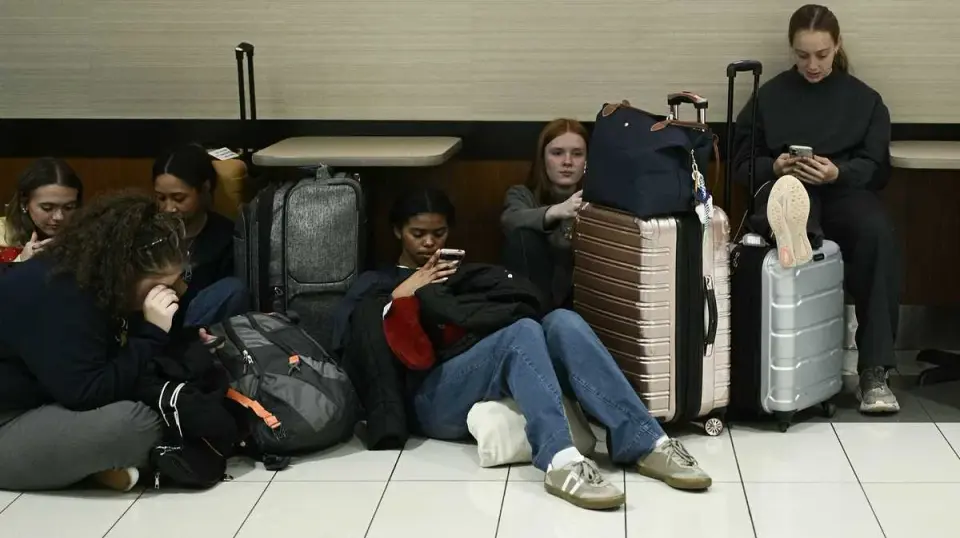
The Federal Aviation Administration (FAA) imposed a rare nationwide ground stop on November 13, 2026, halting all departures for approximately five hours due to a telecommunications outage. Transportation Secretary Sean Duffy attributed the failure to a router error during routine maintenance by contractor L3Harris Technologies, which disrupted communications between air traffic control centers and aircraft. While the stop was lifted, over 5,000 flights were canceled on November 14 as airlines struggled to reposition crews. Officials confirmed the incident was not a cyberattack but highlighted the fragility of the aging FAA Telecommunications Infrastructure (FTI) network, prompting renewed demands for modernization funding.
Key points
- The ground stop lasted about five hours on November 13, the longest since the September 11, 2001, attacks and the first since a 2023 system malfunction.
- Transportation Secretary Sean Duffy blamed contractor L3Harris Technologies, stating a router installed during routine copper-to-fiber conversion work flooded the network and disrupted radar and voice communications.
- FAA Administrator Bryan Bedford confirmed that no facilities went completely dark, but acknowledged that certain frequencies were disrupted, requiring controllers to manually switch planes to working channels.
- More than 5,000 flights were canceled on November 14, exceeding the FAA’s initial forecast, as airlines faced challenges repositioning pilots and flight attendants stranded far from their bases.
- Officials ruled out a cyberattack or AI-related cause, with Homeland Security Secretary Markwayne Mullin asserting the issue was a telecommunications failure, not a national security threat.
- The FAA has requested $50 billion in emergency funding to replace the obsolete FTI network, which officials warn will continue to fail until modernized.
Background
This incident follows a pattern of infrastructure vulnerabilities in U.S. air traffic control. In January 2023, a similar nationwide ground stop occurred after a contractor accidentally deleted files from the Notice to Airmen system. Prior to that, the last nationwide ground stop was after the September 11, 2001, attacks. The current crisis has intensified long-standing debates about the aging FAA Telecommunications Infrastructure (FTI), which has been flagged as a critical weakness by government agencies for over two decades. A 2009 incident involving a predecessor company, Harris Corp., also saw a router misconfiguration disrupt 129 air traffic facilities. Recent political pressure has mounted on the administration to allocate funds for system upgrades, with President Trump requesting $30 billion and Secretary Duffy seeking $50 billion.
How outlets are covering it
WCVB focused on the human impact, highlighting traveler distress, such as passengers in tears and those recalling the 9/11 atmosphere, while noting that some frequent travelers viewed the disruption as an inconvenience. CNN provided real-time updates, emphasizing the lack of a resolution timeline and the calm but confused mood at major hubs like Chicago O’Hare and Newark. Yahoo News detailed the technical and political fallout, reporting that Duffy blamed L3Harris for potential incompetence or faulty equipment, while the contractor stated it was supporting the investigation without addressing the criticism. Yahoo also noted that the National Air Traffic Controllers Association president, Nick Daniels, criticized the practice of daytime maintenance and called for better funding for both technology and controller pay. While all sources agreed on the cause being a telecommunications outage, they differed in emphasis: WCVB on emotional reactions, CNN on immediate operational status, and Yahoo on the technical root cause and political accountability.
Why it matters
The incident exposes critical vulnerabilities in the U.S. air traffic control system, which relies on a network that officials admit is obsolete and prone to failure. The disruption caused significant economic and logistical strain, with over 5,000 flight cancellations on the second day alone and travelers stranded for days. It has intensified political pressure on the FAA and the Department of Transportation to secure emergency funding for modernization, as the current system lacks redundancy and is susceptible to single points of failure. The event also raises questions about maintenance protocols, as the outage occurred during daytime hours when air traffic is highest, despite warnings from union leaders that such work should be scheduled during off-peak times.
What to watch
The FAA expects air travel to return to normal by the end of Sunday, November 15, though recovery may take longer due to crew repositioning issues. A formal review is underway to determine whether the outage was caused by contractor error or a defective router, with Duffy promising accountability. The FAA plans to submit a new funding request to Congress on Monday, seeking over $10 billion specifically for FTI modernization, in addition to the $50 billion requested for broader infrastructure upgrades. Lawmakers from both parties have pledged to investigate the incident, with the House Transportation Committee and Senate Commerce Committee reviewing the technology failures. The FAA has also indicated it will reevaluate maintenance scheduling practices to prevent similar disruptions during peak travel hours.
- 'People in tears': Travelers around the country react after rare FAA nationwide ground stop WCVB
- US aviation shutdown blamed on L3 Harris installed router Reuters
- Hear How the FAA’s Ground Stop Unfolded WSJ
- November 13, 2026 — Some US flights resume after hours-long ground stop CNN
- FAA ground stop latest updates: Saturday cancellations top 6,000; controllers’ union chief says communications with some planes were disrupted; Duffy blames L3Harris Yahoo
Want the full story? Read the original reporting
Read on WCVB