
Canberra and Wellington reject EU associate membership speculation, focus on trade
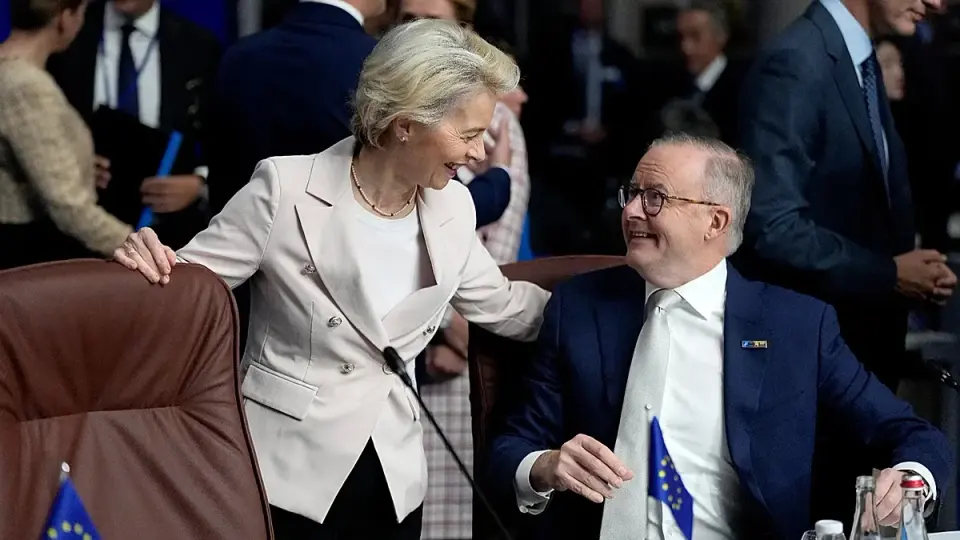
Australian and New Zealand governments have dismissed speculation that they may become EU 'associate members,' a status recently proposed for Canada. Canberra emphasized its focus on finalizing a trade deal, while Wellington confirmed no such discussions have occurred.
Key points
- Australian and New Zealand governments denied any discussions regarding EU associate membership.
- Australia is prioritizing the ratification of a concluded trade deal with the EU.
- The EU-Australia trade agreement faces potential delays due to agricultural quota disputes.
- The associate membership concept was introduced by EU Commission President Ursula von der Leyen for Canada.
- Australian PM Anthony Albanese is scheduled to meet EU leaders in New York.
Background
In September 2026, the EU proposed a new 'associate member' status for Canada to deepen strategic and economic ties, a move that sparked significant debate regarding US-EU relations. This development prompted speculation that other non-EU nations, including Australia and New Zealand, might be considered for similar status. However, prior to these recent denials, Australia and the EU had already concluded negotiations for a comprehensive trade deal in March 2026, which remains pending ratification.
How outlets are covering it
Euronews reports that the Australian government explicitly rejected the idea of associate membership, stating that Canberra is focused on finalizing the EU-Australia trade deal, which it describes as a 'once-in-a-generation' opportunity. A New Zealand government spokesperson similarly clarified to Reuters that no discussions have taken place regarding associate membership. In contrast, Paul Krugman’s analysis on Substack frames the broader context of the EU's associate membership proposal for Canada as a significant shift in global power dynamics, suggesting that nations are moving away from fear of US President Donald Trump. Krugman argues that this move signals a reduced dependence on the US, though he notes that the practical implications of 'associate membership' remain unclear. AP News, while largely obscured by technical code in the provided source, is referenced in the context of the EU's associate member offer to Canada, highlighting the international attention the proposal has received.
Why it matters
The rejection of associate membership by Australia and New Zealand underscores the distinct priorities of these nations in their relationship with the EU. While Canada is exploring a new strategic partnership, Australia and New Zealand are focusing on concrete economic outcomes through trade agreements. This divergence highlights the varying approaches non-EU nations are taking in response to shifting global alliances and the potential implications of the EU's new associate membership concept.
What to watch
The next major development will be the ratification of the EU-Australia trade deal, which is currently facing opposition from farmers on both sides due to concerns over meat quotas. Additionally, Australian Prime Minister Anthony Albanese is expected to meet with EU leaders in New York on the sidelines of the UN General Assembly, where the relationship between the two blocs will likely be discussed, though associate membership is not expected to be on the agenda.
- Canberra responds to Metsola’s EU 'associate membership' suggestion Euronews
- Trump Wanted Canada as the 51st State. He Ended Up Pushing It Toward the European Union. nytimes.com
- Fear Strikes Out Paul Krugman | Substack
- Canada, EU face limits to relationship after symbolic EU overture to Carney Reuters
- What the EU’s offer of ‘associate member’ to Canada might mean AP News
Want the full story? Read the original reporting
Read on Euronews