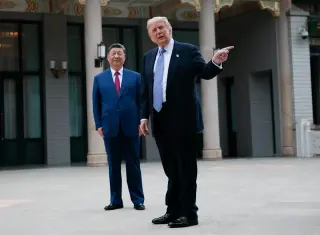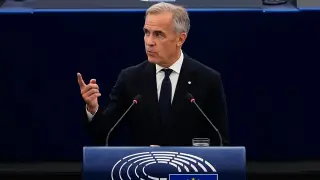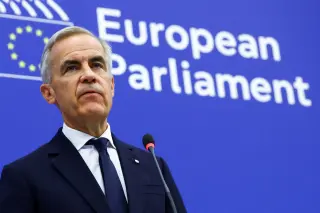
CNN’s fact-check argues Trump’s Canada claims are distorted: Canada’s unemployment rate was 6.4% in July (not 10%), Canada remains a major US trade partner with deep energy links, and most US agricultural exports to Canada are tariff-free (with only some dairy/poultry protections); Canada does have a military role and a NORAD partnership, contradicting Trump’s broader assertions.
China remains Iran's biggest buyer, accounting for a large share of its exports, with Turkey, Pakistan and Armenia among major trading partners; analysts say the US's new “economic D-Day” sanctions may tighten revenue but face enforcement hurdles, implying a possibly limited and gradual impact while markets have shown muted reactions.
The United States unveils an 'economic D-Day' plan to choke Iran off the global economy by penalizing enablers and key trading partners, spotlighting China’s oil link, the UAE as Iran’s main transshipment hub, and Turkey, Iraq, and India as major but exposed partners. With Tehran’s currency sliding toward 200,000 toman per US dollar, enforcement details remain murky, but the move could spur realignments in Iran’s trade as partners weigh financial exposure against dollar access.
Trump’s tariff approach—lauded by allies as a tool to bolster domestic industry—remains a flashpoint in major Senate contests (Maine, Ohio, Michigan and Alaska), where candidates frame tariffs as rising costs for local industries and for cross-border trade with Canada. In Maine, Collins promotes a Canada-friendly stance while opponents argue tariffs hurt voters; in Ohio, Brown and Husted navigate Canada-related trade tensions amid broader tariff criticism, with Democrats highlighting cost increases as they campaign. The policy’s resonance with voters could influence midterm outcomes as Republicans defend control and Democrats weaponize tariff costs in ads and debates.
President Trump is eyeing additional tariffs on China amid persistent U.S.-China trade tensions after earlier reciprocal levies were struck down by the Supreme Court; Beijing protests over capacity and awaits U.S. probe results, signaling the possibility of new tariffs that could heighten global economic strain.
The United Arab Emirates suspended all trade with Iran, cutting off roughly $6 billion in cash and disrupting Iran’s $21.3 billion bilateral trade network, potentially crippling Tehran by choking dollar access and imports as U.S.-led sanctions intensify.
President Donald Trump announced a 50% tariff on Canadian cars, trucks, auto parts and steel that would take effect January 1, 2027, escalating US-Canada trade tensions. Canada signaled readiness to retaliate dollar-for-dollar and urged talks with the right approach, while stressing that Canada remains the US’s top auto market amid a broader shift away from deeply integrated ties.
The Patriots agreed to trade wideout Kayshon Boutte to the Houston Texans in exchange for safety Jaylen Reed and a 2028 seventh-round pick from the Saints; Boutte, entering the final year of his rookie deal, was viewed as surplus behind New England’s revamped receiver group, and Houston adds a young target as it pursues a deeper postseason run. Reed, a 2025 sixth-round pick, contributed mainly on special teams as a rookie with the Texans.
The United Arab Emirates said it would suspend all trade and financial transactions with Iran until further notice after accusing Tehran of firing ballistic missiles toward the UAE. Reported missile strikes triggered nationwide warnings and evacuations, though Iran denies the attacks. The move compounds Iran’s economic isolation amid sanctions and underscores the UAE’s role as a regional trade hub, with analysts warning the embargo could harm both economies and regional stability in the Gulf.
Trump announced 50% tariffs on a broad set of Canadian imports after trade talks collapsed, threatening higher prices for items from Crown Royal whisky to goose-down jackets and ice-hockey equipment; negotiators had worked to avoid tariffs, but Canada said it would retaliate dollar-for-dollar, and American consumers could feel the impact on many everyday goods.
The UAE’s decision to halt all trade and financial transactions with Iran threatens Tehran’s key import routes, fuel product sales, and access to global financial networks, underminingDubai‑based trade links that Iran has depended on despite sanctions. While Iran had been trying to resume some exchanges through Jebel Ali, the new halt jeopardizes those channels and risks worsening inflation, fuel shortages, and broader economic strain at home. The move—set against ongoing U.S. sanctions and looming “Economic D-Day” pressure—also complicates potential diplomacy, with European mediators like Austria and Greece exploring limited roles, and alternative routes via Oman or Turkey unlikely to match Dubai’s reach. The result could be a prolonged economic hold rather than a quick fix, further constraining Iran’s economy while its debt and energy sector remain under pressure.
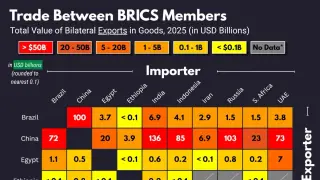
President Trump threatens sweeping economic penalties to isolate Iran and force other countries to stop trading with Tehran, but experts say unilateral sanctions are unlikely to end Iran’s trade. Iran’s oil exports have fallen under sanctions and blockades, while major partners such as China, Türkiye, India, and the UAE continue to engage in some capacity. Iran is pursuing new links (BRICS membership, Tajikistan oil deal) that could reshape its international commerce, highlighting the limits of US pressure amid a web of global trade relationships.
The United Arab Emirates halted all trade, commercial exchanges and financial transactions with Iran, depriving Tehran of a major import lifeline—roughly $21 billion in 2024—and signaling greater isolation as U.S. sanctions intensify and diplomacy stalls, with Dubai serving as the main conduit for Iran’s global trades amid a 60-day deadline that produced no new deal.
President Trump says he’s paused the 50% tariffs on Canadian goods for three days as talks continue toward a last-minute deal, with a separate post from the USTR hinting at concessions like market access for US goods but offering few specifics. Canada’s Prime Minister Mark Carney confirmed progress. The tariffs were set to take effect soon under a 1930 Tariff Act provision, and officials say only a small share of Canadian exports would be affected, while the broader USMCA renegotiations and trade policy remain in flux.
The New York Giants traded backup guard Daniel Faalele to the Jacksonville Jaguars for a late-round pick in the 2027 NFL Draft. Faalele, who joined the Giants in free agency after four seasons with the Ravens, had slid down the depth chart after the team drafted Francis Mauigoa and restructured the line. With Jaguars right guard Patrick Mekari out after back surgery, Jacksonville sought experience to stabilize the line. Faalele signed a one-year, $1.4 million contract with $687,500 guaranteed, leaving the Giants with minimal dead money as Jacksonville inherits $500,000 of the guaranteed base. The deal advances the Giants’ offensive-line reshaping while giving the Jaguars an immediate depth piece.